San José del Cabo
San José del Cabo
Quieter than Cabo San Lucas, San José del Cabo captivates with its 18th-century colonial center, bird-filled estuary, and vibrant Arts District that comes alive every Thursday evening.
San José del Cabo is the historic town of the Los Cabos corridor, at the southern tip of Baja California. Quieter than Cabo San Lucas, it preserves an intact colonial center, an active arts scene, and a protected estuary. It's the natural cultural gateway for exploring the region, between 18th-century architecture, art galleries, and wild beaches minutes away.
Practical Information at a Glance
- Access: Los Cabos International Airport (SJD) approximately 15 km north of downtown.
- Local Transportation: Taxis, rental cars, and shared collectivo vans connect San José del Cabo to Cabo San Lucas (approximately 33 km via the Corridor).
- Recommended Duration: One full day for the historic center and estuary; two to three days to combine beaches and galleries.
- Dress Code: Modest dress required to enter San José Church.
- Accessibility: The historic center is partially accessible; some cobbled streets remain challenging for wheelchairs.
What to See
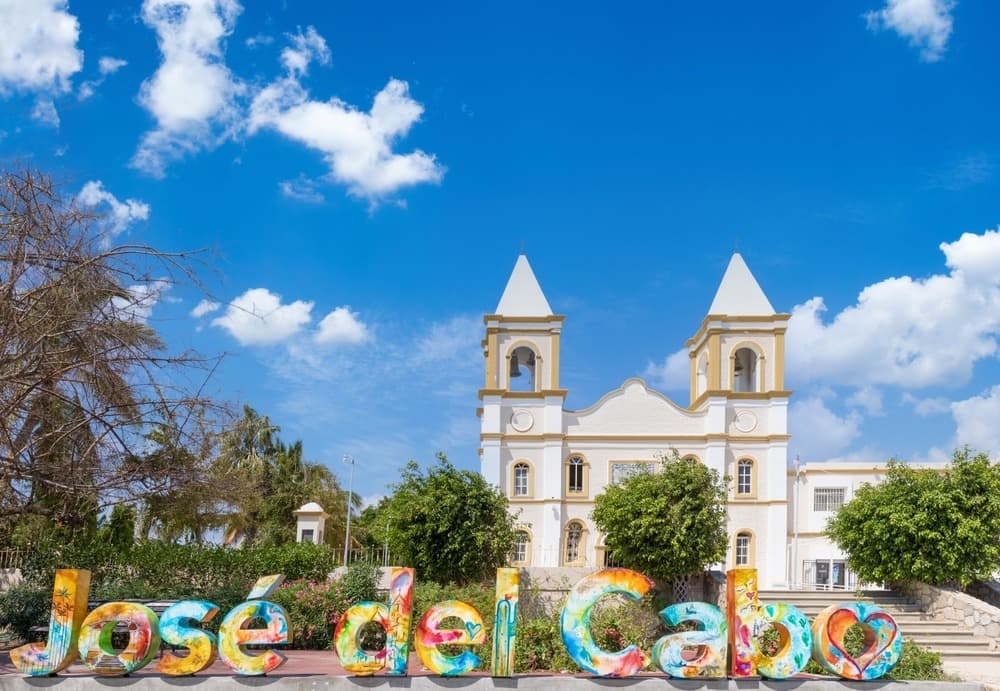
The heart of town centers on Plaza Mijares, a palm-lined central plaza bordered by colonial buildings. The San José Church, founded by Jesuits in the 18th century, dominates the square with its volcanic stone facade. The Arts District, concentrated around Manuel Doblado Street, brings together some forty galleries that open every Thursday evening during the Art Walk. The San José Estuary, a protected wetland, is home to over 200 bird species.
History and Context
San José del Cabo was officially founded in 1730 as a Jesuit mission, one of the last established in Baja California. For centuries, the town served as a stopover port for Spanish galleons traveling between Manila and Acapulco. After the Jesuits' expulsion in 1767, the mission passed to Franciscan and then Dominican hands. Los Cabos' tourism development, launched in the 1970s by the Mexican government, transformed the region without erasing San José's colonial urban fabric.
Highlights of Your Visit
Plaza Mijares and San José Church
The central plaza is the logical starting point. The church features an ornate facade with a mosaic depicting the martyrdom of Father Nicolás Tamaral, killed during an uprising in 1734. The austere interior contrasts sharply with the decorative richness of the facade.
Arts District — Thursday Art Walk
Each Thursday evening (high season, roughly October through June), galleries throughout the neighborhood open simultaneously. Painting, sculpture, photography, and local crafts coexist in spaces often housed within renovated colonial mansions.
San José Estuary
This freshwater estuary, separated from the Pacific Ocean by a sandbar, is one of the peninsula's rarest wetlands. Herons, egrets, ducks, and occasionally sea otters can be spotted here. A riverside trail offers a peaceful stroll away from tourist zones.
Municipal Market and Local Gastronomy
The covered market serves fresh fish tacos, seafood, and regional produce. Restaurants around Plaza Mijares feature Pacific cuisine influenced by local fisheries: ceviche, zarandeado, and aguachile grace most menus.
Etiquette and Visiting Rules
- Cover shoulders and knees when entering San José Church.
- Avoid visiting during religious services.
- In the estuary, stay on marked trails to avoid disturbing wildlife.
Photography Tips
Early morning golden light is ideal for photographing the church facade before crowds arrive. Sunset from the estuary's edge offers water reflections with pelicans in flight. During the Art Walk, gallery lighting creates a warm ambiance perfect for portraits and artwork details.
Location and Access
San José del Cabo sits at the southeastern tip of the Baja California peninsula in Baja California Sur State. Los Cabos International Airport serves the region with direct flights from numerous Mexican and North American cities. The Corridor Turístico (Highway 1) connects San José del Cabo to Cabo San Lucas along the coast for approximately 33 km, with several accessible beaches en route. The historic center is easily explored on foot.
Nearby Attractions
- Cabo San Lucas — Lively town at the peninsula's tip, known for the Arch of Los Cabos and swimming beaches.
- Corridor Turístico — Coastal highway dotted with beaches, resorts, and surf spots between the two towns.
- Todos Santos — Artists' town designated a Pueblo Mágico, approximately 80 km north on the Pacific coast.
- La Paz — State capital, approximately 180 km away, gateway to the Sea of Cortez and Espíritu Santo Island.
Frequently asked questions
The dry season, October through June, offers the most pleasant conditions. July to September corresponds to hurricane season; temperatures and humidity are high, but prices drop significantly.
The Thursday evening Art Walk occurs primarily during high season, October through June. In summer, some galleries close or reduce hours. Check with local galleries before your visit.
San José del Cabo's beach is subject to strong currents that make it unsafe for swimming. Corridor beaches, such as Playa Palmilla, are better suited. Cabo San Lucas has protected beaches ideal for swimming.
Shared taxis (collectivas) run regularly between the two towns at fixed rates. Car rental remains the most flexible option for exploring the Corridor and its beaches.
Yes. Shoulders and knees must be covered. Avoid visiting during Mass to not disturb worshippers.
Yes. The historic center is quiet and easy to explore on foot. The estuary appeals to children interested in nature. Nearby Corridor beaches offer water activities suitable for all ages.
Want to discover this destination?
Our local advisors design your tailor-made trip.