Winter in Mexico: Where to Go Based on Your Preferences
Looking to escape the cold? Head to Mexico! Mild temperatures, idyllic beaches, and calm off-season vibes: in winter, the country promises beautiful sunny days far from the tourist crowds.
Looking to escape the cold? Head to Mexico! Mild temperatures, idyllic beaches, calm off-season vibes: in winter, the country promises beautiful sunny days far from the tourist crowds. From the West Coast to the East Coast: discover where to spend winter in Mexico, from Baja California to the Yucatán, including the Riviera Maya and Cancún!
Pacific Coast (Western Mexico)
Baja California
Located at the far northwestern tip of Mexico, Baja California (or Baja California) forms a long, narrow peninsula separated from the mainland by the Sea of Cortez.
Visiting Los Cabos
At the southern tip of the peninsula, don't miss the municipality of Los Cabos and its three distinct towns: Cabo San Lucas, San José del Cabo, and Palmilla. Renowned for its beaches and festive atmosphere, the area is highly popular for its famous El Arco and Lover's Beach (a stunning rock arch).
San José del Cabo, for its part, captivates visitors with its colonial architecture, cobblestone streets, and thriving arts scene. Every Thursday evening from November to June, the town hosts the San José del Cabo Art Walk. During the event, galleries open their doors to showcase works by local artists to the public.
Visiting La Paz
For a sunny winter getaway, La Paz is an ideal destination. Located in Baja California Sur, this Mexican city benefits from a subtropical desert climate, with daytime temperatures ranging between 20°C and 25°C. Perfect for pursuing water activities like diving, stand-up paddling, or kayaking!
For swimming? Head to Pichilingue beaches, Playa El Coromuel, or Balandra—the latter limited to 450 visitors per day. Beyond its paradisiacal coastline, La Paz is also known for its street art. Indeed, the downtown area is full of murals you can discover on your own as you stroll, or on a guided tour (a chance to learn more about the city's history).
Whale Watching in Baja California
In winter, Baja California is THE spot for whale watching. Between December and April, these mammals leave the cold Arctic waters for Mexico's warmer seas. During this period, numerous boat excursions allow you to get up close with cetaceans. The most well-known sites are:
Los Cabos,
San Ignacio Lagoon,
Magdalena Bay.
Diving and Snorkeling
Bordered to the west by the Pacific Ocean and to the east by the Sea of Cortez, Baja California enjoys a dual identity that attracts divers from around the world. The Sea of Cortez—nicknamed "the aquarium of the world" by Commander Cousteau!—is renowned for its rich biodiversity, which delights both snorkelers and scuba divers. You can admire notably Manta rays and whale sharks.
Dream of seeing cetaceans in Mexico? Discover our winter safari to see whales in Baja California! Cabo San Lucas, Balandra, Pichilingue, La Ventana Bay, and Cerralvo Island: alongside our local guide, set out to encounter these marine giants—and their companions (dolphins, sea lions, sharks, etc.). |
Puerto Vallarta (Jalisco)
In the State of Jalisco, between the Pacific beaches and the Sierra Madre mountains, you'll find Puerto Vallarta. This beach resort, appealing for both its outdoor and water activities as well as its nightlife, attracts many American and Canadian tourists.
Visiting in winter allows you to stroll peacefully through the historic center, admire the Church of Our Lady of Guadalupe, and walk along the waterfront named Malecón far from the summer crowds. An opportunity to listen to street music and admire the sunset in a relaxed atmosphere.
Riviera Nayarit (Nayarit)
The Riviera Nayarit is ideal between November and April, as it offers beautiful sunny days. Moreover, unlike Los Cabos or Cancún, this stretch of the Pacific coast is less affected by tourist overflow.
For history enthusiasts, Nayarit is home to the archaeological site of Ixtlán del Río (also named "Los Toriles"). Designed around 400 AD, it distinguishes itself from other sites through its circular temple and numerous palaces.
Its other advantage? The Riviera Nayarit is recognized as an ideal family destination, thanks to its easily accessible beaches and safety—this region is known as one of Mexico's safest.
Finally, between December and March, the waters of Riviera Nayarit welcome humpback whale migration. You can observe them during a boat excursion or from certain shores (with binoculars). A tip? Opt for a morning outing, when the sea is calmer. This allows you to better spot whales—and dolphins, also visible between December and April.
Mazatlán (Sinaloa)
Once a manufacturing city, Mazatlán experienced tourism growth in the 1970s with the creation of the Zona Dorada. This "golden zone" designates the area along the city's main beaches, including Playa Gaviotas and Playa Sábalo; where prestigious hotels and numerous restaurants are concentrated.
But the city also has more secluded beaches in the North, such as Playa Cerritos and Playa Bruja, which offer a more peaceful atmosphere, ideal for visitors seeking tranquility.
The centro histórico, for its part, also merits a stop. With its shaded plazas, colonial monuments, and small cafés, where an authentic atmosphere reigns, close to local culture.
Huatulco (Oaxaca)
In the State of Oaxaca, you'll find the beach resort of Huatulco, which also offers a very mild winter climate. Less frequented than Cancún or Puerto Vallarta, it is nonetheless equipped with 36 beaches and 9 bays!
Among them? Tangolunda, San Agustín, Santa Cruz, and Cacaluta; all dotted with paradisiacal beaches and hiking trails. Swimming, kayaking, snorkeling, or boat excursions: Huatulco is a land ideal for enjoying beautiful sunny days in winter.
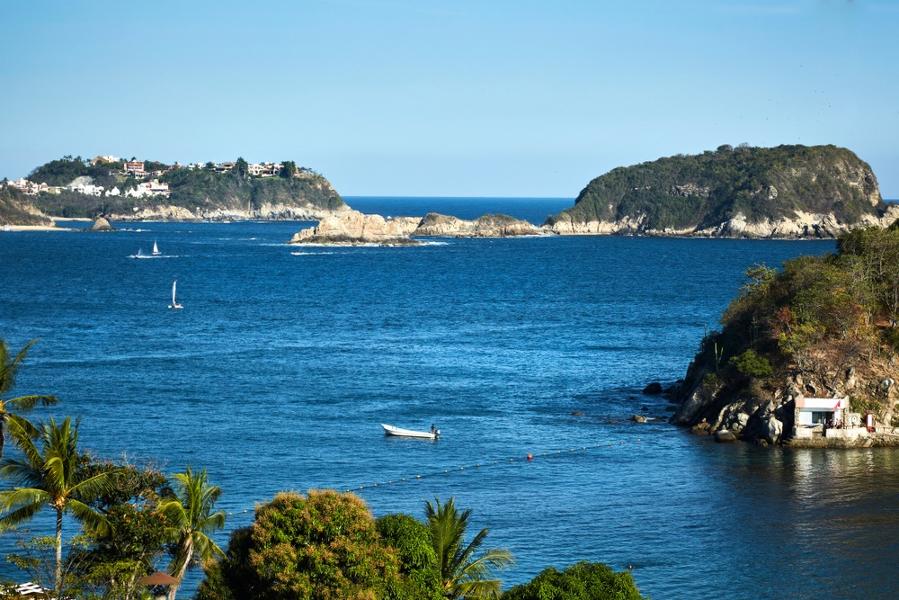
Stop at Huatulco National Park The State of Oaxaca is home to Huatulco National Park (also called Bahias de Huatulco). This protected area (designated Ramsar and biosphere reserve) features lush vegetation, reefs, and mangroves. You can enjoy short hikes, boat trips, snorkeling, and scuba diving. |
Zihuatanejo and Ixtapa (Guerrero)
On the Pacific coast of the State of Guerrero, the climate remains warm and pleasant in winter, with temperatures hovering around 28°C.
Zihuatanejo
A former fishing village, Zihuatanejo is a beach resort located in a protected zone that has maintained its authentic character. Featuring an animated downtown and typical small restaurants, it's also known for the beauty of its Playa el Palmar and crystal-clear waters.
Ixtapa
Just minutes away, you'll find Ixtapa, another beach resort built in the 1970s to welcome international tourists. Less typical but more modern than its neighbor, it attracts a more affluent clientele. Surrounded by tropical jungle, it is home to crocodiles, iguanas, Hawksbill turtles, and numerous bird species.
The common thread between the two resorts? Seabeds of extreme richness! The coastline is home to one of the Pacific's largest coral reefs and about forty iconic diving spots. Zihuatanejo and Ixtapa are also ideal stopovers for water sports enthusiasts, such as surfing or paddling.
Eastern Coast of Mexico
The Yucatán
The Yucatán designates both a Mexican state and a vast peninsula spanning three regions: the Yucatán (in the northwest), Campeche (in the west), and Quintana Roo (in the east). In winter, this part of the country offers beautiful sunny days with temperatures hovering around 27°C.
Mérida
Capital of the Yucatán, Mérida is a former Spanish colonial city. In its historic center, you can admire monuments from this era, recognizable by their atypical architecture. Among them? The Plaza Grande, the San Ildefonso Cathedral, the Palacio de Gobierno, the Casa Montejo, as well as lovely gardens.
Beyond its historical heritage, Mérida also captivates with its festive and authentic atmosphere. On weekend evenings, the streets come alive with performances, folk dances, and concerts—particularly around the Gran Plaza and Paseo de Montejo.
Chichén Itzá
During your stay in the Yucatán Peninsula, don't miss the archaeological site of Chichén Itzá. This ancient Mayan city, inscribed on the UNESCO World Heritage List, testifies to life at the heart of this ancient civilization. The site is known for hosting the pyramid of El Castillo, a nine-story structure that once served as a temple dedicated to the god Kukulkán.
The Riviera Maya (Quintana Roo)
The state of Quintana Roo, on Mexico's east coast, distinguishes itself through varied landscapes between mangroves and dream beaches. The Riviera Maya, which extends along this state, groups the main beach resorts, including Cancún, Playa del Carmen, and Tulum, ideal for enjoying the coastline and coastal atmosphere...
Cancún
The city of Cancún is situated along the Caribbean Sea. Prized for its paradisiacal beaches and nightlife, it is divided into two distinct zones: downtown (El Centro) and the Zona Hotelera bordering the coast, celebrated for its waterfront, small shops, and restaurants.
Its other asset? The city also houses the famous Museo de Arte Subacuático (MUSA)! An underwater museum that allows you to discover over 450 sculptures by British artist Jason deCaires Taylor during a diving excursion.
Tulum and Playa del Carmen
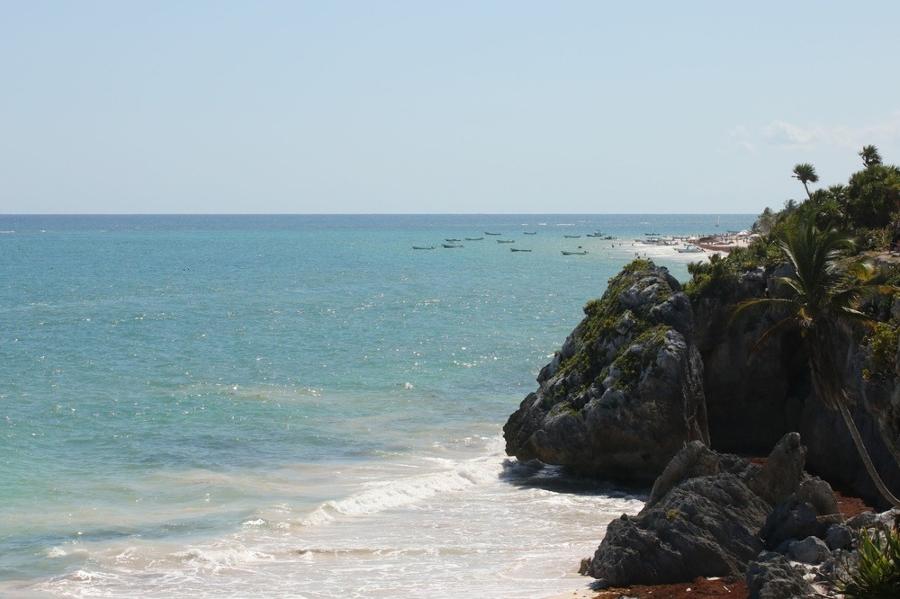
South of the Riviera Maya, you'll find Tulum. Known for its beaches and Mayan sites, it's also renowned for its sublime seabeds. At the heart of the Sian Ka'an reserve, you can notably observe dolphins, turtles, sharks, and numerous bird species.
About 50 minutes north of Tulum, venture to discover Playa del Carmen, a beach highly popular for its atmosphere. The resort also hosts prestigious hotels (with honeymoon suites) and rooftops. Ideal for a romantic getaway or a winter honeymoon.
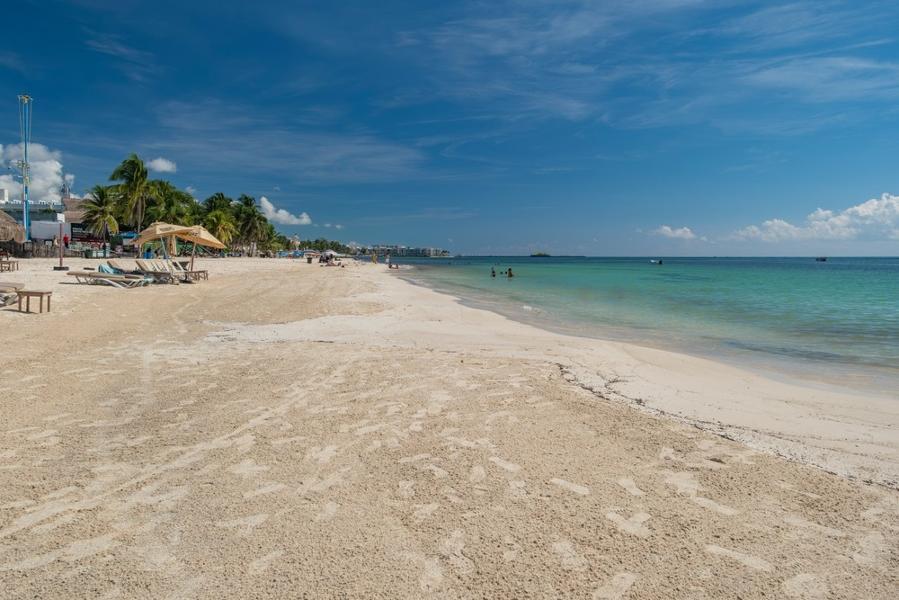
Stop at Cozumel Island Just across from Playa Del Carmen, you'll find Cozumel Island. While it's a lovely little island accessible in 45 minutes by ferry, there's nothing stopping you from making a quick trip (it's possible to explore the island by scooter), but note that almost all of the island's beaches are private, so you won't be able to swim there. |
Bacalar
Near the Belize border, Bacalar is known for its "lagoon of seven shades of blue." The town is an ideal stopover for outdoor activities, such as kayaking or sailing.
The Cenotes
Finally, Quintana Roo is home to numerous cenotes. During your visit, take time to explore these natural treasures, such as Dos Ojos (near Tulum) or Cenote Azul (near Playa del Carmen).
Why Travel to Mexico in Winter? The Season's Advantages
Winter in Mexico offers far more than pleasant weather. It's also an ideal time to immerse yourself in local culture and discover archaeological sites away from summer tourist crowds.
Live to the Rhythm of End-of-Year Celebrations
The festive season begins with the Posadas, from December 16 to 24. These religious processions, held each evening, allow you to discover traditions and traditional songs. For New Year's? You'll have the chance to witness spectacular fireworks and numerous street concerts.
A few days later, on January 6, you can also celebrate Día de Reyes—the Mexican equivalent of Epiphany. On this occasion, children receive gifts and families share the traditional Rosca de reyes cake decorated with candied fruits, like a crown of the Three Wise Men. This tradition closes the Christmas period in a convivial and traditional atmosphere.
Visit Archaeological Sites (Without Crowds)
Due to pleasant temperatures and lower tourist traffic*, winter is also the perfect season to visit Mexico's Mayan sites, located in the Yucatán Peninsula and Caribbean coasts.
An opportunity to visit iconic ancient sites, such as:
Tulum with its stunning panoramic sea views,
Cobá which can be explored by bike,
Ek' Balam known for its architecture adorned with ancient sculptures,
Chichén Itzá, a site inscribed on UNESCO's World Heritage List.
Focus on Tourist Traffic in Winter in Mexico* The country is generally less frequented in winter than in summer. However, this period experiences a major traffic spike between December 20 and January 10, during the end-of-year holidays. Mexico is then very busy and prices are higher than during the rest of the winter period. In December particularly, airfares are quite high. |
What's the Weather Like from December to April in Mexico?
First, it's important to know that Mexico has two main seasons:
The dry season or winter season (November-May): during this period, the weather is mild, with little or no precipitation and pleasant temperatures.
The rainy season (June-October): this period is characterized by showers (sometimes quite heavy), especially in tropical areas.
In winter, the climate is globally pleasant throughout the country, with variations depending on the region and altitude level. In tropical areas, temperatures remain quite warm, with days around 25°C.
Baja California Temperatures* | |||
Period | °C Daytime | °C Sea | Rainy Days |
December | 20 | 22 | 1 |
January | 19 | 22 | 1 |
February | 20 | 24 | 1 |
March | 21 | 26 | 0 |
April | 24 | 27 | 0 |
Tropical Temperatures* | |||
December | 22 | 29 | 2 |
January | 22 | 28 | 2 |
February | 24 | 28 | 2 |
March | 26 | 28 | 3 |
April | 27 | 29 | 4 |
(*) Average daytime temperatures
Frequently Asked Questions
What is the coldest month in Mexico?
The coldest months in Mexico are December, January, and February. During this time of year, the national average temperature hovers around 16.5°C, with marked differences depending on the region. For example, it's about 16°C in January in Mexico City, versus nearly 23°C on the Yucatán and Quintana Roo coasts, and up to 28°C in Cancún.
When Should You Travel to Mexico to Travel More Cheaply?
To travel to Mexico on a budget, avoid the high tourist season of December and the summer period (July-August). Instead, choose the months of May and September, two less popular and more affordable periods.
When is the Best Time to Go to the Yucatán?
The best time to visit the Yucatán extends from November to April. Ideal for enjoying the beaches and Mayan sites, it also features favorable weather, with pleasant temperatures and low risk of rain and hurricanes.
Frequently asked questions
Riviera Nayarit is considered one of the best destinations for families in Mexico during winter. Its beaches are easily accessible, and the region is recognized as one of the country's safest. Huatulco, with its 36 beaches and 9 bays, is also an excellent option for a peaceful stay with children.
Yes! From December to April, Baja California is the best place to observe whales, particularly in San Ignacio Lagoon and Magdalena Bay. Riviera Nayarit, meanwhile, welcomes humpback whale migration between December and March. Boat excursions are offered in both regions.
No, winter corresponds to the dry season in Mexico (November to May), meaning little to no precipitation and virtually no hurricane risk. It's one of the main reasons why this period is ideal for visiting the country, particularly the Yucatán Peninsula.
To save on your Mexico trip, avoid the end-of-year holiday period (December 20 to January 10) as well as July-August. The months of May and September offer the most attractive rates, although May still falls within the dry season and is therefore very pleasant.
French citizens do not need a visa to visit Mexico as tourists for stays of up to 180 days. A valid passport and a Tarjeta de Visitante Turista (TVA), issued on board the plane or upon entry to the territory, are sufficient. Check entry requirements in effect before your departure.