Calakmul
Calakmul
Calakmul is one of the greatest Maya cities ever discovered. Capital of the Snake Kingdom, it brings together monumental pyramids, sculpted stelae and a UNESCO-listed biosphere reserve.
Calakmul is one of the greatest Maya cities ever discovered, buried in the jungle of Campeche, in southern Mexico. Listed as a double UNESCO World Heritage site — for its archaeological ruins and for the biosphere reserve surrounding it — it was the capital of the powerful Snake Kingdom. Its pyramids rise above the canopy, in a silence inhabited by howler monkeys and toucans.
Practical Information at a Glance
Admission: fee required (archaeological zone + biosphere reserve access fee)
Recommended duration: 3 to 5 hours on site; plan the full day from Chetumal or Xpujil
Access: Federal Highway 186, then 60 km of forest road from Conhuas — vehicle recommended
Attire: closed non-slip shoes mandatory for climbing the pyramids
Accessibility: very limited due to forest terrain and steep stairs
To know: the site closes in late afternoon; arrive early to avoid heat and observe wildlife
What You'll See
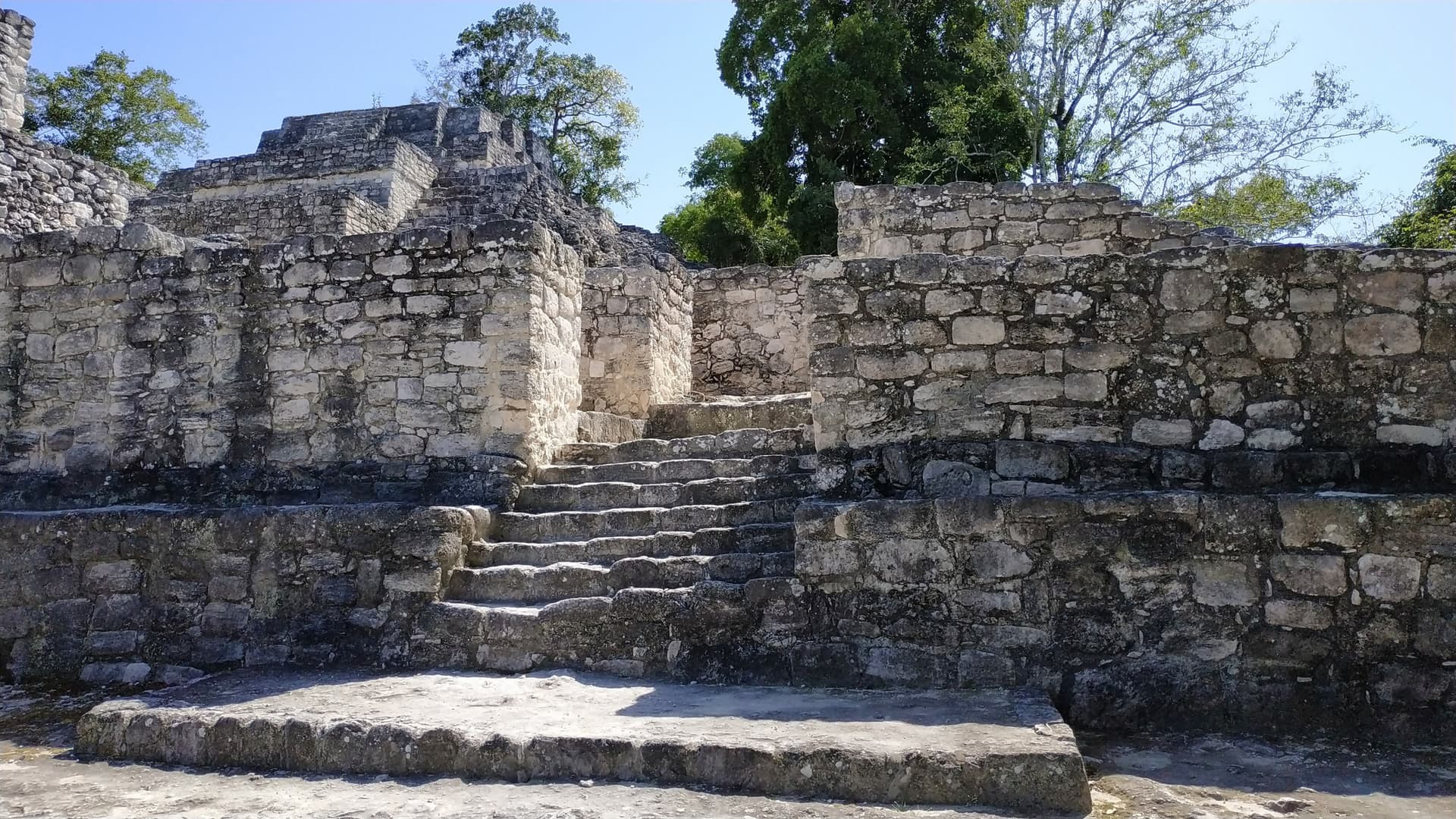
The site contains more than 6,000 structures documented, including two monumental pyramids: Structure I and Structure II, the latter reaching approximately 55 meters in height. Sculpted stelae — among the most numerous in the Maya world — line the great plazas. Dense vegetation wraps around the still-unexcavated buildings, giving the place an atmosphere of authentic exploration.
History and Context
Calakmul was the seat of the Kaan Kingdom (the Snake), the direct rival of Tikal in Guatemala. At its height, between 500 and 800 CE, the city may have had as many as 50,000 inhabitants. It dominated much of the Maya lowlands through a network of alliances and wars. Its decline in the 9th century remains linked to the general collapse of the great classical Maya cities.
Highlights of Your Visit
Structure II
The highest pyramid on the site offers panoramic views of the canopy stretching to the horizon from its summit. The climb is steep; the steps are uneven. The 360-degree spectacle of treetops justifies the effort.
The Stelae of the Great Plaza
Calakmul boasts more than 120 stelae, a record for the Maya world. Some retain finely carved reliefs depicting rulers in war or ceremonial dress. They constitute a major historical source for understanding the dynasties of the Snake Kingdom.
Wildlife of the Biosphere Reserve
The Calakmul Biosphere Reserve is home to jaguars, pumas, tapirs, spider and howler monkeys, as well as exceptional bird species. At dawn, before the site's official opening, is the best time to observe animals along the forest road.
Photography Tips
Light: early morning, when morning mist envelops the pyramids — soft light and unique atmosphere.
Structure II angle: from the base of Structure I, you frame the main pyramid with vegetation in the foreground.
Wildlife: a telephoto lens is useful for photographing howler monkeys in the trees lining the pathways.
Restrictions: no known photography restrictions on site, but flash is discouraged near fragile stelae.
Location and Access
Calakmul is located in southern Campeche State, approximately 300 km from Campeche City and less than 200 km from Chetumal. The closest town is Xpujil, the logistical starting point for your visit. From Xpujil, expect about an hour's drive. There is no regular public transport to the site; vehicle rental or an organized excursion are the most practical options. Local agencies offer guided tours from Xpujil, Chetumal or Bacalar.
Nearby
Xpujil — nearby Maya site with a tower of three temples, less than an hour's drive away.
Becán — Maya city surrounded by a unique defensive moat in the region, a few kilometers from Xpujil.
Chicanná — known for its façade shaped like the mouth of a terrestrial monster, immediately near Becán.
Balamkú — houses an exceptionally well-preserved stucco frieze, rarely visited.
Bacalar — lagoon with turquoise waters, approximately two hours to the east, ideal for unwinding after the jungle.
Frequently Asked Questions
Frequently asked questions
The dry season, from November to April, is the most comfortable. During the rainy season (May-October), vegetation is lush but trails can be slippery and mosquitoes more prevalent.
Yes, the main pyramids remain accessible for climbing. Non-slip soled shoes are essential; the stairs are steep and uneven.
There is no direct public transport to the site. From Xpujil, shared taxis or organized excursions provide access. Vehicle rental from Chetumal or Campeche remains the most flexible option.
Allow a minimum of three hours for the main areas. Five hours lets you explore secondary structures and observe wildlife without rushing.
Yes. Becán, Chicanná and Xpujil can be visited in a half day from Xpujil. Balamkú is also on Highway 186, toward Campeche.
Xpujil has a few hotels and guesthouses. Ecolodges exist within or on the edge of the biosphere reserve for travelers wishing to spend the night closer to the jungle.
Want to discover this destination?
Our local advisors design your tailor-made trip.