Cholula
Cholula
At the foot of Popocatépetl, Cholula conceals the world's largest pyramid by volume beneath a verdant hill, and showcases 70 baroque churches within a low-key Pueblo Mágico.
Some destinations don't headline travel guides, yet they keep surfacing in conversations between travelers. You arrive without knowing quite what to expect and find yourself staying longer than planned. Cholula ranks among those essential visits. Without fanfare, the city reveals its past, local life, and contradictions to those who take time to linger. Here's the full picture.
A brief history
Cholula is one of the oldest continuously inhabited cities in Mesoamerica. Derived from Nahuatl Cholōllān, its name can be translated as "place where water falls" or "place of flight." Occupied for over two millennia, it witnessed the passage of numerous civilizations, including the Olmecs, Zapotecs, Mixtecs, and Maya. One of the first known groups to settle here, the Epatláns, reportedly made the city an important religious center.
Construction of the famous Cholula pyramid began around 200 CE. It has a base of approximately 120 meters on each side and rises 17 meters in height. By the end of the Classic period, around 800 CE, the city fell under the influence of the Olmec-Xicallanca. Much of the original population was likely displaced. Unlike other major centers such as Teotihuacán, Cholula escaped complete destruction, though the reasons for this stability remain debated.
In the 12th century, the Toltecs and Chichimecs arrived in the region and introduced the cult of Quetzalcóatl, a major deity in Mesoamerican culture.
By 1519, when Hernán Cortés arrived, it was the second most populated city in the Aztec empire after Tenochtitlan, with over 100,000 inhabitants. Learning of a possible Aztec trap, Cortés acted first. He summoned local authorities to the Temple of Quetzalcóatl, had them executed, and his Tlaxcaltec allies sacked the city. This pivotal moment of Spanish conquest became known in history as the Massacre of Cholula.
Where is Cholula located?
Cholula, or more precisely Cholula de Rivadavia, is a city in the state of Puebla, situated about ten kilometers west of the regional capital, Puebla. Perched at 2,135 meters of altitude, it sits at the foot of Popocatépetl, an active volcano.
Administratively, it comprises three municipalities: Santa Isabel Cholula, San Andrés Cholula, and San Pedro Cholula. As of 2015, the combined population exceeded 275,000 inhabitants.
What to do and see in Cholula?
The Great Pyramid of Cholula
This is the must-see site in the city. Today, the pyramid is completely covered in vegetation. It resembles a large natural hill. Yet it is the largest pyramid ever constructed by volume.
You can explore a network of tunnels carved into its structure, which provides insight into its architecture and history. At the top stands the church Nuestra Señora de los Remedios, built during the colonial era. The summit rewards you with stunning panoramic views of the Puebla Valley and neighboring volcanoes, including the still-active Popocatépetl and Iztaccíhuatl.
The churches of Cholula
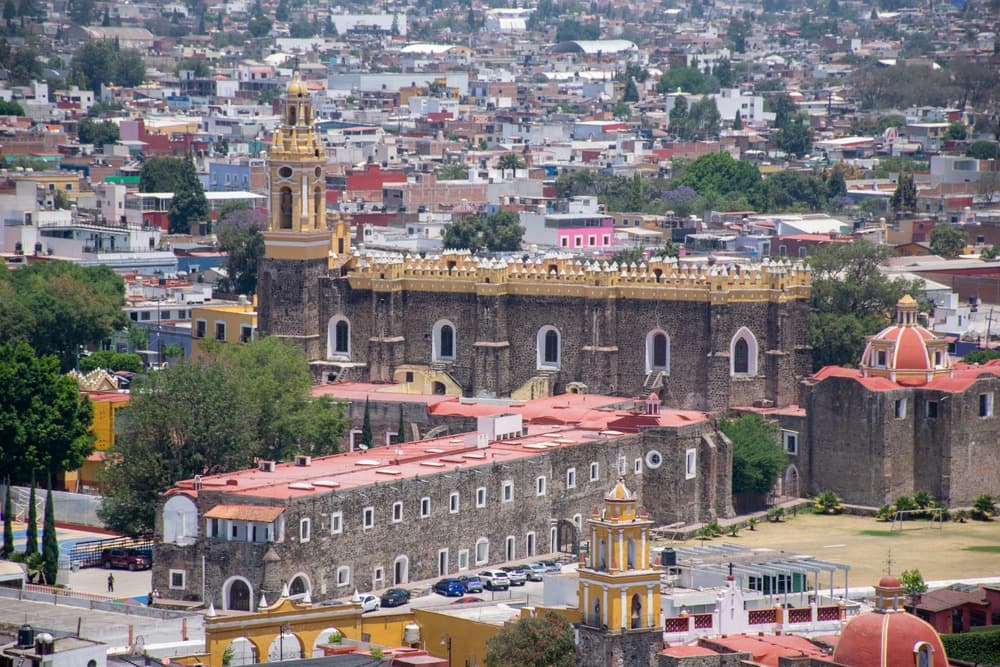
Cholula is also renowned for its numerous churches. There are nearly 70 in total. Among the most remarkable, don't miss the Capilla Real de Naturales, easily identified by its 49 small domes.
The San Francisco Acatepec church is equally worth visiting for its façade covered in colorful tiles typical of the region.
You can also explore the former San Gabriel convent, which houses one of the largest Franciscan churches in the country.
Just nearby, the Capilla de la Tercera Orden also merits a quick visit.
The historic center
The heart of San Pedro Cholula captivates with its welcoming atmosphere. You'll find cobblestone streets, colorful façades, lively squares like the Zócalo, and a fine selection of cafés and restaurants for a pause or a quick bite.
The weather
The climate here is generally mild, with pronounced seasonal variations. From November to February, the air is dry and temperatures remain cool. March and April bring warmer weather, still without rain. The rainy season extends from May to October, with regular but usually short-lived showers. The average annual temperature hovers around 14.4°C.
When to visit?
The best time to discover Cholula falls between October and April. The climate is dry, days are often sunny, and temperatures are pleasant. This is the ideal moment to explore the city on foot and visit the Great Pyramid without being hindered by rain.
From Puebla
To reach Cholula from central Puebla, take a taxi to the colectivo (shared minibus) station for approximately 50 pesos and a 10-minute ride. Once there, you'll easily find a minibus heading to Cholula. Departures are frequent. Tickets cost 10 pesos per person, and the journey takes about 45 minutes.
Attractions in Cholula
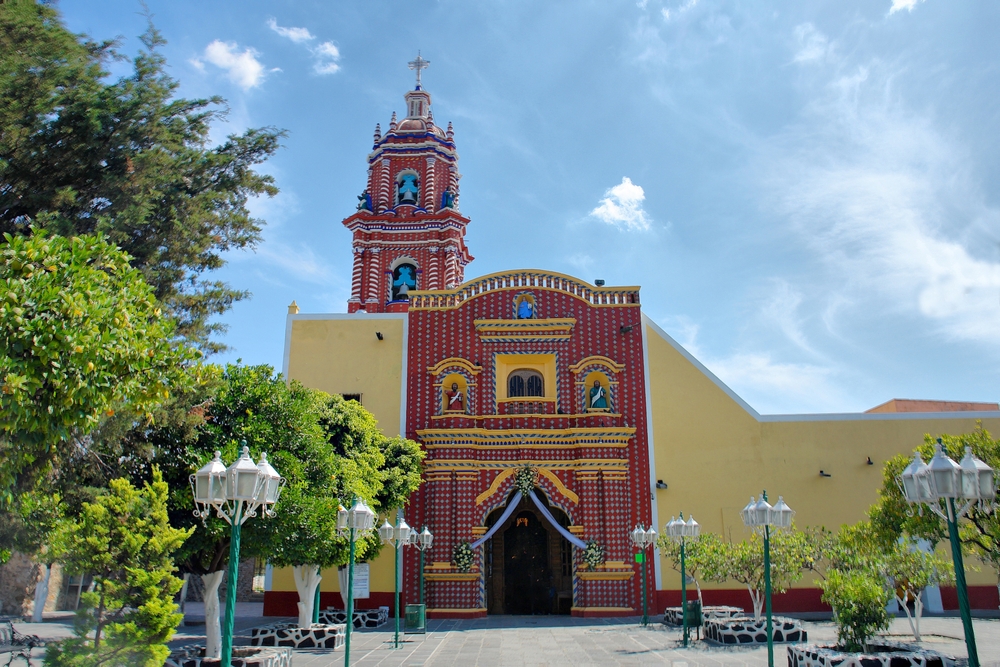
Temple de Santa María Tonantzintla
À San Andrés Tonantzintla, près de Cholula, ce temple baroque colonial cache un intérieur entièrement recouvert de stuc polychrome et de figures indigènes.
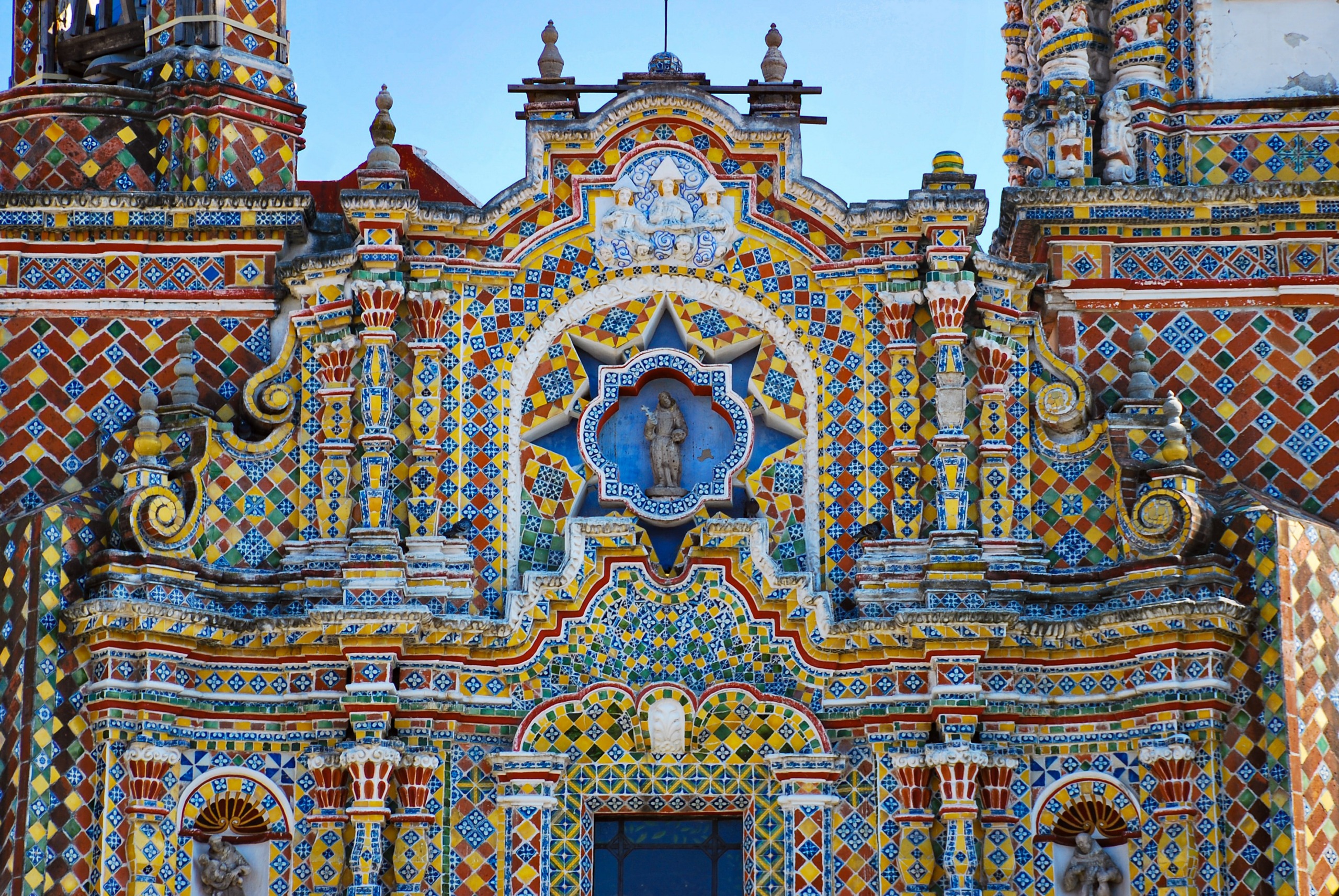
Iglesia de San Francisco Acatepec
À quelques kilomètres de Cholula, l'église San Francisco Acatepec étonne par sa façade entièrement couverte de carreaux de Talavera polychromes, chef-d'œuvre du baroque indigène du XVIIIe siècle.
Want to discover this destination?
Our local advisors design your tailor-made trip.