Cobá
Cobá
A sprawling Mayan city covering nearly 70 km² in the heart of the Yucatán, Cobá combines forest-shrouded ruins, a 42-meter pyramid and nearby cenotes.
Cobá is one of the major Mayan archaeological sites on the Yucatán Peninsula. Located in Quintana Roo State, inland between Tulum and Valladolid, the ancient city spreads across nearly 70 km² amid dense vegetation, and can be explored on foot, by bicycle or in a tricycle taxi. Its main appeal: a vast, shaded site still partially buried, complemented by several cenotes accessible nearby.
Why visit Cobá
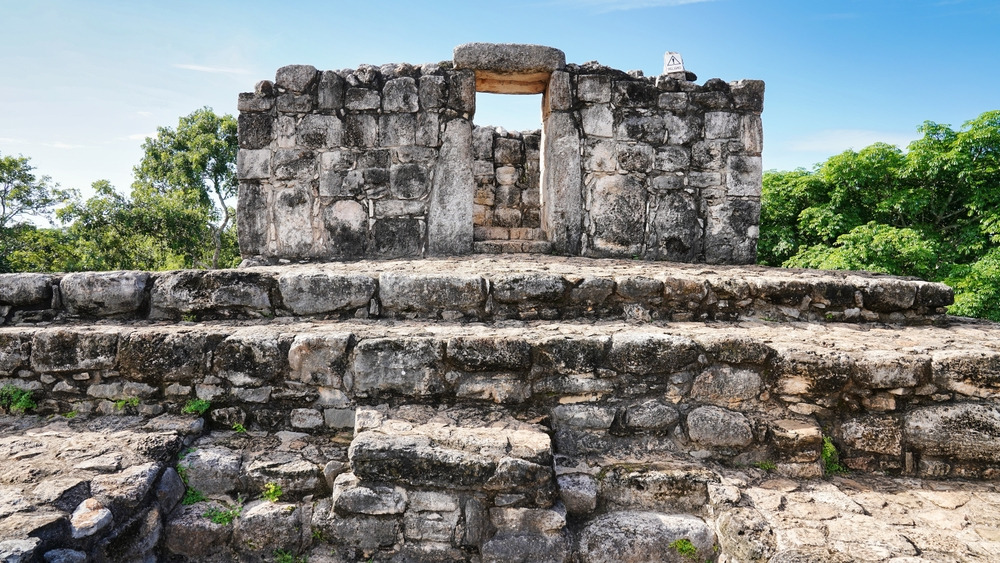
Cobá sets itself apart from the more heavily trafficked Mayan sites in the Yucatán through its scale and forest-like atmosphere. The site is home to Nohoch Mul pyramid, the peninsula's tallest at 42 meters, and over 6,000 documented structures, of which only a fraction has been uncovered. Unlike Chichén Itzá or Tulum, the grounds aren't a short, marked circuit: they extend several kilometers, with shaded trails connecting different archaeological complexes. Add to this three cenotes close to the site, which naturally extend your visit.
Cobá's history
Cobá was founded well before Chichén Itzá and Tulum, and held a central place in the region between the 9th and 11th centuries. Archaeologists estimate that roughly 40,000 inhabitants lived in the city, which sprawled across nearly 70 km². At the start of the post-classical period, control by the Itzaes led to gradual decline. The site then became a pilgrimage destination, before eventually being abandoned.
Long isolated from archaeological research due to its remoteness, Cobá underwent its first excavations led by Austrian archaeologist Teobert Maler in 1891. The site wasn't opened to the public until 1973. A large portion of the estimated 6,000 structures remains buried beneath vegetation today.
What to see on the site
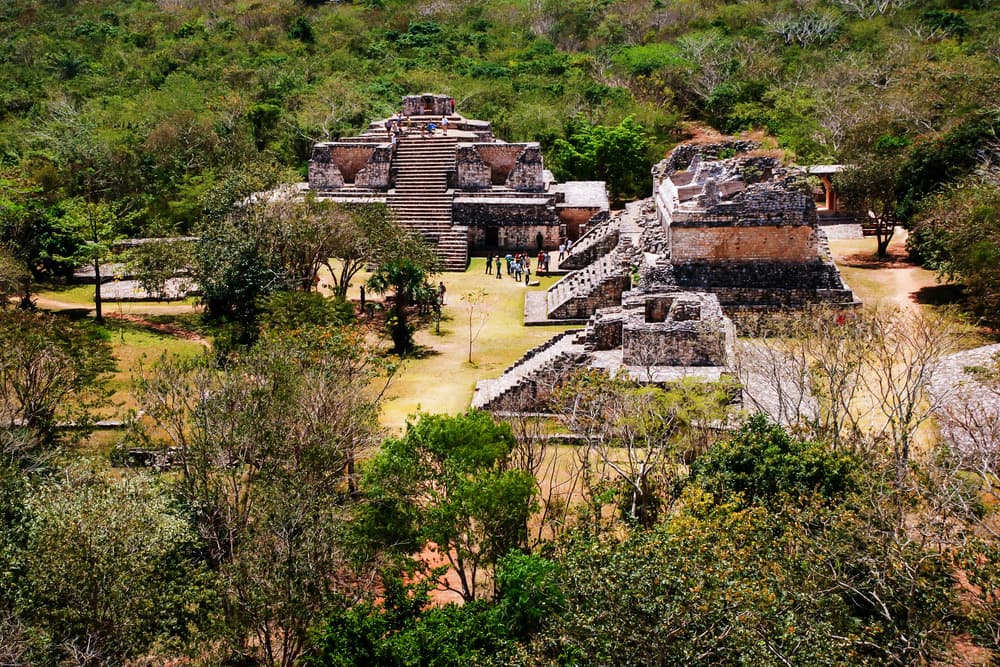
The grounds can be explored by following pathways that connect several archaeological complexes, sometimes separated by one to two kilometers.
- Nohoch Mul pyramid: 42 meters tall, the peninsula's highest pyramid. Under current regulations, climbing to the summit may or may not be permitted — check at the entrance.
- The ball court: recognizable by its elongated "I" shape, with stone rings fixed at height, testament to a ritual practice central to Mayan culture.
- The Temple group: notably featuring La Iglesia, one of the site's best-preserved structures.
- The Macanxoc group: set apart, this ceremonial complex brings together altars, temples and the Foliated Cross carved in relief.
- The Sacred Way (Sacbé): a stone road bordered by stelae that connects the different complexes and illustrates the city's internal organization.
Throughout your walk, you'll encounter carved stelae, altars and secondary structures linked to the inhabitants' daily and ritual life.
Nearby cenotes
Three cenotes located just minutes from the site extend your visit:
- Choo-Ha Cenote: shallow, suitable for family swimming in crystal-clear water.
- Tankach-Ha Cenote: equipped with jumping platforms at various heights.
- Multum-Ha Cenote: underground, deeper and generally quieter.
Practical information
Visiting the main complexes on foot takes 2 to 3 hours, depending on your pace and stops. Three visiting modes are available:
- On foot: the most flexible option, but requires walking several kilometers under the heat.
- By bicycle: rental available at the site entrance at a moderate rate. It's the most practical way to cover everything without tiring yourself out.
- By tricycle taxi: a local driver pedals while you sit as a passenger. More relaxing, and useful if traveling with children or during intense heat.
Bring water, sturdy shoes, a hat and sunscreen. A headlamp or flashlight is useful if you plan to visit Multum-Ha cenote.
When to visit Cobá
The dry season, from November to April, offers the most comfortable conditions, with less rainfall and more manageable humidity. The rainy season (May-October) brings lush vegetation, but also frequent afternoon showers and more mosquitoes.
Regardless of the month, it's best to arrive early in the morning, right at opening: the heat is more moderate, crowds are thinner, and light in the forest is more pleasant. Late afternoon is another option, but leaves less time to combine the site with cenotes.
How to get there
Cobá is located in Quintana Roo State, in a small village bearing the same name. The site is accessible from the main tourist towns along the Caribbean coast and inland Yucatán.
- From Tulum: approximately 45 minutes of driving inland. Colectivos regularly connect downtown to the site.
- From Playa del Carmen: allow approximately 1.5 hours of driving via Tulum.
- From Cancún: approximately 2 hours of driving along the coastal route then turning inland.
- From Valladolid: approximately 50 minutes of driving toward Chemax then Cobá.
Nearby
Several stops complement a day at Cobá nicely:
- Punta Laguna Reserve: roughly 15 minutes by car, spot spider monkeys in their natural habitat, canoe on the lagoon, forest trails and zip-lining or rappelling activities.
- Sanctuary of Mayan Customs at Sahcab Mucuy: to explore contemporary Mayan culture through traditional ceremonies and belief transmission.
- Valladolid: colonial town with authentic charm, departure point for other sites such as the San Bernardino de Siena convent.
- Cenotes in the region: the peninsula has hundreds, including Cenote Cocalitos.
Frequently asked questions
Frequently asked questions
Plan for 2 to 3 hours to explore the main complexes on foot. With a cenote stop, allow a half-day to a full day.
Access to the summit was long permitted, but regulations evolve depending on the period for conservation reasons. Check at the site entrance.
Early morning, right at opening, offers the most bearable temperatures and thin crowds. Late afternoon is an alternative, but leaves less time for cenotes.
It's the most practical option given the site's extent. On foot, walking in the heat can be grueling. The tricycle taxi is a comfortable alternative.
Yes, the experience is different: forest atmosphere, a vaster and less marked site, partially buried structures, and cenotes accessible nearby.
Plan your trip
Cobá fits naturally into a circuit through the Yucatán Peninsula, between the Caribbean coast and the inland interior. To prepare your itinerary, consult our complete Mexico guide and our custom travel suggestions.
Interested in this visit?
We can include it in your personalised itinerary.