Zócalo of Oaxaca (Plaza de la Constitución)
Zócalo of Oaxaca (Plaza de la Constitución)
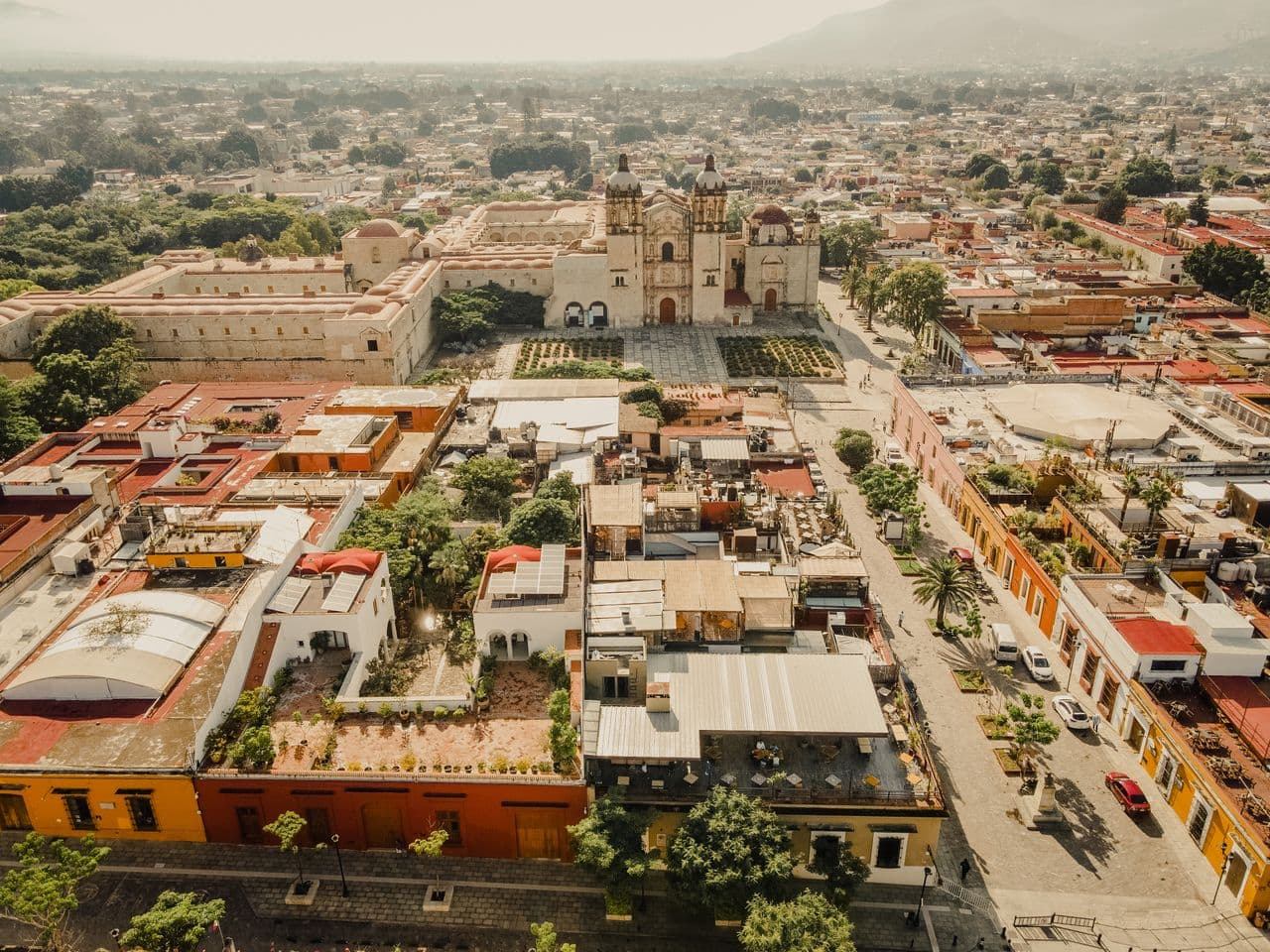
The Zócalo of Oaxaca de Juárez, the city's central plaza, concentrates the Baroque cathedral in green cantera stone, the Government Palace with its Zapotec frescoes, and the daily animation of a city listed as a UNESCO World Heritage site.
The Zócalo of Oaxaca is the central plaza of the city, framed by a Baroque cathedral, the Government Palace, and lively portales (arcades). The social heart since colonial times, it hosts informal markets, musicians, political demonstrations, and shaded terraces. It's the natural starting point for exploring the historic center, a UNESCO World Heritage site.
Practical information at a glance
- Access: public plaza, free access at all hours
- Suggested duration: 30 minutes to 1 hour for strolling; longer if attending an event
- Dress code: no restrictions on the plaza; modest attire required to enter the adjacent cathedral
- Accessibility: paved ground with minor irregularities; the portales (arcades) are level
- Transportation: historic center is pedestrian-friendly; numerous taxis and collectivos from the ADO bus terminal a few blocks away
What you'll see
The plaza is framed by four distinct elements. To the north, the Cathedral of Our Lady of the Assumption, with its Baroque façade in green cantera stone. To the east, the Government Palace and its murals tracing Zapotec history. The portales (arcades) house cafés and vendors of chapulines (grilled grasshoppers). At the center, an iron kiosk hosts concerts by the municipal band.
History and context
The plaza occupies the site of the pre-Hispanic city's ceremonial center. After the Spanish foundation of Antequera in 1529, it became the administrative and religious heart of the region. The grid layout imposed by colonizers still structures the historic center today. Oaxaca de Juárez has been a UNESCO World Heritage site since 1987, along with Monte Albán.
Highlights of your visit
The kiosk and concerts
Each evening, the municipal band plays beneath the iron kiosk. Residents settle onto benches, children run among balloon vendors. It's one of the few places where local life unfolds without theatrical staging.
The Government Palace frescoes
The interior staircase of the Palace is adorned with frescoes by Arturo García Bustos, a student of Diego Rivera. They illustrate Zapotec cosmogony, the Conquest, and the figure of Benito Juárez, a native of Oaxaca State. Entry is free.
The Cathedral of the Assumption
Begun in the 16th century and completed in the 18th, the cathedral displays a Churrigueresque façade in green cantera, a local volcanic stone. The austere interior contrasts with the ornamental richness outside.
The atmosphere of the portales
The arcades on the south and west sides concentrate the terraces. Here you negotiate the best angle to observe the plaza: a cup of café de olla in hand, watching the flow of tlayuda and Zapotec textile vendors.
Etiquette and visiting rules
- On the plaza: public space, no particular rules.
- In the cathedral: shoulders and knees covered, silence during services, photos permitted outside celebrations.
- In the Government Palace: free access to public areas; respect office opening hours.
Photography tips
Golden morning light (around 7–8 a.m.) illuminates the cathedral façade straight on. In the evening, the kiosk and portales' lighting create a warm atmosphere. Avoid midday: the plaza is backlit and crowded. The Palace frescoes photograph well with a wide-angle lens from the bottom of the staircase.
Location and access
The Zócalo lies at the heart of Oaxaca de Juárez's historic center, at the intersection of main axes. The ADO terminal (long-distance buses) is a few minutes' walk to the north. Most downtown sites are within walking distance of the plaza. The Temple of Santo Domingo is about five minutes' walk north via Macedonio Alcalá, the main pedestrian thoroughfare.
Nearby
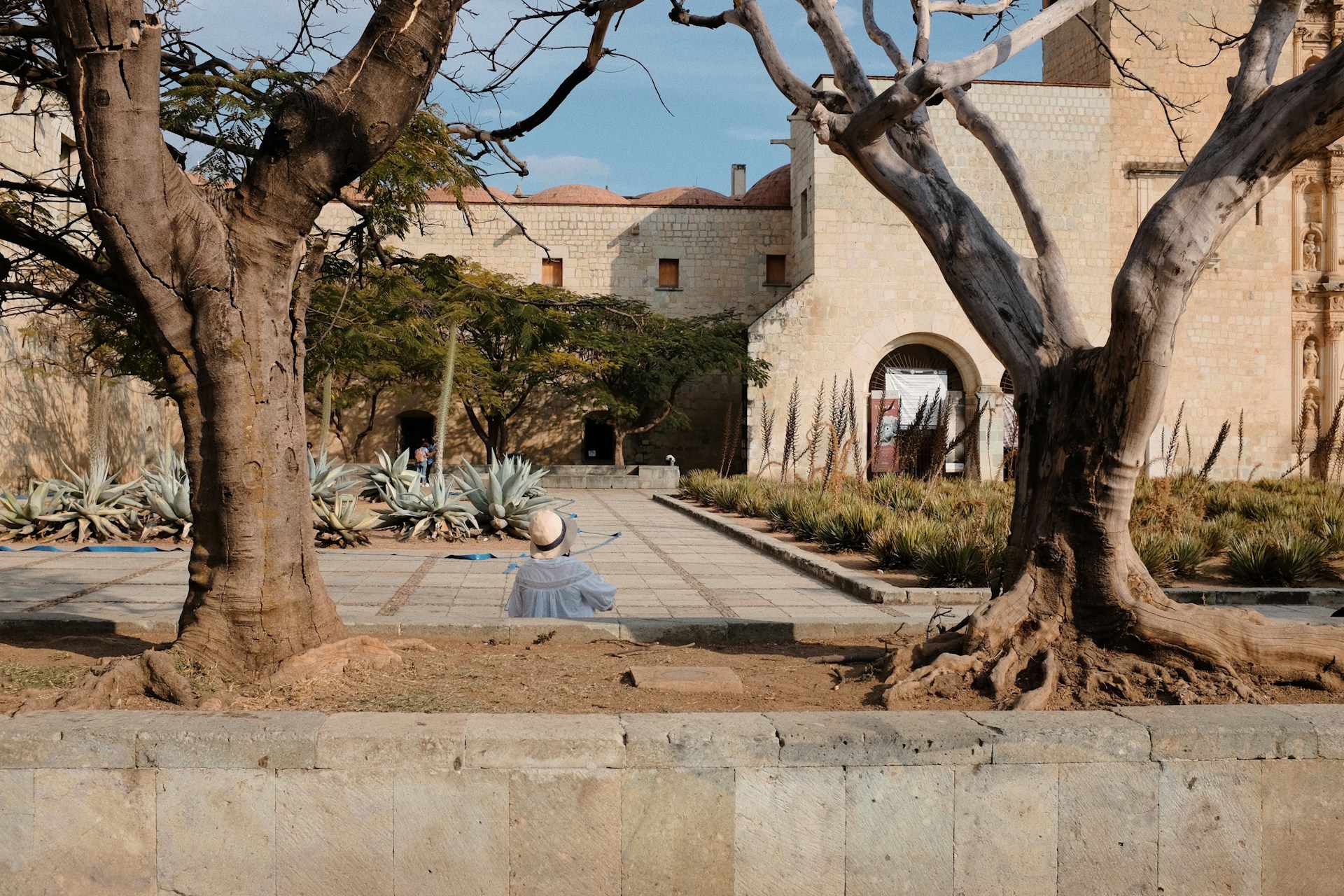
- Temple and former convent of Santo Domingo — 16th-century Baroque masterpiece, with the Museum of Oaxaca Cultures in the former convent.
- Benito Juárez Market — covered market one block from the Zócalo, ideal for tasting Oaxacan cuisine (mole negro, tasajo, mezcal).
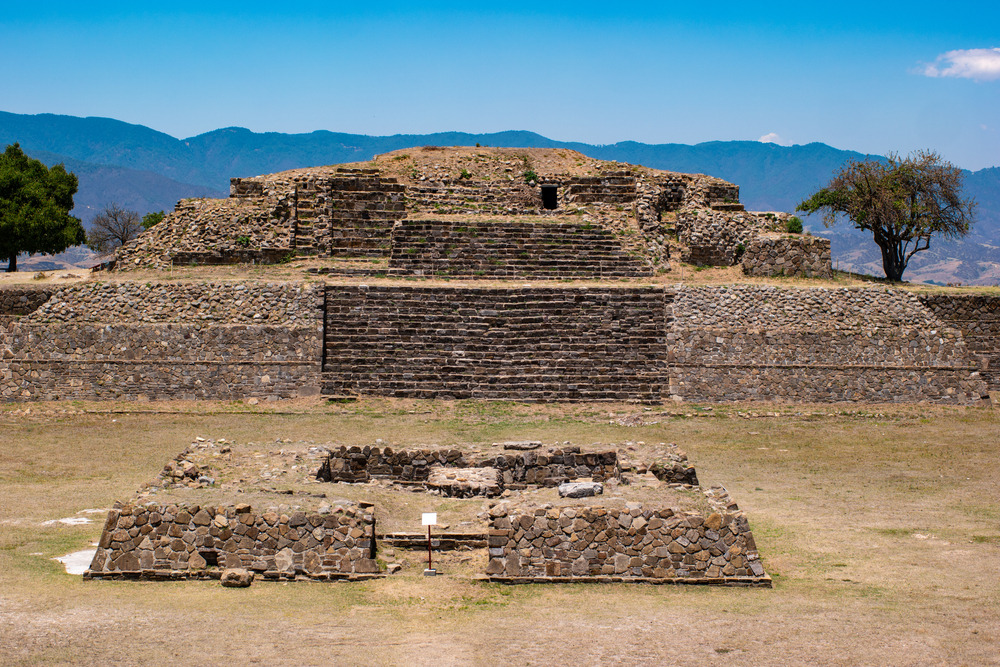
- Monte Albán — Zapotec archaeological site about ten kilometers away, accessible by collectivo or taxi from downtown.
- Rufino Tamayo Museum — pre-Hispanic collection assembled by the Oaxacan painter, two blocks from the Zócalo.
Frequently asked questions
The Zócalo is lively year-round. The Guelaguetza period (July) and the festivals of Noche de Rábanos (December 23) and Día de Muertos (late October–early November) offer particularly intense atmospheres. The dry season (November to April) is most pleasant for strolling.
Public areas, including the frescoed staircase, are freely accessible during business hours. Entry is free.
Start at the Zócalo in the morning, walk up Alcalá Street toward Santo Domingo, visit the Museum of Cultures, then return via Benito Juárez Market for lunch. Half a day is enough for this walking circuit.
Photos are generally tolerated outside religious celebrations. Turn off your flash and avoid photographing during Mass.
Several local agencies offer guided walking tours of the historic center departing from the Zócalo. Nomadays can connect you with English-speaking local guides.
Nearby
Interested in this visit?
We can include it in your personalised itinerary.