Ek Balam Site
Ek Balam Site
Just 30 minutes from Valladolid, Ek Balam is one of the rare Maya sites where you can still climb to the summit of a 31-meter pyramid adorned with stucco friezes.
About thirty minutes north of Valladolid, the Maya site of Ek Balam concentrates a dense history and structures among the best preserved on the Yucatán Peninsula across just a few hectares. Less visited than Chichén Itzá, it offers the distinctive privilege of allowing visitors to climb its Acropolis, where exceptionally fine stucco friezes have survived the centuries thanks to a deliberate burial by the inhabitants themselves.
Why Visit Ek Balam
Three factors make this site unique. First, the Acropolis is accessible: unlike many major Maya sites now closed to climbing, this 31-meter pyramid can still be scaled, offering sweeping views of the surrounding jungle. Second, the exceptional preservation of sculptures and stucco friezes in the royal chamber, rare testimonies to polychromatic Maya art. Finally, visitor numbers remain moderate: a few hours suffice to explore the entire site in far more serene conditions than at major Yucatán sites.
The site works particularly well for a half-day visit combined with the X'Canché cenote, located 1.5 km from the entrance and accessible on foot or by bike-taxi.
History of Ek Balam
In the Maya language of the Yucatán, Ek translates to "black" or "star," and Balam means "jaguar." The site's name thus renders as "black jaguar" or, in a more poetic reading, "star jaguar," possibly evoking a mythological figure linked to the sky.
The city's foundation dates back to around 300 BC, and its occupation continued until the arrival of Spanish conquistadors. At its height, Ek Balam extended over nearly 12 km² and formed a major religious, political, and economic center in northern Yucatán. Three great concentric walls surrounded the city, serving both defensive purposes and controlling access to its ceremonial heart. Five paved roads, the sacbeob, departed from the entrances oriented according to the four cardinal directions, illustrating Maya cosmology.
When modern excavations began, the Acropolis appeared only as a vegetation-covered mound. Archaeologists then formulated the hypothesis of intentional burial: the inhabitants themselves would have covered the building to protect it from a rival group about to attack the city. This act explains the remarkable state of the interior decorations.
In 1998, researchers identified an emblem glyph at the site previously unknown, deciphered as "Tohol." The first glyph of this type found on the Yucatán Peninsula, it attests to Ek Balam's royal status and regional political role.
What to See at the Site
The monumental heart organizes around two large plazas — the northern plaza and the southern plaza — connected to each other and to the rest of the site by the sacbeob.
The Maya Arch and Oval Palace
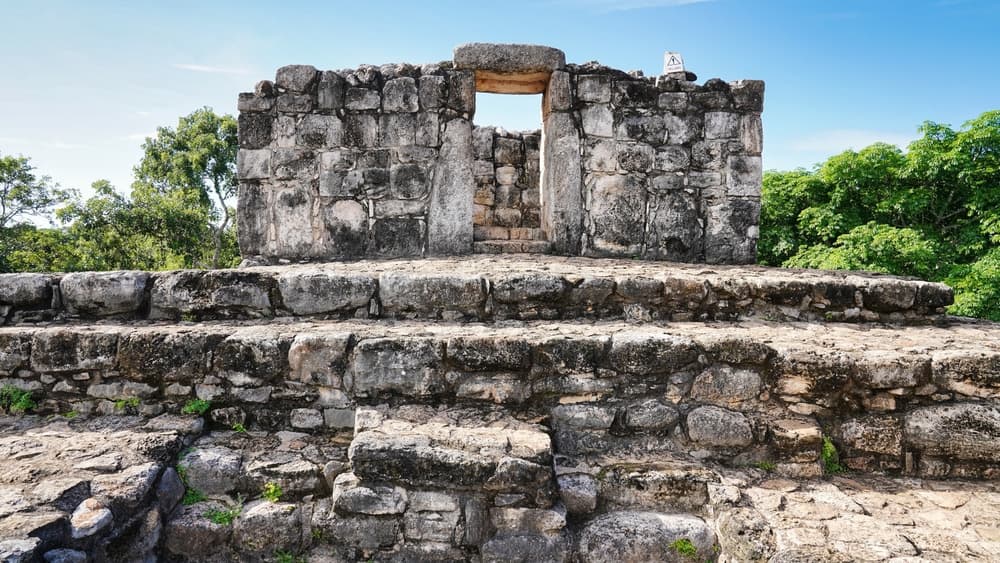
The Maya Arch marks the official entrance to the noble sector, once reserved for the elite. The Oval Palace, which can be climbed in a few minutes, serves as an initial landmark and provides good overall reading of the site.
The Acropolis
The site's centerpiece, the Acropolis measures 31 meters high and 160 meters wide. It harbors a labyrinth of rooms, corridors, and staircases spread across multiple levels, combining royal residential and ceremonial functions. Midway up, the entrance to a chamber is carved in the shape of a monster's mouth, representing a passage to the underworld (Xibalba).
Inside this chamber lies a stucco frieze of exceptional finesse, once painted in blue and red, with traces of pigment remaining visible. The Acropolis housed the principal discoveries about the city's sovereigns.
Structure 18
Located near the site's entrance, Structure 18 marks the end of sacbé #2 and likely served as the main access gate. Its particularity lies in its layout: two vaulted corridors forming a cross when viewed from above, a configuration without equal at Ek Balam.
The Ball Court
Composed of Structures 8 and 9, the ball court terrain lies between the two central plazas. Excavations uncovered a remarkable offering here: more than 90 ceramic vessels and a collection of burnt stone balls, testifying to ritual practices still partially understood.
Structure 17, or Twin Pyramids
Structure 17 designates two adjoining pyramids forming a double pyramid. Their function remains debated — ritual or funerary use — but their silhouette makes them among the most recognizable buildings after the Acropolis.
Practical Information
- Visit Duration: allow 1.5 to 2.5 hours on site, plus 1 additional hour if combined with X'Canché cenote.
- Hours: morning opening through late afternoon (verify current hours with INAH before departure).
- Fee: moderate entrance fee, payable on site. A surcharge may apply for cenote access.
- To Bring: closed-toe shoes for climbing the Acropolis, water, hat, sunscreen, and insect repellent. Little shade along most of the route.
When to Visit
The dry season, from November to April, offers the most comfortable conditions, with more bearable temperatures than summer and limited rain risk. From May to October, midday heat can be intense and tropical downpours are possible in the afternoon.
Regardless of season, arriving at opening is recommended: temperatures rise quickly and climbing the Acropolis is far easier in early morning. It's also the least crowded time slot.
How to Get There
Ek Balam is located approximately 30 minutes north of Valladolid by road, 1 hour 45 minutes from Tulum, and 2 hours 15 minutes to 2 hours 30 minutes from Playa del Carmen or Cancún.
By Car
The most flexible option. From Valladolid, follow Route 295 toward Temozón, then local signage. The route is toll-free, well-marked, and in good condition.
By Colectivo from Valladolid
Colectivos (shared minibuses) depart from the corner of Calle 44 and Calle 37 in Valladolid, under the sign "Colectivos ZA Ek-Balam." Departures occur once the minibus is full. Private charter is possible if you prefer not to wait. Fares are moderate in any case.
By Scooter or Organized Tour
Scooter rental in Valladolid is an economical alternative for a day excursion, with the route being short and easy. Many agencies in Valladolid, Tulum, or Cancún also offer guided tours combining Ek Balam with a cenote.
Nearby Attractions
- X'Canché Cenote: 1.5 km from the site entrance, accessible on foot, by bicycle, or bike-taxi. Swimming possible.
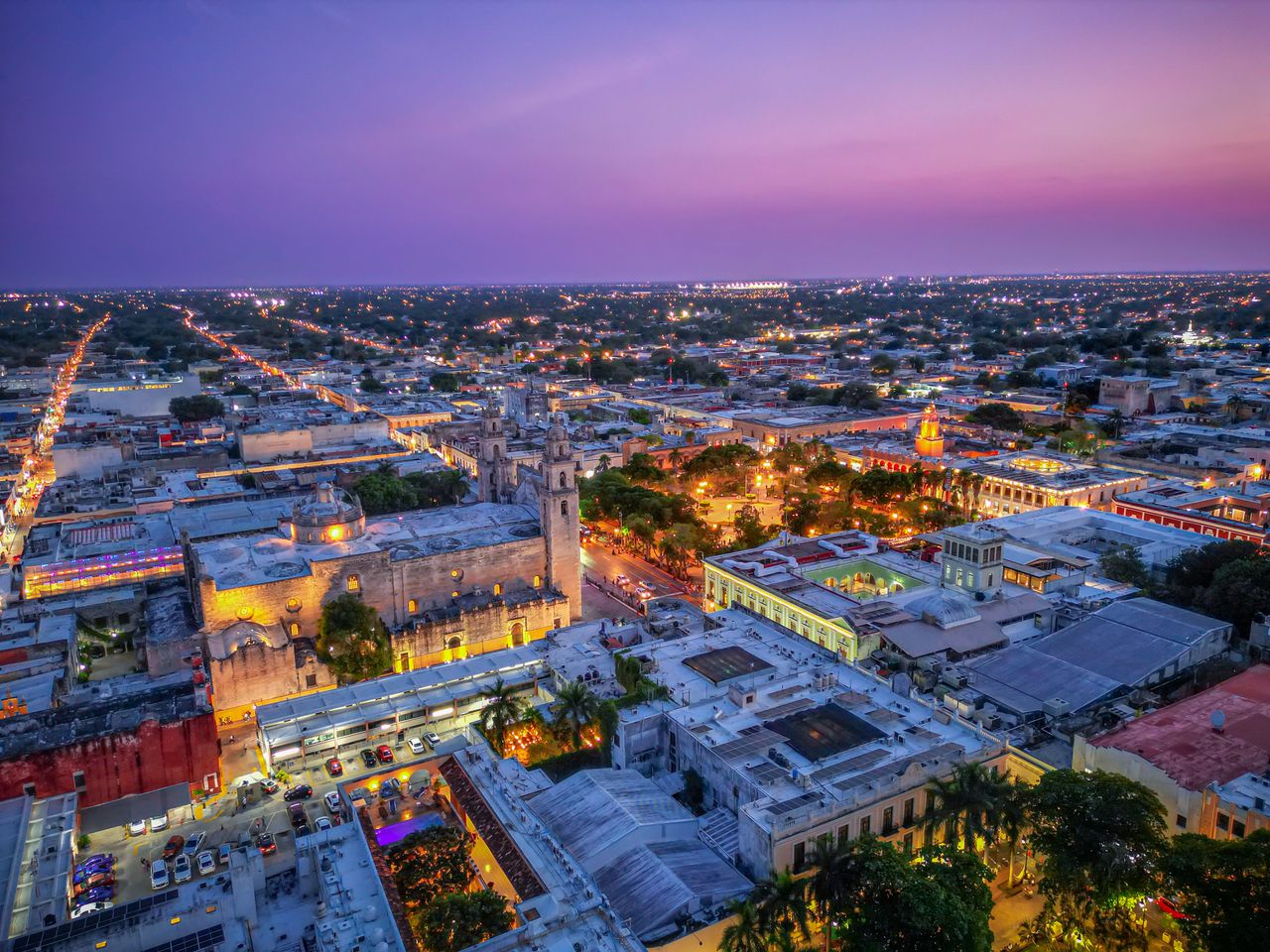
- Valladolid: colonial city with colorful streets, an ideal base for exploring. The Convent of San Bernardino de Siena is one of its major points of interest.
- Chichén Itzá: about 45 minutes away, complementary for understanding Maya urbanism at grand scale.
- To extend discovery of Mexican archaeological sites, Monte Albán, in Oaxaca State, offers another perspective on pre-Hispanic civilizations.
Frequently Asked Questions
Frequently asked questions
Yes, climbing the Acropolis is one of the site's distinctive features. The stairway is steep; closed-toe shoes and good hydration are recommended.
Allow 1.5 to 2.5 hours for the archaeological site alone, and approximately one additional hour if extending to the X'Canché cenote located in immediate proximity.
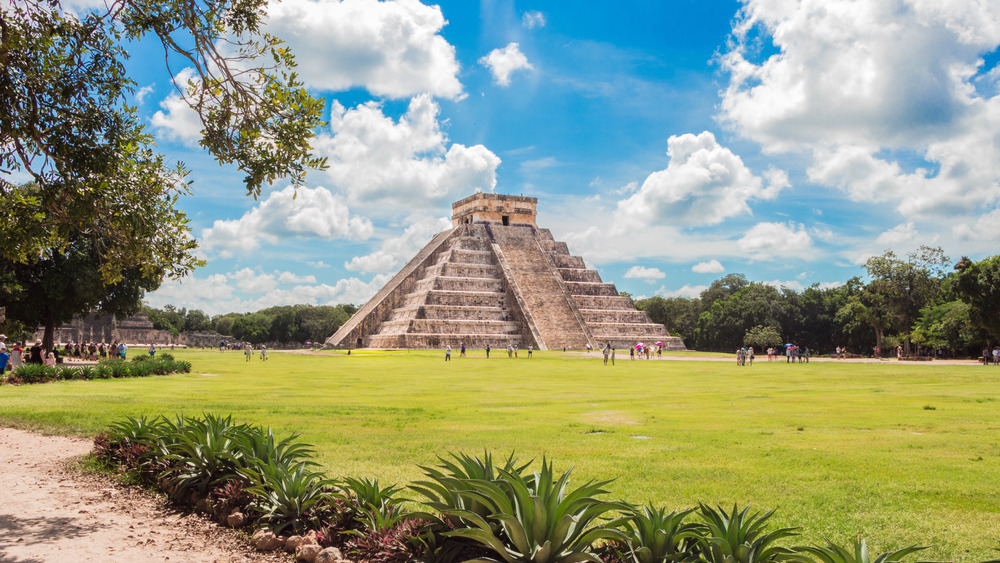
Both sites are complementary. Chichén Itzá impresses with its scale and renown, but its pyramids can no longer be climbed. Ek Balam is more modest but allows a more immersive approach with Acropolis climbing and nearby visible stucco friezes.
From Valladolid, colectivos depart from the Calle 44 / Calle 37 corner. Organized tours from Valladolid, Tulum, or Cancún also feature Ek Balam, often combined with a cenote.
From November to April, during the dry season, with an early morning arrival to avoid heat and crowds.
Extend the Experience
Ek Balam naturally integrates into a circuit through the Yucatán, between Maya cities, cenotes, and colonial towns. To plan your itinerary, consult our Mexico travel suggestions.
Interested in this visit?
We can include it in your personalised itinerary.