El Castillo
El Castillo
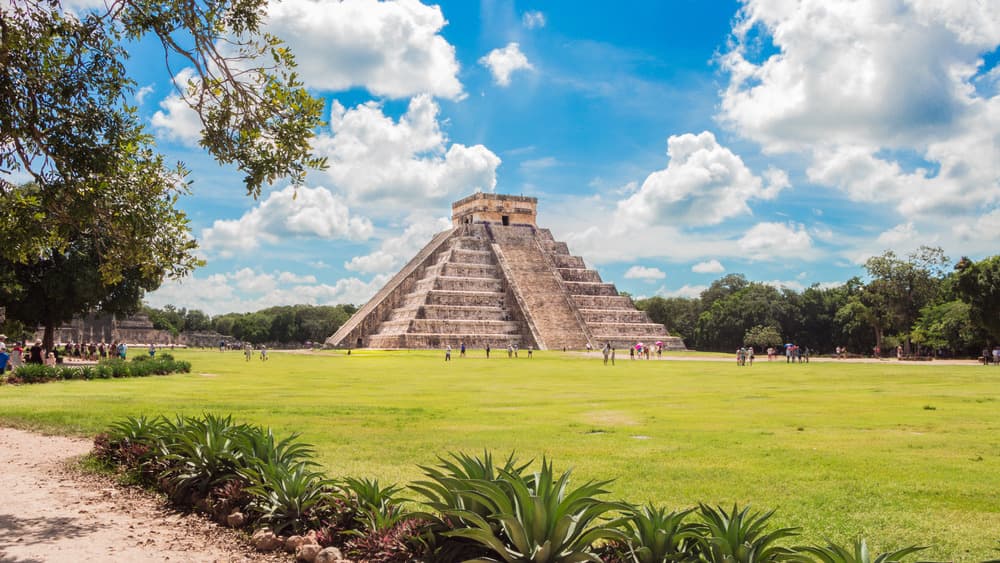
El Castillo, pyramid of Kukulcán at the heart of Chichén Itzá: 365 steps aligned with the Mayan calendar, shadow serpent at the equinoxes and the quetzal's echo.
In the heart of the Yucatán, El Castillo stands amid the ruins of Chichén Itzá. This Mayan temple-pyramid combines architecture, religion and astronomy with a coherence that has fascinated researchers for over a century. Also known as the Temple of Kukulcán, it has become the visual symbol of post-classic Mayan civilization.
Why visit El Castillo
El Castillo concentrates multiple layers of meaning in a single monument: architectural, mythological, astronomical and acoustic. The pyramid was designed as a stone calendar, its 365 steps echoing the Mayan solar year. At the equinoxes, the play of shadows on the northwest staircase recreates the image of a serpent descending the pyramid, a staging attributed to ritual intention. To these peculiarities is added an acoustic effect studied by researchers since 1998: a hand clap in front of the staircase produces an echo close to the cry of the quetzal, a sacred bird in Mayan culture.
The monument is part of the Chichén Itzá archaeological zone, listed as a UNESCO World Heritage Site and among the New Seven Wonders of the World.
History and religious significance
Mayan civilization built El Castillo between the 8th and 12th centuries after Christ. The temple was dedicated to Kukulcán, the feathered serpent of Yucatecan Mayan mythology. This deity is closely linked to Quetzalcóatl, revered by the Aztecs and other Mesoamerican cultures of the post-classic period.
As with other Mayan monuments, the builders superimposed several construction stages. The substructure probably dates back to a period between 600 and 800 after Christ. The temple visible today was likely erected between 900 and 1000, perhaps in the early 11th century.
Archaeological research shows that the entire structure rests on the concept of axis mundi, a symbolic point that connects the celestial, terrestrial and subterranean worlds. The site retained its sacred character, regardless of which structure stood there. With each new construction, the Maya destroyed the old one according to a precise ritual, in order to restore the spiritual balance of the place.
In the 1930s, restoration teams cut an entrance into the balustrade of the northeast staircase. This opening allowed archaeologists to reach the inner temple. Access, long permitted to visitors during the 20th century, is now closed for conservation reasons.
What to see on site
Exterior architecture
Designated by archaeologists as structure 5B18, the step pyramid visible today rests on an earlier, entirely covered construction. The inner temple, uncovered during excavations, stands 16 meters tall.
- Height of the visible pyramid: 24 meters, plus 6 meters for the temple at the summit.
- Square base of 55.3 meters per side.
- Four monumental staircases, oriented according to the cardinal directions.
- Each staircase has approximately 91 steps, totaling 365 with the upper platform: a direct echo of the Haab solar calendar.
The summit and sculptural details
The entrance to the upper temple is framed by two columns sculpted as serpents with open jaws. Above, a mask of the god Chaac, deity of rain, surmounts the lintel. The whole structure rests on two square pillars adorned with bas-reliefs. As you approach the northern staircase, you'll notice the feathered serpents adorning the balustrades.
Astronomical and acoustic phenomena
At the equinoxes, in late afternoon, the sun casts a series of triangular shadows along the northwest staircase. This interplay of light creates the illusion of an undulating serpent appearing to descend the pyramid. The phenomenon remains visible for several days before and after the equinoxes.
Another peculiarity: if you clap your hands in front of the staircase, the sound echoes off the steps and produces an echo resembling the cry of the quetzal. Studies conducted since 1998 suggest that this acoustic effect is not accidental. It is linked to the narrow, inclined shape of the steps, which alters the frequency of the reflected sound.
When to visit
The dry season, from November to April, offers the most comfortable visiting conditions, with manageable heat and little rain. The months of May to October are hotter and more humid, with a risk of evening showers.
Two dates draw significant crowds: the spring equinox (around March 20) and the autumn equinox (around September 22), when the shadow serpent phenomenon is most pronounced. If you wish to observe this effect, plan to arrive early; the site is crowded these days. For a more peaceful visit, target the days surrounding the equinox, when the phenomenon remains visible with fewer people.
Practical information
- Visit duration: allow 2 to 3 hours to explore El Castillo and the rest of the Chichén Itzá archaeological site (Temple of the Warriors, Sacred Cenote, Ball Court).
- Entrance fee: paid admission with two components (federal tax and Yucatán State tax). Moderate pricing for foreign visitors.
- Hours: open from morning until late afternoon, daily.
- Pyramid access: climbing the staircases has been prohibited since 2006 to preserve the monument. Visits are conducted from ground level only.
- What to bring: hat, sunscreen, water, closed-toe shoes. Shade is scarce on the central esplanade.
How to get there
Chichén Itzá is located in the State of Yucatán, approximately two hours from Cancún or Mérida by car. Several options are available:
- From Mérida: approximately 1.5 hours via the 180D highway. Daily ADO bus connections.
- From Cancún or Playa del Carmen: 2 to 2.5 hours of driving depending on your starting point. ADO buses and organized tours available.
- From Valladolid: the nearest town, just 45 minutes away. It's a convenient base to arrive early at the site and avoid tour bus crowds.
What to see nearby
The Yucatán Peninsula and southern Mexico are rich in Mayan and colonial sites that complement a visit to Chichén Itzá:
- The San Bernardino de Siena convent in Valladolid, an example of 16th-century colonial architecture.
- The San Felipe de Bacalar fort, several hours to the south, on the Seven-Color Lagoon.
- The Monte Albán site, in Oaxaca State, another major hub of Mesoamerican archaeology.
Frequently asked questions
Frequently asked questions
No. Climbing has been prohibited since 2006 to preserve the structure and ensure visitor safety. The pyramid can only be viewed from ground level.
It occurs around the equinoxes, around March 20-21 and September 22-23, in late afternoon. The effect remains visible for several days before and after these dates.
Plan 2 to 3 hours to explore the entire archaeological site, including El Castillo, the Temple of the Warriors, the Ball Court and the Sacred Cenote.
Valladolid, 45 minutes from the site, is the most convenient option for arriving early. Mérida (1.5 hours) offers more tourist infrastructure. Cancún is feasible as a day trip but involves 5 hours of round-trip driving.
Studies conducted since 1998 by acousticians suggest it is: the narrow, inclined shape of the steps alters the frequency of the reflected sound, producing an echo close to the cry of this sacred bird in Mayan culture.
Plan your trip
El Castillo naturally fits into an itinerary in the Yucatán Peninsula, between Mayan sites, colonial towns and cenotes. To build an itinerary suited to your pace, consult our journeys to Mexico.
Interested in this visit?
We can include it in your personalised itinerary.