Fort of San Felipe de Bacalar
Fort of San Felipe de Bacalar
An 18th-century colonial fortress in the heart of Bacalar, the Fort of San Felipe houses the Piracy Museum and dominates the lagoon.
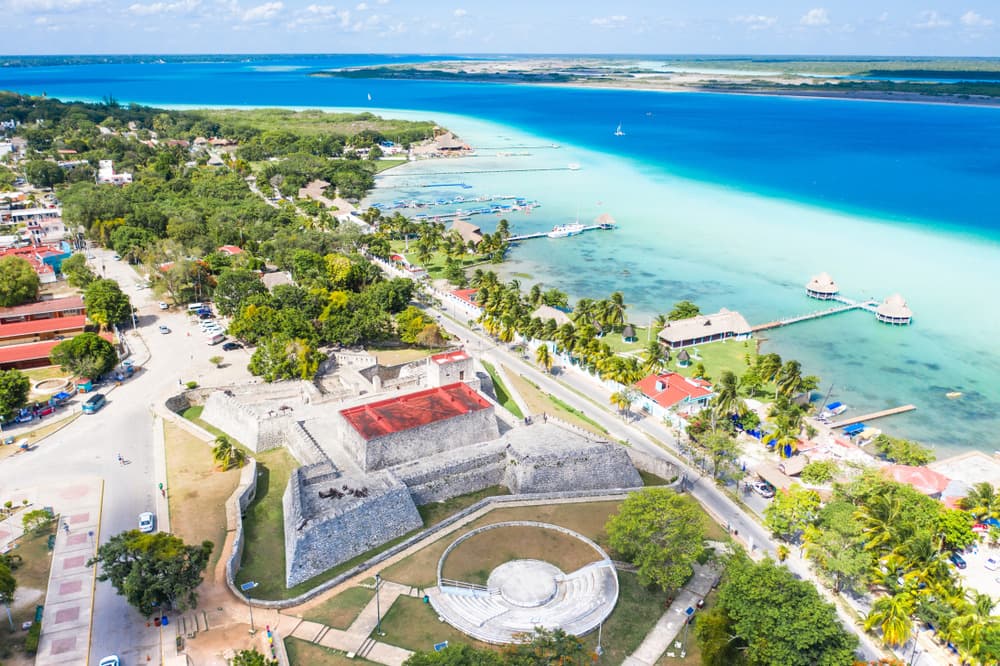
The Fort of San Felipe de Bacalar stands at the center of the city, just steps from the lagoon. This 18th-century stone fortress now houses the Piracy Museum and is the main historical site in Bacalar. A visit sheds light on the strategic role this frontier region played between the Spanish empire, the Mayas, and the English established in neighboring Belize.
Why visit the Fort of San Felipe
The fort offers a tangible understanding of colonial history in southern Yucatán. The visit takes one to two hours and reveals why Bacalar, long a simple outpost, found itself at the center of rivalries between European powers and Maya populations. The ramparts offer unobstructed views of the lagoon and represent one of the few fortified structures of this scale on the peninsula.
History of the fort
In the 18th century, Bacalar occupied a strategic territory rich in logwood, a resource prized for textile dyeing. The English, established in neighboring Belize, repeatedly raided to seize it. Facing this threat, viceroy Juan de Acuña launched a fortification project. In 1725, the governor of Yucatán, Antonio de Figueroa y Silva, ordered the construction of a fort to protect the city.
The project was entrusted to Juan Podio, a captain of Italian origin. He designed a complete complex: soldier barracks, warehouse, chapel, and command post. In 1733, the fort was enlarged. In 1754, new work began under engineer Juan de Dios González Dávila to adapt the structure for artillery use. These improvements continued until 1770.
The fort played an important role during the Anglo-Spanish war of 1779, serving as a base to organize the offensive on Cayo Cocina in Belize. In 1796, engineer Rafael Llobet, known for his work in Campeche and the San Benito citadel, added the moat and drawbridge.
In 1858, during the Caste War, the fort was briefly occupied by Maya insurgents Cruzo'ob. It was subsequently abandoned and gradually fell into ruin. In 1965, a museum was installed in one of the bastions. After extensive renovations, the Piracy Museum opened in 1983.
What to see on site
The Piracy Museum
The museum narrative traces the fort's history and regional issues during the colonial era. Panels explain the Spanish trade routes that connected Yucatán to the rest of the empire, as far as Guam in the Pacific. Display cases of objects related to piracy, antique maps, and reconstructions complete the experience.
The bone displays
Several display cases exhibit genuine human bones, remains found on site and direct witnesses to the confrontations that took place there.
The ramparts and bastions
A tour of the ramparts allows you to observe the moat, drawbridge, and corner bastions. From the upper promenade, the view extends across the lagoon and the center of Bacalar.
Practical information
- Visit duration: allow 1 to 2 hours for the museum and rampart tour.
- Entrance fee: moderate price, free admission possible on certain days for Mexican residents.
- Hours: open during daytime from Tuesday to Sunday, closed Mondays (verify locally before visiting).
- Language: panels in Spanish, some English translations.
How to get there
The fort is located on Bacalar's central plaza, at the corner of the main street and the avenue along the lagoon. From any accommodation in the center, access is on foot in just minutes. Bacalar is reached by bus from Chetumal (approximately 40 minutes) or from Tulum (3 to 4 hours). The nearest international airport is Chetumal.
When to visit
The dry season, from November to April, offers the most pleasant conditions: comfortable temperatures, low humidity, and clear skies for views from the ramparts. The rainy season, from June to October, brings often short but intense showers and coincides with the cyclone season. To avoid the heat, prefer visiting in early morning or late afternoon.
What to see nearby
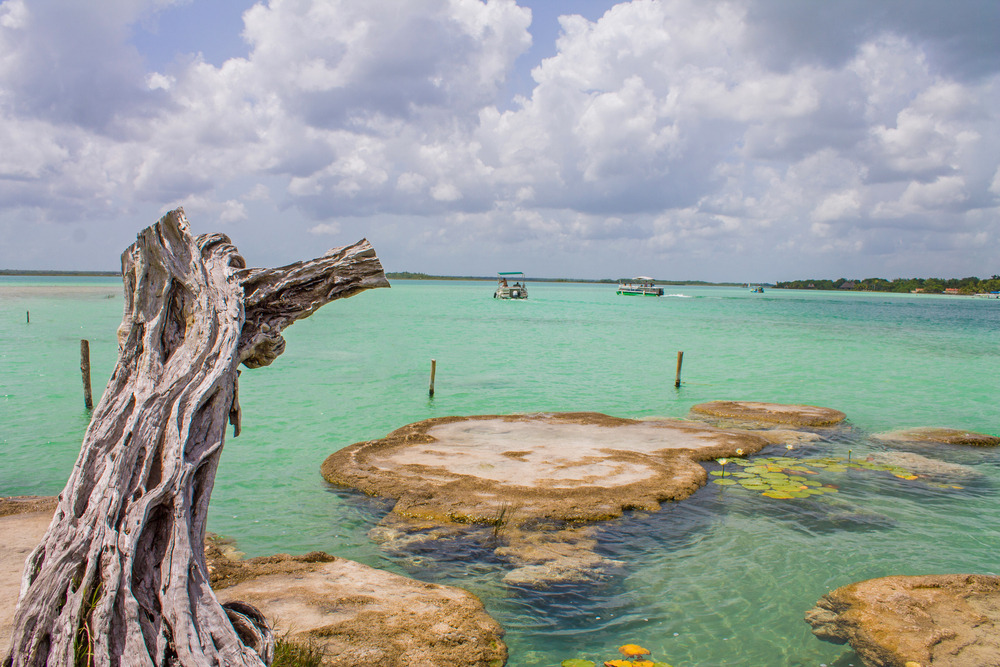
- The Bacalar Lagoon and its cenotes, accessible directly from the city center for swimming or a boat trip.
- The Convent of San Bernardino de Siena in Valladolid, another testament to Yucatán's colonial architecture.
- The Puerto Morelos Reef National Park, a natural complement on the Caribbean coast.
Frequently asked questions
Frequently asked questions
Plan your trip
The Fort of San Felipe naturally fits into an itinerary combining colonial history, Maya sites, and lagoons of southern Yucatán. To build a custom stay including Bacalar and its surroundings, consult our Mexique travel suggestions.
Interested in this visit?
We can include it in your personalised itinerary.