Los Rápidos de Bacalar
A few kilometers north of Bacalar, Los Rápidos is a natural channel where the turquoise waters of Bacalar Lagoon flow with enough force to carry swimmers, set within the unspoiled landscape of Quintana Roo.
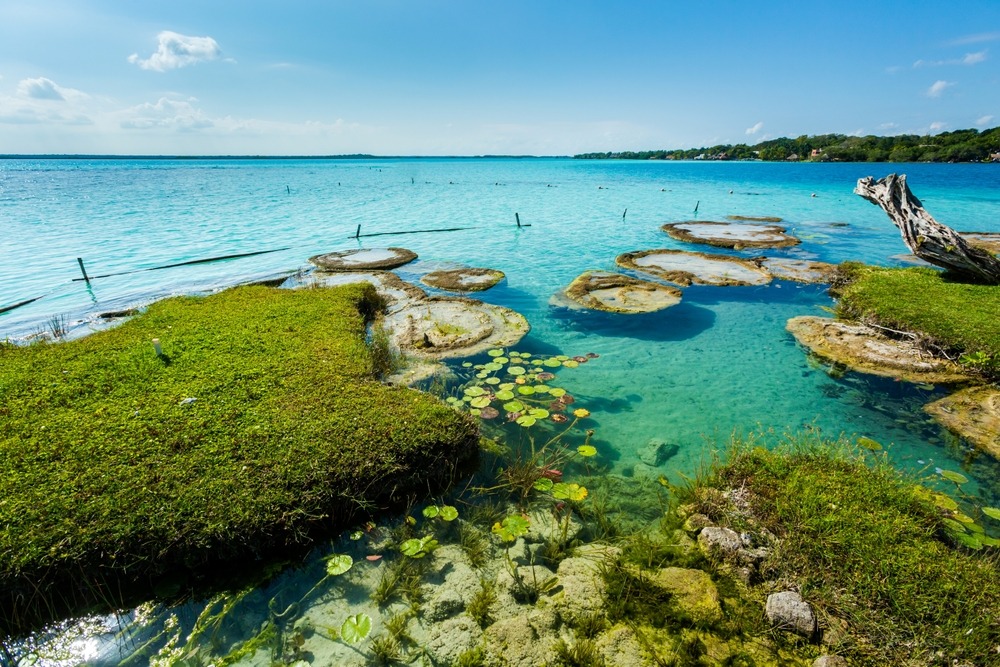
A few kilometers north of the town of Bacalar, in Quintana Roo State, Los Rápidos is a natural waterway where the waters of Bacalar Lagoon flow between two banks through a shallow channel. The current is strong enough to carry swimmers effortlessly, in water of a clarity and turquoise hue characteristic of this seven-colored lagoon. It's one of the rare places in Mexico where you can drift along a freshwater current in the heart of nature.
Quick Facts
- Access: by car or taxi from Bacalar (Federal Highway 307 heading north); collectivo vans also service this route.
- Suggested duration: 1 to 2 hours on site.
- What to bring: swimsuit essential; wear sandals for walking on the banks.
- Sunscreen: use only biodegradable sunscreen to protect the lagoon ecosystem.
What You'll See
The site consists of a natural channel about twenty meters wide where water flows between two forested banks. The bottom is visible at all times: stromatolites, algae, and white sand create a minimalist underwater landscape. Mangroves line the banks. The water's transparency allows you to observe aquatic life — small fish, occasionally turtles — without special equipment.
History and Context
Bacalar Lagoon is fed by a network of cenotes and underground springs that maintain exceptionally pure freshwater. Los Rápidos owes its current to the water level difference between two sections of the lagoon, a stable natural phenomenon that has always attracted the region's inhabitants. The site remained largely undiscovered until it gained popularity with Bacalar's tourism boom in the 2010s.
Highlights of Your Visit
Drifting with the Current
The main activity is entering the water upstream and letting the current carry you about fifty meters downstream. The water is cool, the bottom shallow. Most visitors repeat the circuit several times, walking back up the bank.
Observing Stromatolites
The channel bottom is home to stromatolites, rock structures formed by microorganisms among the oldest on the planet. They're visible to the naked eye from the surface. It's essential not to walk on them or touch them.
Light on the Lagoon
Late morning light reveals the different shades of blue and green in the water. The forested banks create a natural setting without heavy infrastructure, which sets Los Rápidos apart from more developed sites in the region.
Photography Tips
Light is optimal between 9 a.m. and 11 a.m., before the sun reaches its zenith. From the bank, a slightly elevated angle captures the water's color variations. A waterproof camera or waterproof case is useful for photographing beneath the surface. Avoid peak hours (midday on weekends) for crowd-free images.
Location and Access
Los Rápidos sits on Federal Highway 307, north of Bacalar town. From central Bacalar, allow about 10 to 15 minutes by car. Collectivo vans linking Bacalar to Chetumal or Felipe Carrillo Puerto stop nearby on request. The site is accessible on foot from the road; the terrain is flat but the banks can be slippery.
Nearby
- Bacalar Lagoon — the seven-colored body of water of which Los Rápidos is an integral part.
- Fort San Felipe de Bacalar — an 18th-century colonial fortress in the heart of the town, with a museum on the region's history.
- Cenote Azul — one of Mexico's largest open cenotes, a few kilometers south of Bacalar.
Frequently asked questions
The dry season, November through April, offers the most pleasant conditions: clear water, clear skies, and less rain. During the rainy season (June to October), visibility may be reduced and the banks more slippery.
The channel is shallow in most places, but the current is real. Comfort in open water is recommended. Children should be supervised at all times.
Yes. Los Rápidos pairs easily with Cenote Azul and a boat tour on the lagoon. Plan a full day to visit all three sites without rushing.
No known restrictions on photography. A waterproof camera is recommended to capture stromatolites and aquatic life from the surface or underwater.
Only biodegradable sunscreen, without oxybenzone or octinoxate. These substances are banned at many natural sites in Quintana Roo to protect aquatic ecosystems.
Interested in this visit?
We can include it in your personalised itinerary.