Puerto Escondido
Puerto Escondido
Puerto Escondido, on Oaxaca's Pacific coast, blends wild beaches, world-renowned surf at Zicatela, sheltered coves and Oaxacan flavors. An authentic and diverse coastal destination.
Puerto Escondido is a coastal town in Oaxaca State, on Mexico's Pacific coast. Once a humble fishing village turned world-famous surf destination, it combines wild beaches, powerful waves and laid-back atmosphere. The historic center remains modest, but the diversity of its beaches — from family-friendly shores to world-class waves — makes it a hub for exploring the Oaxacan coast.
Practical information at a glance
- Access: local airport (PXM) with flights from Mexico City and Oaxaca; long-distance buses from Oaxaca (mountain road, approximately 7–8 hours) or from Mexico City.
- Best time to visit: November to April (dry season, calmer seas on certain beaches); experienced surfers aim for May to October for large swells.
- Recommended duration: 3 to 5 days minimum to explore several beaches and surroundings.
- Currency: Mexican peso; ATMs available in town, limited card payments at small establishments.
- Language: Spanish; English spoken in tourist areas.
What to see
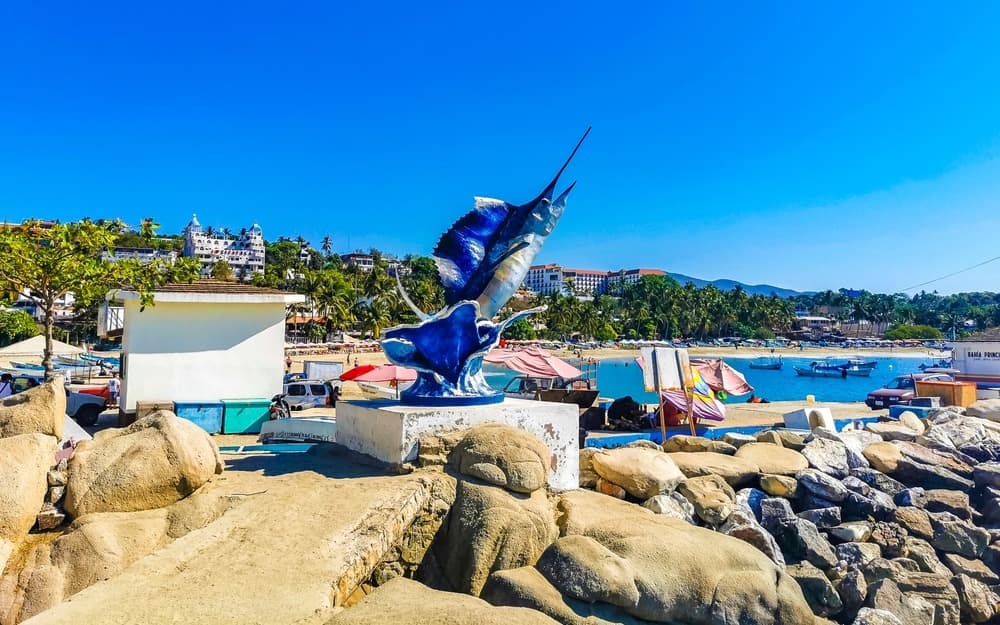
Puerto Escondido revolves around several distinct beaches. Playa Zicatela is the heart of the surf scene: its tubular waves, known as the "Mexican Pipeline," attract surfers from around the world. Playa Principal and Playa Marinero, more sheltered, suit swimmers. Playa Carrizalillo, accessible by stairs, offers turquoise waters in a protected cove.
The Malecón and Adoquín neighborhood form the lively center: fish restaurants, bars, craft shops. The local market lets you taste Oaxacan specialties — tlayudas, memelas, mezcal.
History and context
Puerto Escondido — "hidden port" — owes its name to the natural configuration of its bay, which made it barely visible from the open sea. Long a simple coffee export port, the town transformed from the 1970s onward when surfers discovered Zicatela. Tourism gradually replaced fishing as the main activity, without entirely erasing its coastal village character.
Highlights of your visit
Playa Zicatela and surfing
Zicatela's wave is one of the Pacific's most powerful. Swimming there is dangerous for the uninitiated, but watching surfers from the beach or café terraces is a spectacle in itself. International competitions are held there regularly.
Playa Carrizalillo
This deep cove, accessible by a hundred or so steps, offers calm, clear water. Ideal for snorkeling and family swimming. A few fin and mask rental operators are on site.
Manialtepec Lagoon
About twenty kilometers to the west, this mangrove-ringed lagoon is known for its nighttime bioluminescence phenomenon. Boat excursions are organized from Puerto Escondido, particularly during the dry season.
Market and Oaxacan cuisine
Local cuisine blends fresh seafood with Oaxacan traditions: ceviche, pescado a la talla (spicy grilled fish), tlayudas. Artisanal mezcal from Oaxaca region is omnipresent in Malecón bars.
Photography tips
- Zicatela: golden light in late afternoon to photograph waves and surfers; a telephoto lens lets you capture tubes from the beach.
- Carrizalillo: best light in the morning, before the cove gets crowded.
- Sunset: Marinero beach and the Malecón offer an open horizon to the west.
- Bioluminescence: no flash — only long exposure works; bring a tripod.
Location and access
Puerto Escondido sits on the Pacific coast of Oaxaca State, about 250 km south of Oaxaca City by road. The airport (PXM) receives direct flights from Mexico City and Oaxaca. By bus, several companies connect the town to Oaxaca and Mexico City, with long journeys but scenic routes.
In town, shared taxis (colectivos) and individual taxis are the main way to get between beaches. Scooter rental is common for visitors wanting to explore independently.
Nearby attractions
- Manialtepec Lagoon — mangroves and nighttime bioluminescence about twenty kilometers to the west.
- Mazunte — alternative village on the coast, known for sea turtle protection and natural cosmetics cooperatives.
- Zipolite — long, wild beach, bohemian atmosphere, one of Mexico's few official clothing-optional beaches.
- San José del Pacífico — mountain village on the road to Oaxaca, known for its cloud-shrouded landscapes and traditional hallucinogenic mushrooms.
- Oaxaca (city) — cultural capital of the state, about 7–8 hours' drive away, with markets, colonial architecture and renowned cuisine.
Frequently asked questions
Zicatela is reserved for experienced surfers. Currents are very powerful and swimming is not recommended for non-surfers. For swimming, prefer Carrizalillo or Playa Principal, which are more sheltered.
The dry season (November–April) brings less rain and more accessible seas for non-surfers. Experienced surfers prefer May–October for Pacific swells, but tropical rains are frequent then.
By plane (short flight from Oaxaca airport), long-distance bus (7–8 hours on the mountain road), or shared van. The road is winding; pack motion sickness medication if needed.
Yes, provided you choose a moonless night and visit during the dry season, when the phenomenon is most visible. Book through a reputable local agency; tour quality varies.
Yes, as long as you choose the right beaches. Carrizalillo and Playa Principal suit children. Zicatela should be avoided for family swimming due to its dangerous waves and currents.
Easily. Zipolite, Mazunte and Huatulco are accessible by bus or colectivo from Puerto Escondido. A multi-day route along the coast is a popular option.
Want to discover this destination?
Our local advisors design your tailor-made trip.