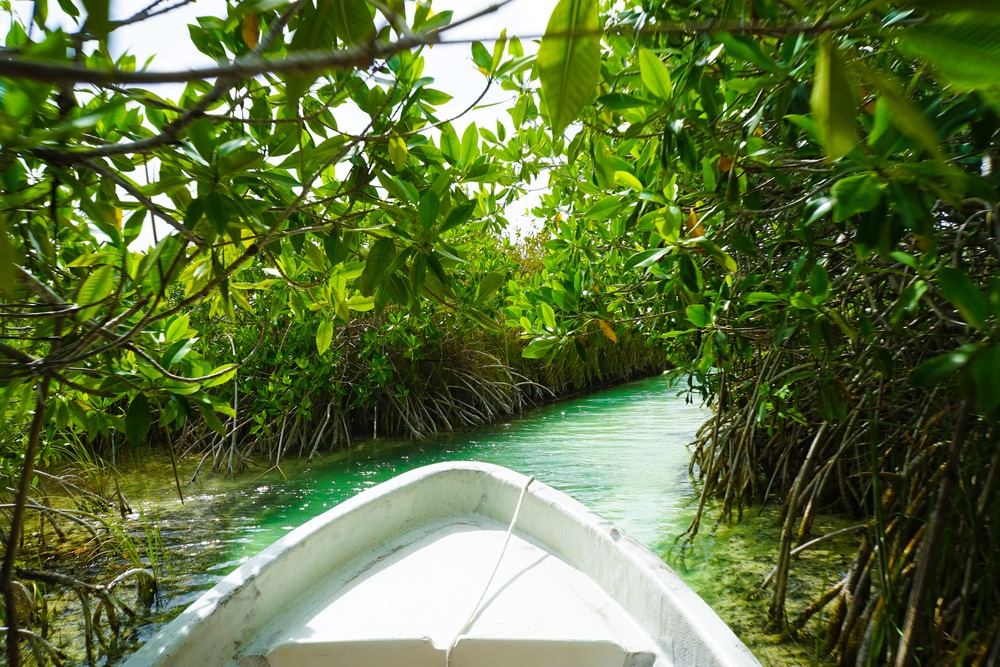
Manialtepec Lagoon
Manialtepec Lagoon
Just 18 km from Puerto Escondido, Manialtepec Lagoon offers mangroves, nocturnal bioluminescence, and over 200 bird species to observe.
Eighteen kilometres northwest of Puerto Escondido, in the state of Oaxaca, Manialtepec Lagoon stretches for 15 kilometres between mangroves and the Pacific Ocean. This expanse of brackish water stands out for two singular attractions: a bioluminescence phenomenon visible on certain moonless nights, and an avifauna that draws bird watchers from around the world.
Why visit Manialtepec Lagoon
The lagoon offers a rare contrast to the bustling beaches of Puerto Escondido. Its ecosystem combines freshwater and saltwater depending on the season, making it an environment of great biological richness. Outings are organized by boat or kayak, typically in small groups with a local guide, and last an average of 2 to 3 hours.
Three good reasons to come:
- observe more than 200 species that frequent the site, both resident and migratory birds;
- experience, at the right time, a nocturnal outing where the water lights up with blue reflections;
- enjoy pristine nature just twenty kilometres from the tourist coast.
What to see and do
Mangroves and lagoon wildlife
The mangroves bordering the lagoon can reach 15 metres in height. Their aerial roots shelter crustaceans, juvenile fish, and reptiles. You will regularly spot iguanas along the shoreline, as well as several fish species visible in the shallow waters. During the rainy season, from May to November, the lagoon sometimes overflows and becomes an estuary connected to the ocean, altering salinity and attracting other species.
Bird watching
Manialtepec is a reference site for ornithology in Mexico. In addition to local species, migratory birds from Canada spend the winter here. Among frequently observed species:
- the American coot (Fulica americana);
- the grey pelican;
- the tiger heron, the great blue heron, the green heron, and the cattle egret;
- the reddish egret.
Bring binoculars and prioritize early morning outings, when bird activity is at its peak.
The bioluminescence phenomenon
The seasonal connection between the lagoon and the Pacific allows microscopic marine organisms to develop there. When the water is stirred or when you dip your hand in, these organisms emit very bright blue reflections. The phenomenon only manifests under certain conditions: moonless night, clear sky, favourable water temperatures. Guided excursions take place in secure zones, in quiet boats, and typically include supervised swimming.
When to visit
The lagoon can be visited year-round, but two periods stand out:
- December to March: best period for bird watching, with the arrival of migratory species.
- May to November: rainy season, lagoon at its highest, conditions more favourable for bioluminescence (depending on the night).
For daytime outings, prioritize sunrise or late afternoon: the light is softer and the heat more bearable.
Practical information
- Duration of visit: allow 2 to 3 hours for a standard excursion, up to 4 hours for a nocturnal outing with bioluminescence.
- Rates: moderate, varying depending on the type of outing (kayak, group boat, private outing) and season.
- Recommended equipment: hat, sunglasses, sunscreen, mosquito repellent, binoculars, swimsuit, and towel for the nocturnal outing.
- Who to go with: a local guide is highly recommended, both for safety (currents, mangrove zones) and to identify wildlife.
How to get there
From Puerto Escondido, several options allow you to reach Manialtepec:
- Shared taxi: departure from Avenida 4 Poniente heading towards San José Manialtepec, approximately 15 minutes' travel.
- Minibus: departure from Avenida Hidalgo 5, heading towards Río Grande, with possible stop at the lagoon.
- Organized tour: most agencies in Puerto Escondido offer round-trip transport included in the outing.
Schedules and frequencies of shared transport vary; check locally the day before your visit.
Nearby attractions
The lagoon combines well with other stops in Oaxaca state. Travellers continuing inland reach the Monte Albán archaeological site, the former Zapotec capital perched above the Oaxaca valley, and appreciate Oaxaca's art scene, particularly rich in street art. To extend the nature experience towards the Caribbean side, the Puerto Morelos National Park and the Calakmul archaeological site are among the most renowned complementary destinations.
Frequently asked questions
Frequently asked questions
The phenomenon is mainly visible during the rainy season (May to November), on moonless nights with clear skies. Not all outings guarantee its appearance: it depends on weather conditions and the concentration of marine organisms.
A daytime excursion lasts approximately 2 to 3 hours. A nocturnal outing for bioluminescence typically extends to 4 hours, including transfers.
Yes, daytime boat excursions are suitable for children. For the nocturnal outing, check the minimum age with the operator and bring clothing: it gets cool on the water.
During high season (December to March) and for nocturnal outings, booking the day before is recommended. Off-season, you can typically organize the outing the same day from Puerto Escondido.
From December to March, when migratory species from North America, including Canada, winter on the lagoon.
Preparing your trip
Manialtepec Lagoon integrates easily into an itinerary between the Pacific coast and Oaxaca's highlands. To build your tailor-made stay, consult our Mexico trips and connect with our local specialists.
Interested in this visit?
We can include it in your personalised itinerary.