Valladolid
Valladolid
A colonial town in Yucatán nestled between Mérida and Cancún, Valladolid captivates with its 16th-century Franciscan convent, cenotes accessible in the heart of town, and the Calzada de los Frailes lined with colorful facades.
Valladolid is a colonial town in Yucatán, founded by the Spanish in the 16th century on a former Maya site. Positioned between Mérida and Cancún, it preserves a historic center with colorful facades, imposing convents, and cenotes accessible right in the heart of the city. Less frequented than major beach resorts, it offers direct access to Chichén Itzá and the Río Lagartos reserve.
Practical Information at a Glance
- Access: ADO buses from Mérida (~2 hours) and Cancún (~2.5 hours); colectivos from Pisté (Chichén Itzá).
- Recommended stay: 1 to 2 nights to combine the historic center, cenotes, and excursions.
- Dress code: Cover shoulders and knees to enter churches and the convent.
- Cenotes: Entrance fee for private cenotes; bring swimsuit and towel.
What to See
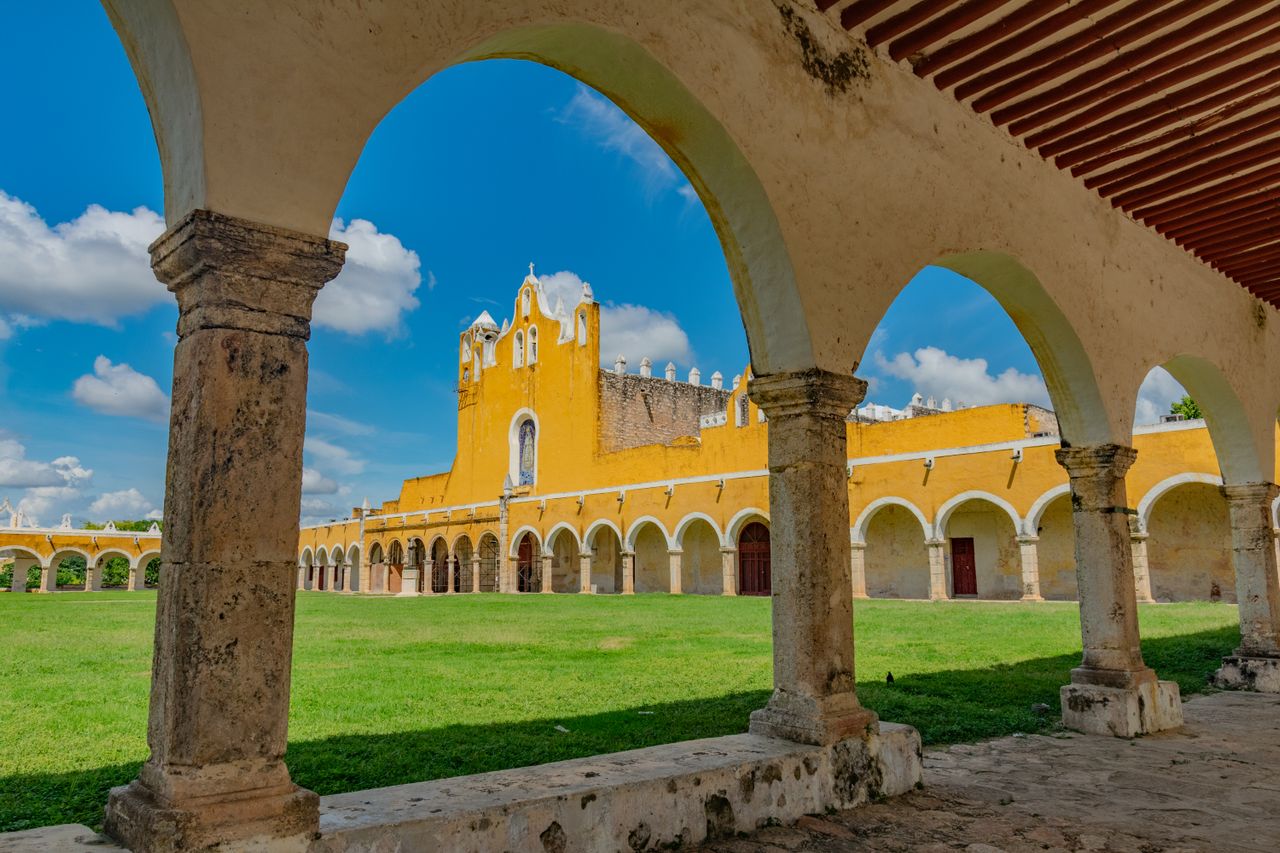
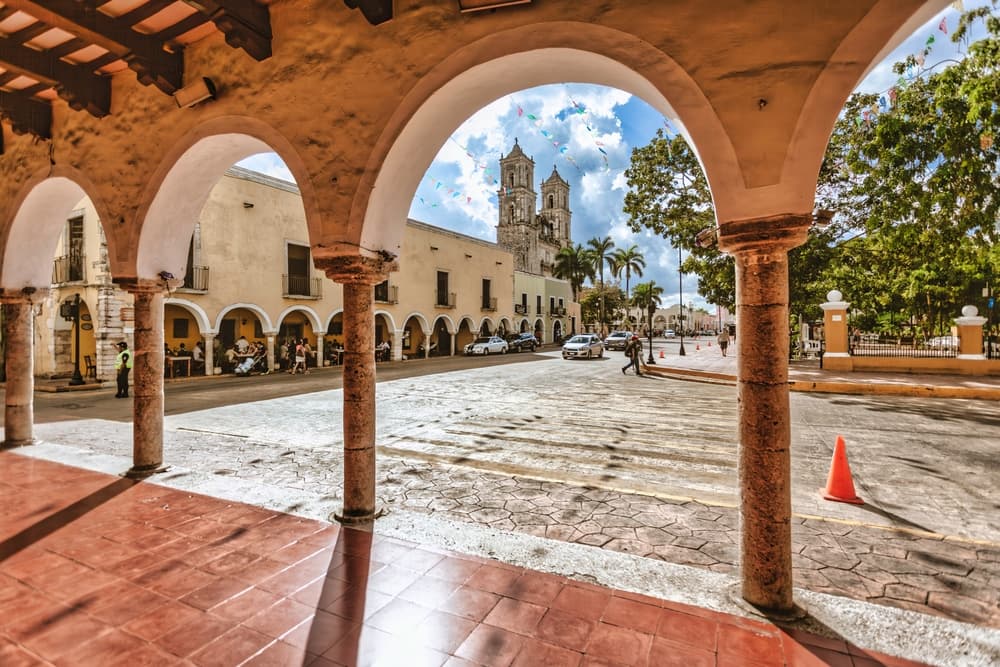
The Parque Principal Francisco Cantón Rosado is the heart of the town: arcades, terraces, and the San Servacio church bordering it to the north. The Convento de San Bernardino de Siena, built from 1552 onward, is one of the best-preserved Franciscan convents in Yucatán. Its murals and fortified atrium merit careful attention.
The Zaci and Samulá cenotes are just minutes from the center. Zaci is accessible on foot from the main plaza; Samulá, in Dzitnup, is renowned for its fig tree roots plunging into turquoise waters.
History and Context
Valladolid was founded in 1543 on the site of the Maya city of Zací. The Spanish quickly established an administrative and religious center here. The town played a key role in the Caste War (1847), a Maya uprising that profoundly shaped Yucatán. Its name echoes the Spanish city of Valladolid in Castile, reflecting its founders' colonial ambitions.
Highlights of Your Visit
Convento de San Bernardino de Siena
Founded by the Franciscans, this fortress-convent combines defensive architecture with religious art. Recently restored frescoes depict biblical scenes interwoven with Maya elements. The complex is designated a national historical monument.
Cénote Zaci
Located in a municipal park in the town center, this semi-open cenote allows swimming. Its limestone walls shelter bats and dense vegetation. Access is straightforward and crowds remain moderate on weekdays.
Dzitnup Cenotes (Samulá and Xkekén)
A few kilometers west, these two underground cenotes rank among Yucatán's most photographed. A shaft of natural light pierces the rocky ceiling, illuminating the clear water. Arriving early morning limits tour groups.
Calzada de los Frailes
This paved street connects the center to the San Bernardino convent. Lined with brightly colored colonial homes, it concentrates several restaurants, artisan shops, and Maya embroidery workshops.
Etiquette and Visiting Rules
- Shoulders and knees covered to enter the San Servacio church and convent.
- Avoid visits during religious services.
- In cenotes, chemical sunscreen is often prohibited to protect the ecosystem; prefer mineral or biodegradable formulas.
Photography Tips
Golden morning light is ideal on the Calzada de los Frailes and the convent facade. For the underground Dzitnup cenotes, the natural light shaft is sharpest between 11 a.m. and 1 p.m. A tripod or good stabilization helps in cave shadows. Drones are generally forbidden over private cenotes.
Location and Access
Valladolid lies in eastern Yucatán, roughly 160 km east of Mérida and 160 km west of Cancún. The town is served by long-distance buses (ADO) and frequent colectivos. Chichén Itzá is about 45 km west, accessible by colectivo from Valladolid. The bus station is near the historic center. The town center is walkable; bicycles and tricycle taxis (triciclos) round out local transport.
Nearby Attractions
- Chichén Itzá — Mexico's most visited Maya archaeological site, less than an hour by colectivo.
- Ek Balam — A less-crowded Maya city whose acropolis offers sweeping jungle views.
- Río Lagartos — A biosphere reserve to the north, famous for pink flamingos and mangrove forests.
- Izamal — The ochre "yellow city," home to a Franciscan convent and Maya pyramids woven into the urban fabric.
Frequently asked questions
The dry season, November to April, offers the most pleasant conditions. July and August are hot and humid but remain manageable. Hurricanes can affect the region between June and October.
Yes. Colectivos depart regularly to Pisté, the village gateway to the site. Starting early morning lets you avoid peak heat and the largest tour groups.
Cénote Zaci is minutes on foot from the main plaza. The Dzitnup cenotes (Samulá and Xkekén) are about 7 km from the center, accessible by taxi or bicycle.
Yes. Covered shoulders and knees are required to enter the San Servacio church and San Bernardino convent. A scarf or sarong works if you wear light clothing.
Swimming is permitted in the Zaci, Samulá, and Xkekén cenotes. Chemical sunscreen is often banned to protect the water; use mineral or biodegradable formulas instead.
Yes. The center is compact and walkable, cenotes appeal to children, and the atmosphere is calmer than beach resorts. Triciclos offer a fun transport option for younger visitors.
Want to discover this destination?
Our local advisors design your tailor-made trip.