Bacalar
Bacalar
Turquoise lagoon, ancient stromatolites and pirate history: Bacalar, a Pueblo Mágico in Quintana Roo, is the hidden jewel of the Mexican Yucatán.
In Mexico's southeastern region, Bacalar stands out as a locality distinguished by the beauty of its lagoon and the simplicity of its way of life. The town is perfect for a stay punctuated by swimming, exploring, and discovering local culture. Here's an overview of this Mexican gem.
History
Bacalar was inhabited by the Maya during the pre-Columbian era. In 1543, Spanish conquistadors took control of the city. Two years later, Gaspar Pacheco founded a settlement here, naming it Salamanca de Bacalar. In the 17th century, following a pirate attack, the San Felipe fortress was constructed and completed in 1729.
In 1848, during the Caste War, rebel Maya from Chan Santa Cruz seized Bacalar. The Mexican Army retook it in 1902.
A Bit of Geography
Bacalar is located in southeastern Mexico, in the heart of Quintana Roo State. Since 2011, it has served as the municipal seat of the municipality of the same name, which was established that year. The town is classified as a "Pueblo Mágico" by the Mexican government.
Must-See Attractions
Lagoon of Seven Colors
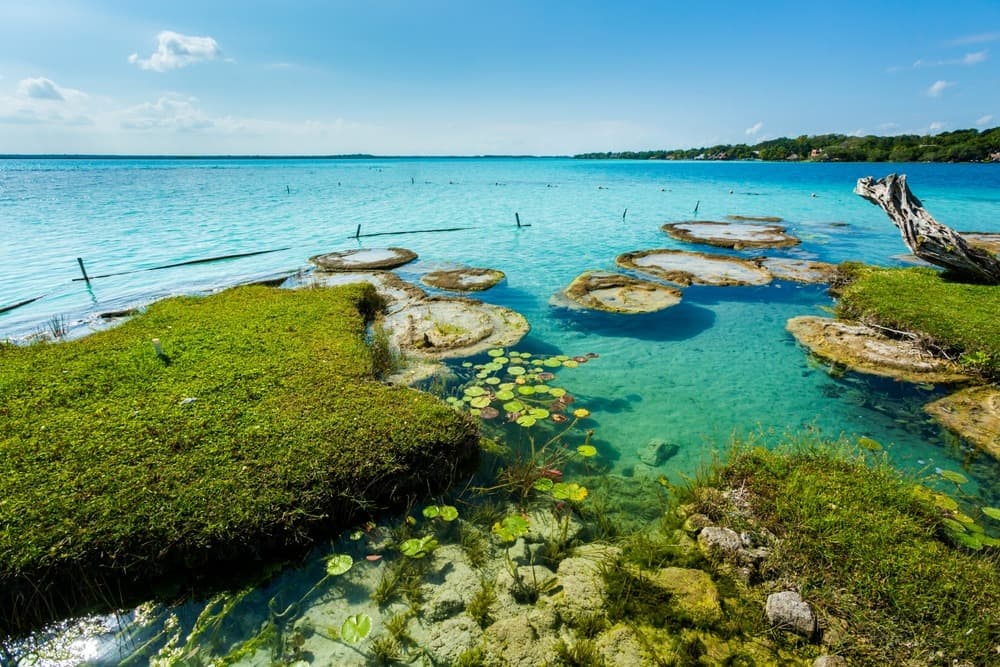
The Lagoon of Seven Colors owes its name to the different shades of blue that shift according to water depth. It stretches 45 kilometers long and includes several islets and four cenotes open to visitors.
Take the opportunity to try various activities: paddle a kayak, sail on a catamaran, swim in its crystal-clear waters, go snorkeling, or try stand-up paddleboarding.
Pirate's Canal
During the colonial era, the Canal de los Piratas served as a strategic passage between Europe and the Americas. It witnessed numerous confrontations between pirates and privateers, earning it its name. Among the most famous, you'll hear about Henry Morgan and Francis Drake.
You'll discover a palette of blues and greens here. You can also swim and benefit from the exfoliating properties of sand rich in sulfur.
Fort San Felipe
Built to defend the region against repeated pirate attacks, Bacalar's fort offers you today an extensive viewpoint over the lagoon and its cenotes.
Its museum is also worth visiting as it traces the town's history through Maya artifacts as well as elements from the colonial period, including weapons, ammunition, and maps.
The Balnearios
Throughout Bacalar Lagoon, you'll find several "balnearios" — small designated swimming areas.
Here's a selection of the most interesting ones to discover:
- Balneario Municipal: Located just a 10-minute walk from town center, this free-access venue attracts many local families. Convenient and close by, it remains lively during the day.
- Balneario Municipal El Aserradero: Right next door, this balneario features a long wooden dock making water entry easy. You'll also find picnic tables, ideal if you bring your own food (excluding alcohol).
- Balneario de los Azucareros: This large space is mainly frequented by workers from the local union and residents, with few tourists. It's an opportunity to spot stromatolites like those at Cocalitos. It's located north of the Mirador, past the police station, via a path leading directly to the lagoon.
- Balneario de Lasarch (or La Saarch): Adjacent to the previous one, this calm and well-maintained spot offers plenty of shaded areas and a long dock. You can even hang your hammock between two palm trees.
- Balneario Ejidal Mágico: Very popular with families, this site includes a restaurant, dock, pontoons, and a lifeguard on duty. You can rent a kayak or book a boat excursion here.
- Balneario Ecológico: Surrounded by mangroves, this wilder, more intimate setting appeals with its peaceful atmosphere. It's smaller and less crowded, but lacks amenities.
- Balneario Sac Ha: Less touristy and more simple in its facilities, this balneario suits those seeking a quiet moment by the water.
Sunset Over the Lagoon
Watch orange hues form in the sky as evening falls. Settle along the lagoon's edge to enjoy the calm and take in the landscape.
Experience this moment alone or join a stand-up paddleboarding excursion, even if you're a beginner. Follow your guide to Pirate's Canal.
Uchben Kah Ecotourism Park
Discover this 290-hectare park. It's a favorite spot for sports enthusiasts. Explore the jungle and lagoon on foot or by bike, dive for snorkeling, or cool off with a swim. Nature is well-preserved here since no motorized vehicles are permitted on-site.
Practical Information
Weather
Bacalar enjoys a tropical climate with a dry season from November to April. Temperatures are warm and comfortable. From May to October, the rainy season arrives, bringing frequent but generally short showers, with clearer periods in between.
When to Visit?
January to March
This period offers pleasant temperatures, typically between 25 and 28°C, with dry weather. If you book in advance, flights and accommodations often remain affordable. It's the ideal time to enjoy the lagoon and boat trips without experiencing extreme heat.
April to June
During this period, days become warmer, with temperatures reaching up to 32°C. It's still an interesting time to visit provided you tolerate heat well. However, prices tend to rise as summer approaches.
Getting There
By Air
From France
From France, first take an international flight from Paris, Lyon, or another major French city to Cancún. Airlines such as Air France or Aeromexico offer direct or connecting flights. Once in Cancún, plan for approximately 4 to 5 hours of driving to reach Bacalar.
If you wish to shorten the overland journey, take a domestic flight from Cancún to Chetumal. The latter is roughly a 40-minute drive from Bacalar.
By Car
Renting a car in Cancún is also a good option if you want to explore the region at your own pace. The drive to Bacalar takes about 4 hours via Highway 307, which is generally in good condition, though the frequent presence of speed bumps requires some caution. This solution offers you the freedom to make stops as you wish, with the possibility of visiting Tulum, Cenote Azul, or even heading to the Belize border.
By Bus
If you prefer public transportation, ADO buses offer several daily connections between Cancún and Bacalar. Both comfortable and affordable, this option features reclining seats and air conditioning. The journey takes approximately 5 hours for a fare between 20 and 35 euros.
By Taxi or Private Transfer
You can also book a private transfer or taxi from the moment you arrive at Cancún or Chetumal airport. This solution is naturally more expensive, but it's comfortable and gets you directly to your destination.
Attractions in Bacalar
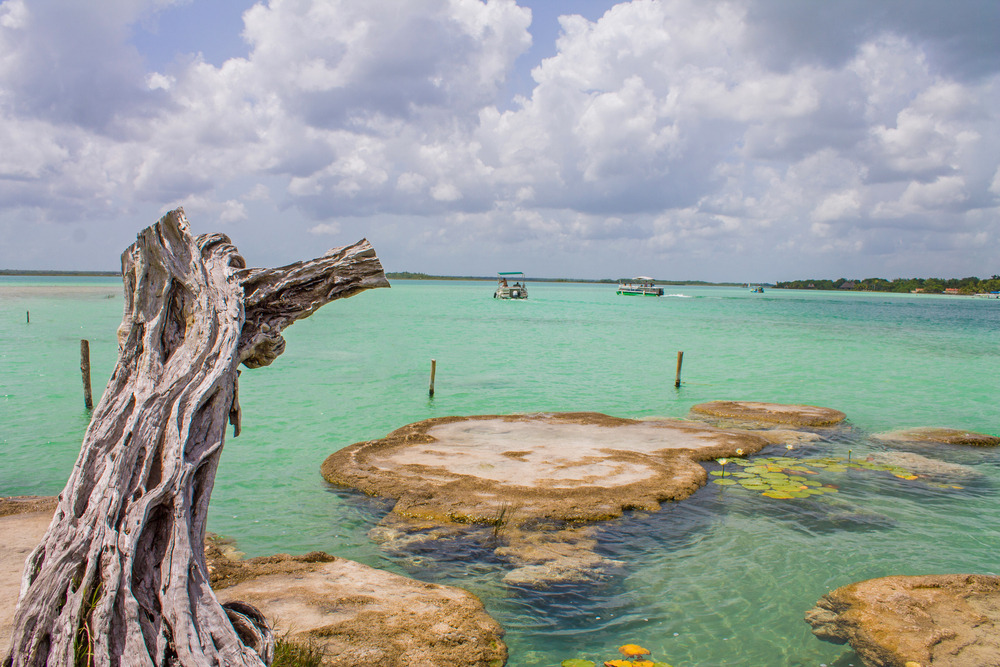
Cenote Cocalitos
À 2,5 km de Bacalar, le Cenote Cocalitos abrite des stromatolites vivants et une lagune peu profonde aux dégradés de bleu, idéale en famille.
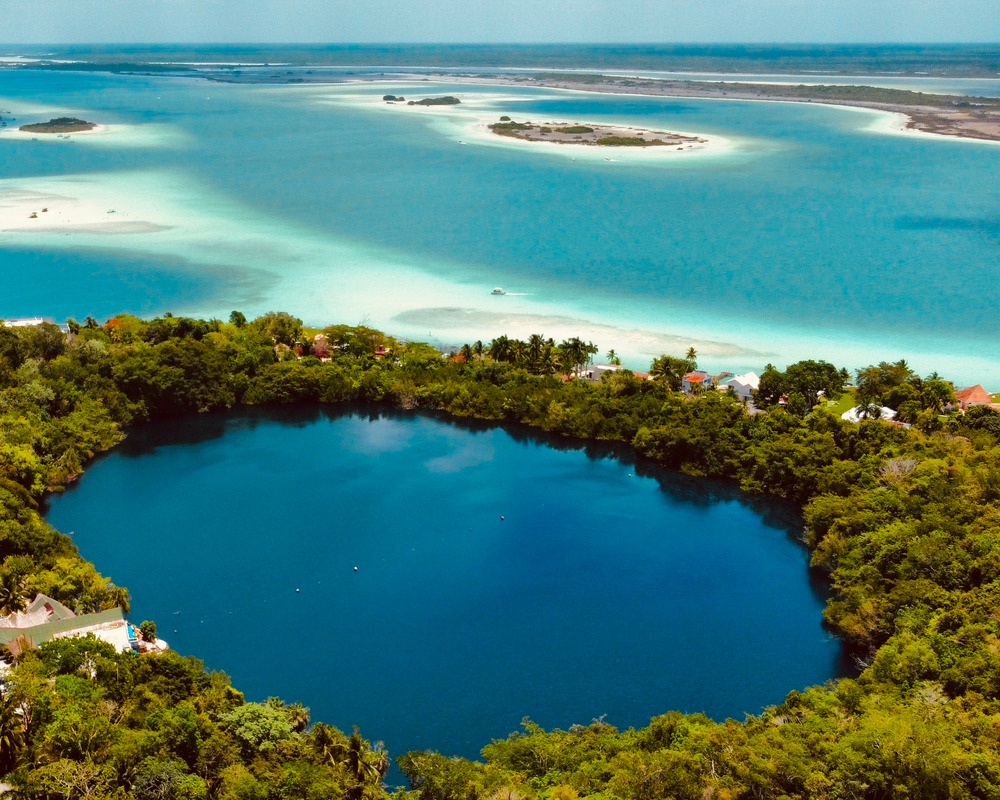
Cénote Azul
Cénote à ciel ouvert de 200 m entre Playa del Carmen et Tulum : baignade, snorkeling, plateforme de saut et grottes immergées sur la Riviera Maya.
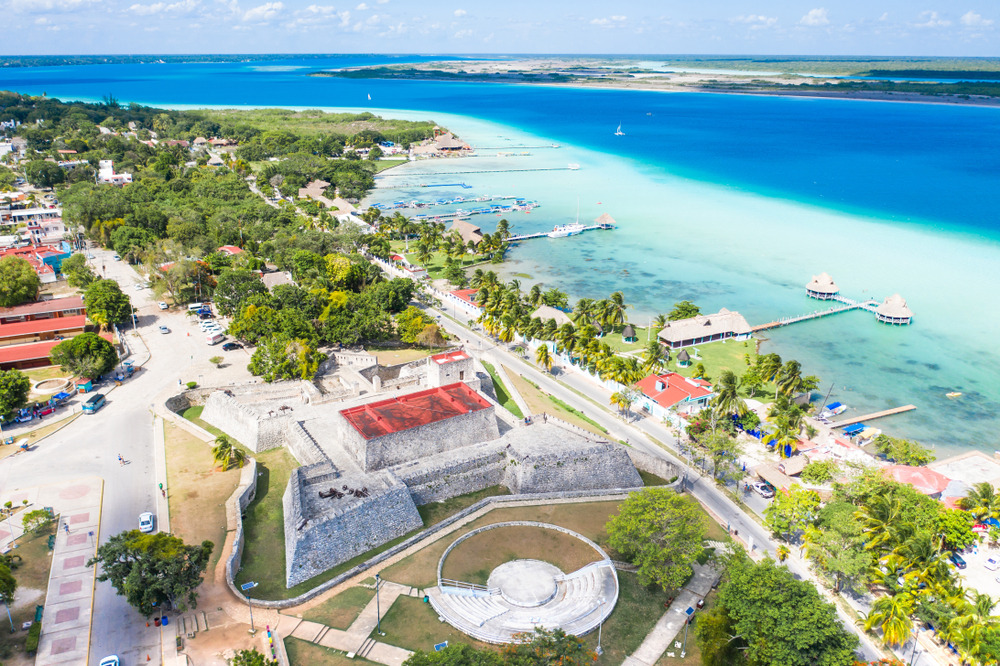
Fort de San Felipe de Bacalar
Forteresse coloniale du XVIIIe siècle au cœur de Bacalar, le fort de San Felipe abrite le Musée de la Piraterie et domine la lagune.
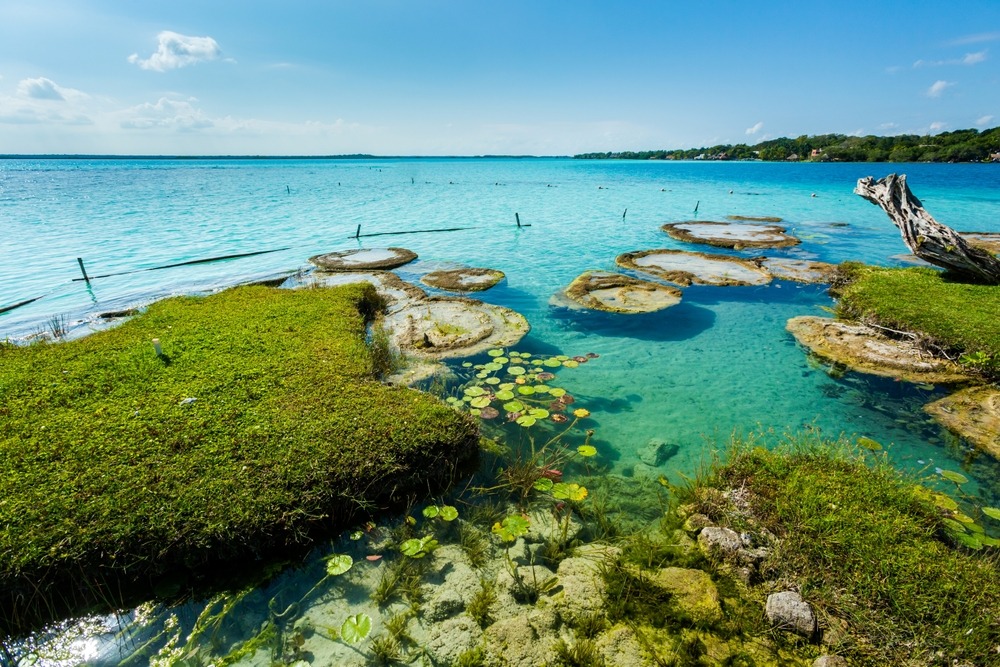
Laguna de Bacalar (Lagune aux sept couleurs)
La lagune de Bacalar étend ses eaux aux sept nuances de bleu sur 60 km dans le sud du Quintana Roo. C'est l'une des destinations les plus singulières du Mexique.
Want to discover this destination?
Our local advisors design your tailor-made trip.