Cenote Kankirixché
Cenote Kankirixché
At Mukuyché, between Mérida and Uxmal, Cenote Kankirixché combines swimming in crystal-clear water, limestone formations and underground diving galleries.
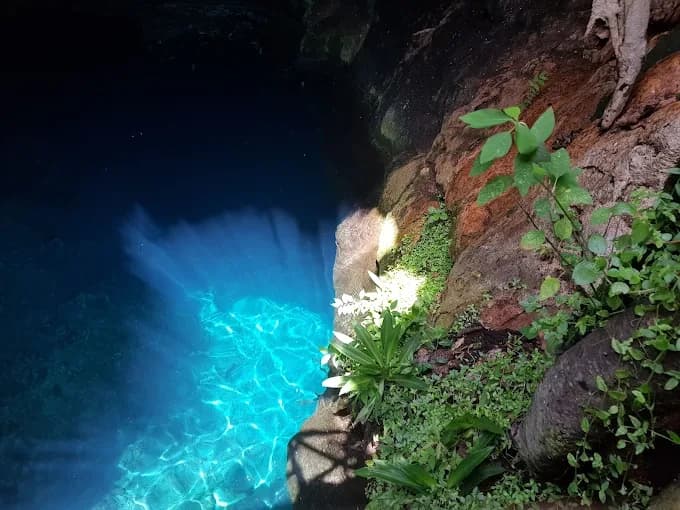
Halfway between Mérida and Uxmal, in the village of Mukuyché in southern Yucatán, Cenote Kankirixché is a semi-open cavity where natural light streams through the ceiling opening to illuminate a freshwater pool. Stalactites hanging from the vault, tree roots plunging to the surface, limestone walls: the site combines geological interest, swimming and opportunities for snorkeling or underground diving.
Why visit Cenote Kankirixché
Less crowded than neighboring cenotes along the Mérida-Uxmal route, Kankirixché retains a preserved atmosphere. Three elements set it apart:
- Direct natural light that descends onto the water and creates striking contrasts between dark rock and the blue of the pool.
- Particularly clear water, at a constant temperature around 26°C, ideal for swimming and snorkeling.
- A network of subaquatic galleries that makes it one of the recognized underground diving sites on the peninsula.
The setting remains rustic: no heavy tourist infrastructure, which appeals to travelers seeking a more authentic experience than the heavily frequented cenotes of the Riviera Maya.
Geology and Mayan heritage
Cenote Kankirixché is part of a phenomenon unique to the Yucatán peninsula. The region rests on porous limestone rock and has neither rivers nor surface lakes: freshwater circulates underground, carving galleries and caverns over time. When the vault of these cavities partially collapses, it creates a cenote.
For the ancient Maya, these water sources were both a vital resource in a region without surface watercourses and sacred places associated with the underworld, Xibalba. Some cenotes received offerings; all were considered contact points with the deities. The word itself comes from Yucatec Maya dz'onot, meaning well or water cavity.
What you'll see on site
Access to the pool is via a staircase of approximately 15 meters that descends to a developed platform. The pool measures approximately 25 to 27 meters long by 15 to 23 meters wide, with depths ranging from 2 meters near the edges to several dozen meters in the center, making it one of the deepest cenotes accessible to the public in the area.
From the moment you descend, your gaze is caught by stalactites hanging from the vault and tree roots that cross through the rock to reach the water. The walls are well preserved and underwater visibility frequently exceeds 20 meters.
Possible activities
- Swimming: the water is calm and cool, accessible from the platform.
- Snorkeling: the clarity of the water allows you to observe rock formations and submerged roots.
- Underground diving: Kankirixché is among the preferred sites for certified cavern/cave divers, due to its extensive galleries.
- Photography: the interplay of light in mid-morning is particularly striking.
Practical information
The cenote is open daily during daytime hours, typically from morning until late afternoon. Entrance fees are moderate and are paid in pesos directly on site. Bring cash, as card payment is not guaranteed.
Things to bring: swimwear, towel, non-slip shoes for the wet stairs, headlamp if you plan to explore less-lit areas, and a flotation vest if you're not a strong swimmer (rental sometimes available on site). Non-biodegradable sunscreens should be avoided to preserve the ecosystem.
Allow 1 to 2 hours to enjoy the site without rushing; more if you plan a diving session.
When to visit
The natural light descending through the ceiling opening is most spectacular at midday, between late morning and early afternoon, when the sun is at its zenith. This is also the busiest time: to enjoy the peace and quiet, choose opening hours in the morning or the last hour before closing.
Since water temperature is constant year-round, Kankirixché can be visited in any season. The dry season (November-April) remains the most comfortable for combining cenotes and neighboring Mayan sites.
How to get there
By car
From Mérida, allow approximately 45 to 50 minutes via Highway 184 heading southeast. Access is by paved road to the village entrance, then by a marked path. From Mérida International Airport, allow an extra ten minutes.
By taxi or ride-sharing
A taxi from Mérida or Progreso is possible: negotiate the round-trip fare with waiting time on site, which is more economical than a one-way journey.
By organized excursion
Many agencies in Mérida offer tours combining Kankirixché with other cenotes or Mayan sites such as Uxmal. This is the most convenient option without a vehicle.
Nearby attractions
Southern Yucatán boasts several major sites that are easy to combine with a visit to the cenote:
- The Uxmal archaeological site, less than an hour away, one of the great Puuc complexes of the region.
- The Convent of San Bernardino de Siena in Valladolid, a testament to colonial evangelization.
- The Fort of San Felipe de Bacalar, further east, to extend your discovery of the Yucatán.
- The Monte Albán site, in the neighboring state of Oaxaca, for travelers extending their itinerary.
Frequently asked questions
Preparing your trip to the Yucatán
Cenote Kankirixché fits naturally into an itinerary combining Mérida, Mayan sites and the gulf coast. To build a tailor-made stay including cenotes, archaeology and colonial towns, consult our trips to Mexico.
Interested in this visit?
We can include it in your personalised itinerary.