Puebla's Historic Center
Puebla's Historic Center
UNESCO-listed, Puebla's historic center brings together over 2,600 colonial buildings, renowned gastronomy and the Palafoxiana Library founded in 1646.
Puebla's historic center encompasses more than 2,600 listed buildings laid out in a grid pattern inherited from the 16th century. Colonial architecture, culinary traditions and religious heritage coexist within a walkable perimeter, roughly two hours from Mexico City.
Why visit Puebla's historic center
Listed as a UNESCO World Heritage site, Puebla's center concentrates one of Mexico's best-preserved colonial urban ensembles. Within a few grid-lined streets, baroque façades adorned with tilework, convents founded in the 16th century and markets showcasing some of Mexican cuisine's most emblematic specialties appear around every corner. The city lends itself to a one- to two-day walking tour, compact enough to navigate without transport, yet dense enough to reward lingering.
A foundational chapter in New Spain's history
Puebla was founded on April 16, 1531, by Spanish settlers on a strategically positioned site between Mexico City and the port of Veracruz. The city was meant to secure the trade route linking the capital to the Atlantic and serve as a supply relay. Its urban layout follows a grid plan attributed to architect Francisco de Montejo, a rational design that guided the city's expansion over centuries.
Puebla also witnessed a pivotal moment in Mexican history: the Battle of May 5, 1862, when the Mexican army repelled French troops. This victory spawned Cinco de Mayo, celebrated annually in the city and beyond the country's borders. The historic center's 1987 UNESCO World Heritage designation recognized the value of this Renaissance, baroque and classical ensemble.
What to see in the historic center
The Cathedral and Rosary Chapel
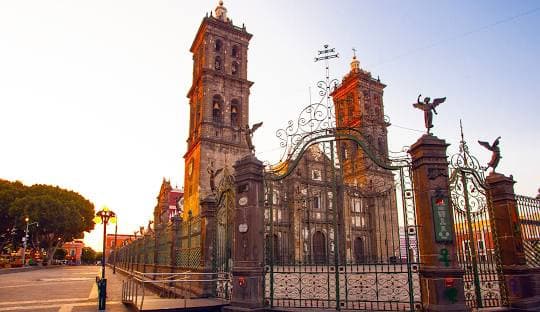
Puebla's Cathedral, its construction spanning nearly a century, dominates the Zócalo with two towers among the tallest in colonial Mexico. A few blocks away, Santo Domingo church shelters the Rosary Chapel, nicknamed the "House of Gold." This jewel of Spanish neo-baroque drapes walls and vaults in gilded stucco, ceramics and sculpted figures—a microcosm of the decorative exuberance characteristic of novohispanic baroque.
The Palafoxiana Library
Founded in 1646 by Bishop Juan de Palafox y Mendoza, the Palafoxiana Library is considered the first public library in the Americas. It preserves roughly 45,000 volumes, including rare manuscripts and incunabula, arranged across three levels of dark wood shelving. The reading room, designated a national monument, can be explored in minutes but leaves a lasting impression.
The Amparo Museum
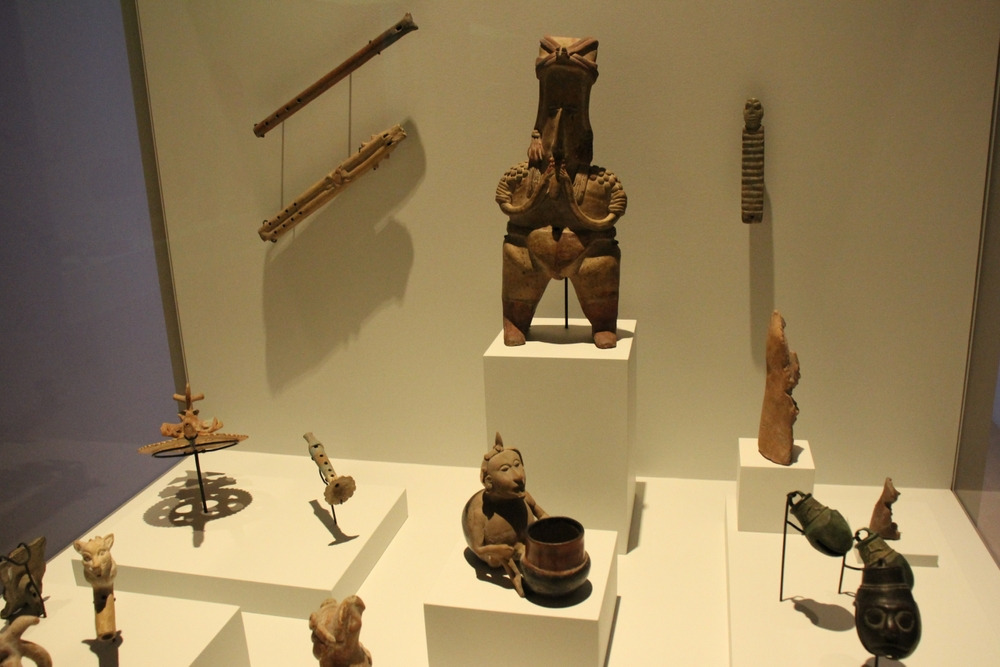
Housed in two connected colonial buildings, the Amparo Museum traces Mexican art from the pre-Hispanic era through contemporary creation. The pre-Columbian art collections, particularly rich, make it one of the country's reference museums.
Markets and gastronomy
Puebla is the birthplace of dishes that have become icons of Mexican cuisine:
- Mole poblano: a thick sauce of chiles, spices and chocolate, served over poultry.
- Chiles en nogada: poblano peppers stuffed and topped with walnut cream and pomegranate, a seasonal dish in the colors of the Mexican flag.
- Cemitas: sandwiches filled with meat, avocado, Oaxaca cheese and papalo.
The Mercado de Sabores Poblanos gathers multiple stalls dedicated to these specialties under one roof, ideal for sampling several preparations without moving around.
Practical information
The historic center is best explored on foot: most major sites lie within a few blocks of the Zócalo. Allow half a day for a quick tour of essentials, one to two full days to include the Palafoxiana, the Amparo Museum and a gastronomic pause. Museums charge modest fees and typically close one day weekly, usually Monday—check before planning your day. Respectful attire is expected in religious buildings.
When to visit Puebla
The dry season, from November to April, offers the most comfortable conditions for exploring the city on foot. Temperatures range between 10 and 25°C, with cool mornings and sunny afternoons. From May to October, the rainy season brings showers often in late afternoon: visits remain possible by adjusting your pace. Days around May 5 are particularly lively but also more crowded, with parades and historical reenactments.
How to get there
Puebla sits roughly two hours' drive from Mexico City. Several bus companies operate frequent service from the capital's TAPO terminal, with departures throughout the day. The journey is direct and comfortable. From Mexico City's international airport, direct shuttles also serve Puebla without passing through the capital's center. Once there, the historic center is entirely walkable.
Worth exploring nearby
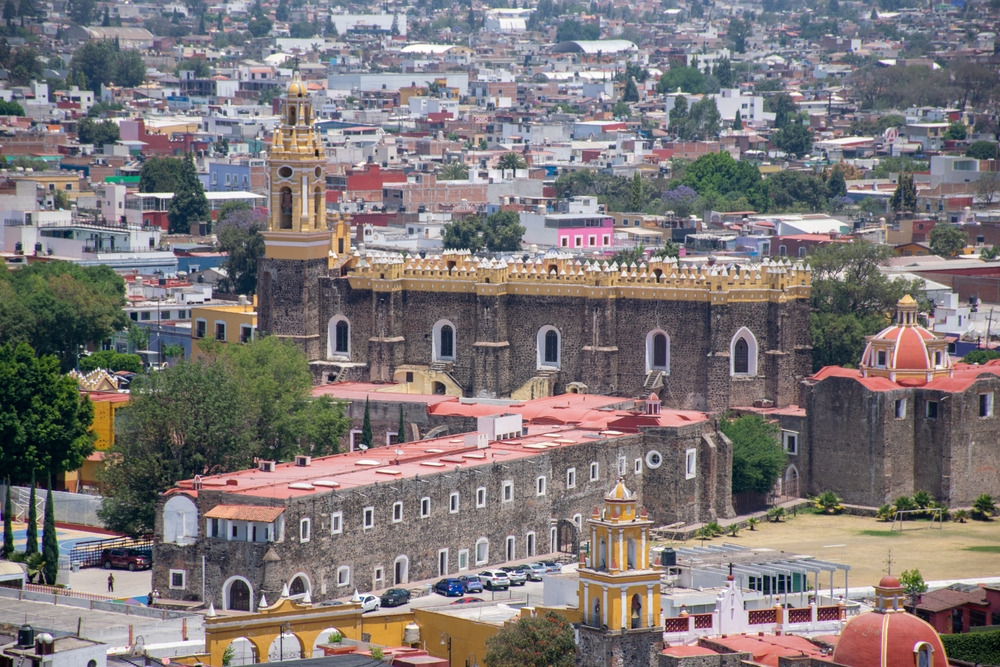
Puebla makes a good base for extending exploration toward other southern Mexican sites. A few hours' drive away, Monte Albán showcases one of the largest pre-Hispanic Zapotec cities. Further south, Oaxaca's street art scene testifies to a particularly vibrant contemporary landscape. For another facet of colonial heritage, the San Bernardino de Siena Convent in the Yucatán usefully complements visits to major religious ensembles.
Frequently asked questions
Frequently asked questions
One day allows you to cover the essentials: the Zócalo, cathedral, Rosary Chapel and a market. Two days are preferable to include the Palafoxiana Library, the Amparo Museum and several gastronomic stops.
The bus is the simplest option: expect roughly two hours from the TAPO terminal, with very frequent departures. Direct shuttles also connect Mexico City's airport to Puebla.
The tourist perimeter of the historic center is generally calm by day and early evening. Standard urban precautions apply: keep watch over belongings and use taxi or ride-share services at night.
From November to April, the dry season offers mild temperatures and clear skies. The period around May 5 is festive but more crowded.
Planning your trip
Puebla's historic center works well as a two- or three-night stop, woven into a broader itinerary connecting Mexico City, Oaxaca and the Pacific coast. To craft a custom-tailored program, explore our Mexico travel suggestions.
Interested in this visit?
We can include it in your personalised itinerary.