Coyoacán
Coyoacán
A former colonial village south of Mexico City, Coyoacán brings together shaded squares, major museums and neighborhood life around Plaza Hidalgo.
South of Mexico City, Coyoacán preserves the atmosphere of a colonial borough that remained apart from the megapolis until the mid-20th century. Its cobbled streets, shaded squares and museums make it one of the capital's most striking neighborhoods, linked to pre-Hispanic history, Spanish conquest and 20th-century Mexican cultural life.
Why visit Coyoacán
Coyoacán combines three assets rarely found together in a single Mexico City neighborhood: exceptional historical density (first capital of New Spain, monastery linked to the Mexican-American War, pre-classical site of Cuicuilco nearby), a concentration of major museums (Anahuacalli, Casa Trotski, National Museum of Interventions, National Watercolor Museum) and preserved neighborhood life around Plaza Hidalgo and Jardín del Centenario. The center is walkable, making it a valuable complement to Mexico City's historic center.
History
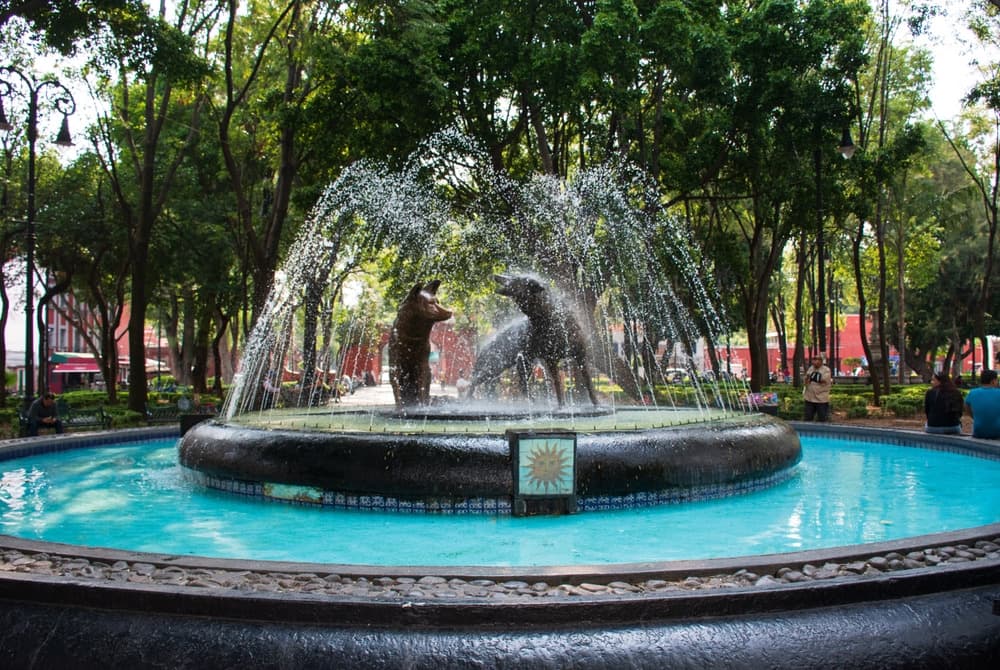
The name Coyoacán comes from the Nahuatl Coyohuacán, most often translated as "place of coyotes," sometimes also as "skinny coyote" or "place of wells." The glyph representing a coyote dates back to the founding of the locality, situated between the 10th and 12th centuries.
In pre-Hispanic times, Coyoacán was a commercial center of the Tecpanecas, a people of farmers and volcanic stone carvers. After approximately three centuries under Tepanec rule, the region came under Aztec control in the 15th century. During the conquest of Tenochtitlan, the Tepanecs allied with Hernán Cortés against the Aztecs.
After the fall of Tenochtitlan, Cortés established New Spain's first capital at Coyoacán, from 1521 to 1523, while Mexico was being rebuilt. The neighborhood subsequently maintained a certain autonomy during the colonial period.
In 1847, during the Mexican-American War, the Churubusco monastery was the site of an important battle. Coyoacán was incorporated into Mexico City's federal district in 1857 but remained semi-rural until the mid-20th century, renowned for its cantinas and pulque bars — Victoriano Huerta was among its regulars. Urbanization has since caught up with it without erasing its character.
What to see in Coyoacán
Plaza Hidalgo and Jardín del Centenario
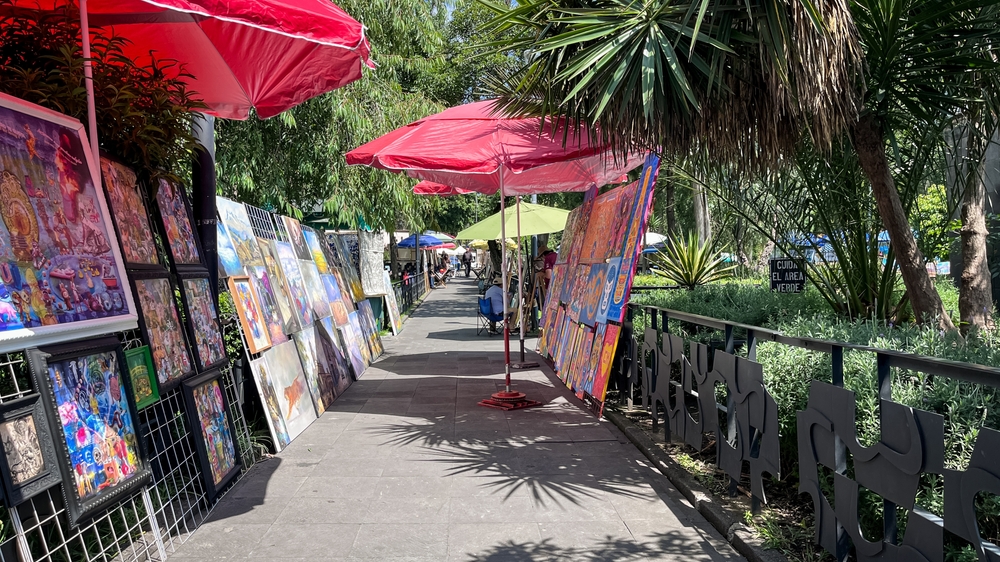
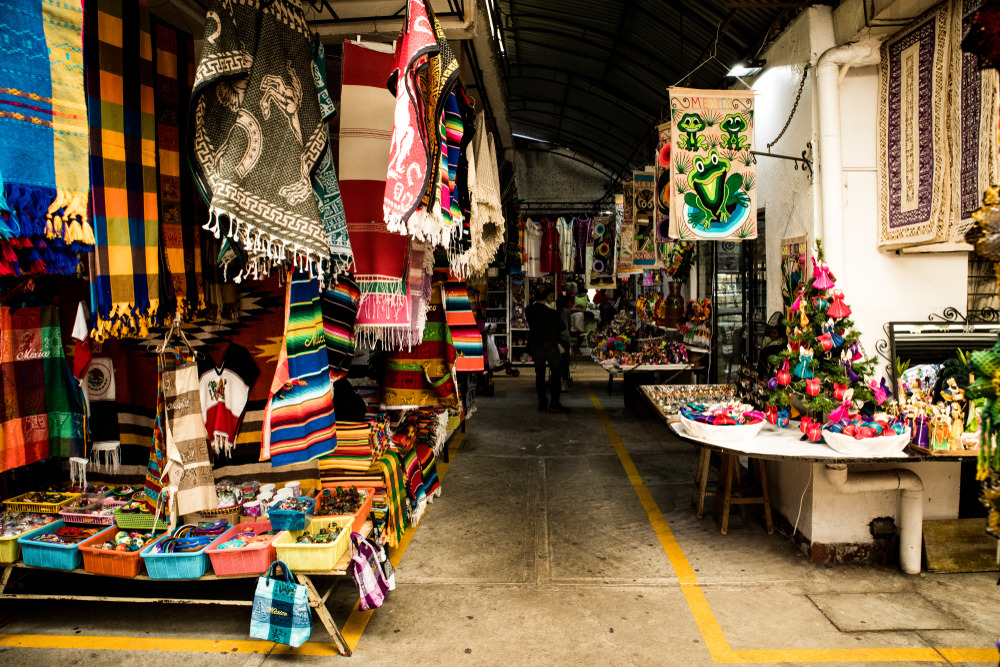
The heart of the neighborhood, these two adjacent squares concentrate most of the social life, particularly on weekends. You'll find the Casa de Cortés, a historic building now occupied by local administration, and the Parroquia de San Juan Bautista, a church founded in the 16th century. Craft markets, cafés and restaurants enliven the surroundings.
Anahuacalli Museum
Designed by Diego Rivera and built in black volcanic stone, the building draws inspiration from Aztec temple architecture. It houses Rivera's personal collection of over 59,000 pre-Columbian pieces, one of the country's most important collections.
Casa Museo León Trotski
The last residence of Leon Trotski after his time with Diego Rivera and Frida Kahlo, the house has been preserved in its original state. The Russian revolutionary was assassinated there in 1940 by Ramon Mercader, a Stalinist agent. Offices, library and tomb in the garden are open to visitors.
National Museum of Interventions
Housed in the Ex Convento de Churubusco, this museum traces foreign interventions in Mexico, from Spanish conquest to the Revolution. The building itself is a historic site linked to the 1847 battle.
National Watercolor Museum
Founded in 1967 by painter Alfredo Guati Rojo, this museum presents a collection devoted to the watercolor technique in Mexico.
Los Viveros de Coyoacán Park
A former nursery transformed into a public park, this vast eucalyptus-planted space welcomes joggers and strollers. Squirrels, accustomed to visitors, readily approach them.
Santa Catarina Square
A small square around a typical yellow church, quieter than Plaza Hidalgo. The Centro Cultural Jesús Reyes Heroles, just opposite, offers regular cultural programming in a colonial mansion.
Cuicuilco Archaeological Site
South of Coyoacán, this pre-classical ceremonial center was buried by the eruption of the Xitle volcano (dated by recent research around the beginning of our era). A four-level circular pyramid remains, partially cleared of the lava flow. The site is among the oldest in the Mexico City basin.
Practical Information
- Duration of visit: allow half a day for central Coyoacán and its squares; a full day if you add two museums (Anahuacalli, Trotski) or Cuicuilco.
- Admission: modest entrance fees for museums, free access to squares and Los Viveros park. Several museums offer free admission on Sundays for residents.
- Closed days: most museums close on Mondays; check before your visit.
- What to bring: comfortable shoes (cobbled streets), water, and some loose change for markets.
When to visit Coyoacán
The neighborhood changes character depending on the day of the week. On weekdays, the atmosphere is calm, streets are less crowded and museums more accessible — a good choice for art and history enthusiasts. On weekends, and particularly Saturday and Sunday, the Plaza Hidalgo craft market is in full swing, Mexican families flock to Jardín del Centenario and neighborhood life is at its liveliest. Saturday is also a chance to combine your visit with the Bazar del Sábado in the nearby San Ángel neighborhood.
Seasonally, the dry season (November to April) remains most comfortable in Mexico City, with a temperate climate year-round.
How to get there
Coyoacán is located approximately 10 km south of Mexico City's historic center. Several options:
- Metro: Coyoacán or Viveros stations (line 3), approximately 15-20 minutes on foot from the neighborhood center.
- Metrobus: line 1, stops at Doctor Gálvez or Dr. Gálvez depending on your itinerary.
- Taxi or ride-sharing: expect 30 to 60 minutes from the historic center depending on traffic, often heavy during the day.
Once there, everything is accessible on foot. To reach the Anahuacalli Museum or Cuicuilco, plan for additional transportation (taxi recommended).
Nearby
San Ángel, approximately 3 km to the west, naturally extends your visit: cobbled streets, colonial mansions, and the famous Bazar del Sábado that brings together artisans and gallery owners every Saturday around Plaza San Jacinto. Further south, the UNAM (University City) and its UNESCO-listed campus deserve a detour for its monumental murals. To broaden your Mexican experience, you can combine Mexico City with a site like Chichén Itzá or Coba in the Yucatán.
Frequently Asked Questions
Frequently asked questions
Half a day is sufficient for the neighborhood center and its squares. Allow a full day if you wish to add two museums such as Anahuacalli and Casa Trotski, or include the Cuicuilco site.
Yes, central Coyoacán is among Mexico City's safest areas, frequented by families and tourists. Standard big-city precautions still apply, especially in the evening and on public transport.
This depends on what you're looking for. Weekends offer the liveliest atmosphere, with craft markets and neighborhood life in full swing. Weekdays are better for visiting museums peacefully.
Yes, the Casa Azul, Frida Kahlo's house-museum, is located in the neighborhood. Online booking is strongly recommended as tickets sell out quickly.
Coyoacán pairs well with San Ángel on Saturday (Bazar del Sábado) and with UNAM's University City. For a more historical day, combine it with Mexico City's historic center or the Basilica of Guadalupe.
Plan your trip
Coyoacán fits naturally into a Mexico City stay, complementing the historic center and the National Museum of Anthropology. To build a tailor-made itinerary including the capital, the Yucatán or colonial sites, consult our Mexico trips.
Nearby
Interested in this visit?
We can include it in your personalised itinerary.