Mexico City Historic Center
Mexico City Historic Center
From the Zócalo to the Templo Mayor, Mexico City's Historic Center brings together seven centuries of urban history within a UNESCO-designated perimeter easily explored on foot.
Mexico City's Historic Center concentrates more than seven centuries of urban history across just a few square kilometers. Once the heart of Tenochtitlan, the Aztec capital and later Spanish viceregal seat, this UNESCO World Heritage-designated perimeter unites pre-Hispanic ruins, colonial palaces, museums, and bustling markets. It unfolds on foot from the Zócalo, one of the largest urban plazas on the American continent.
Why Visit the Historic Center
Here you can read Mexico City's dual identity: the Mexica city buried beneath the Spanish one, then reshaped by the Republic. In half a day's walk, you encounter the remains of the Templo Mayor, the Metropolitan Cathedral built atop its ruins, Diego Rivera's murals in the National Palace, and the Art Nouveau facades of the Palacio de Bellas Artes. The neighborhood remains alive: government offices, shops, political demonstrations, and popular celebrations succeed one another throughout the year.
- Over 1,500 registered buildings across 9 km².
- UNESCO World Heritage Site since 1987.
- Walking exploration; no vehicle needed.
From Tenochtitlan to the Modern Capital
The city was founded in the 14th century, when the Mexica established Tenochtitlan on an island in Lake Texcoco. In less than two centuries, it became one of the world's most populous cities, structured around a great ceremonial center dominated by the Templo Mayor. The Spanish conquest in 1521 ended the Aztec Empire: Hernán Cortés ordered the destruction of the temples and the rebuilding of a new capital on the same foundations, following a grid plan organized around the Plaza Mayor—today's Zócalo.
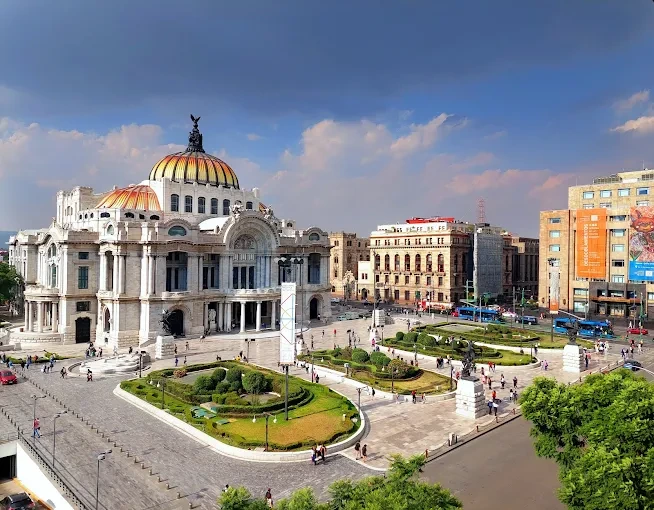
The Metropolitan Cathedral rose beginning in 1573 atop the remains of the Mexica sanctuary, partly built from its stones. In the 19th century, independence and liberal reforms further transformed the urban fabric: administrative palaces, theaters, banks. The Palacio de Bellas Artes, commissioned under Porfirio Díaz and completed in 1934, marked the city's openness to European movements. The neighborhood was designated a UNESCO World Heritage Site in 1987.
What to See in the Historic Center
The Zócalo and the National Palace
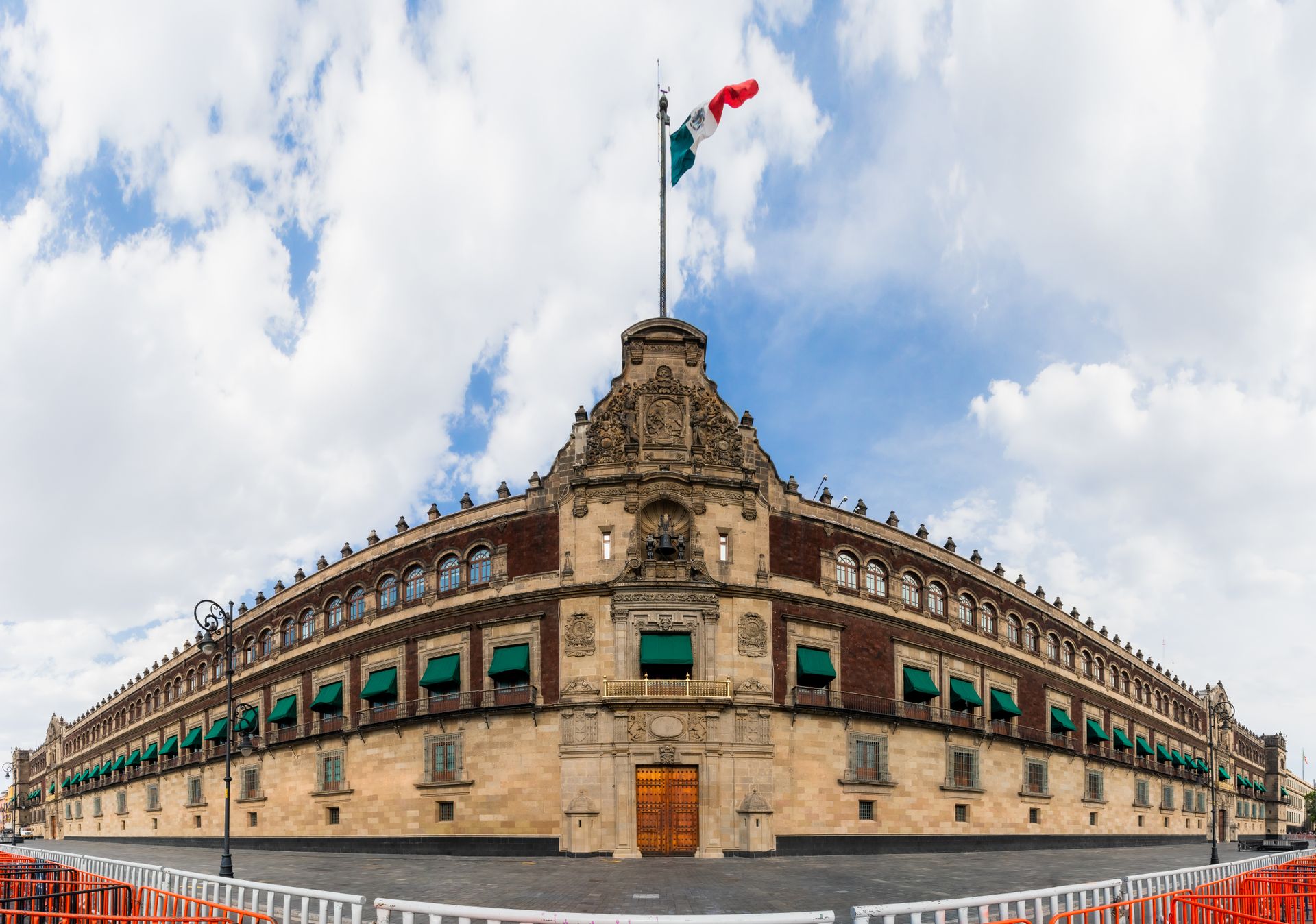
The Plaza de la Constitución, known as the Zócalo, is the logical starting point. Each morning around 6 a.m., a flag-raising ceremony takes place in front of the National Palace, followed by a lowering at sunset. Inside the palace, Diego Rivera's murals, created between 1929 and 1951, trace Mexico's history from pre-Hispanic times through the Revolution. Access is usually free upon presentation of an ID.
The Metropolitan Cathedral and the Templo Mayor
North of the Zócalo, the cathedral superimposes Renaissance, Baroque, and Neoclassical styles across nearly 250 years of construction. Just behind it, the Templo Mayor archaeological site, rediscovered in 1978 during electrical work, displays the foundations of the great Mexica temple and a museum rich in ritual offerings.
The Palacio de Bellas Artes
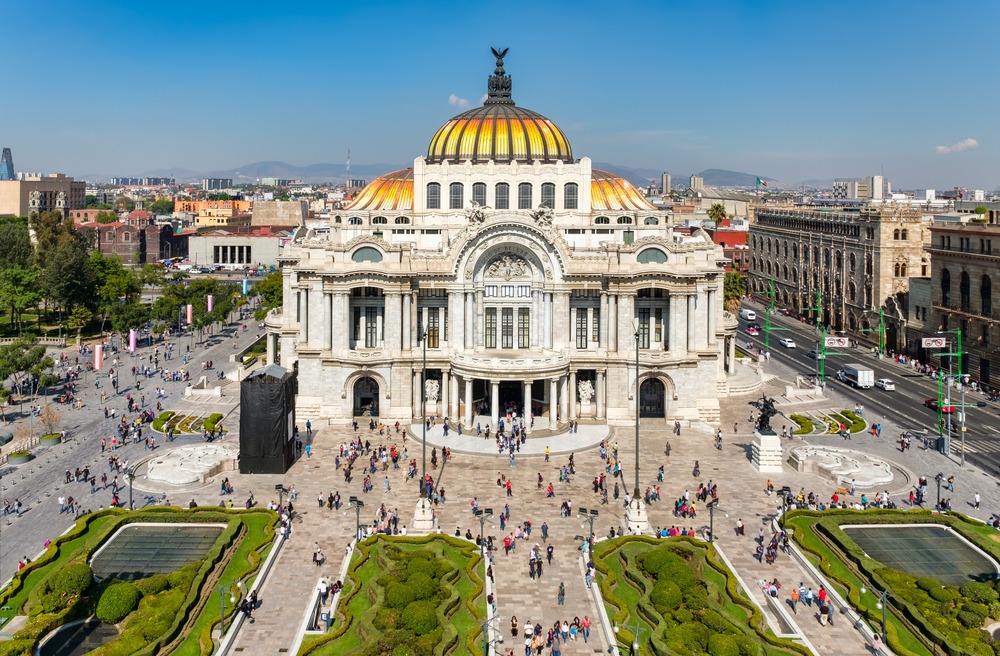
At the western end of Calle Madero, this Art Nouveau and Art Deco palace houses the national opera and several major murals (Rivera, Orozco, Siqueiros, Tamayo). The view from the café Don Porfirio terrace in the Sears building across the street ranks among the best free vantage points overlooking the dome.
Garibaldi Square
About ten minutes' walk to the northwest, Plaza Garibaldi gathers mariachi bands in the evening who perform for a fee. The Tequila and Mezcal Museum (Mutem), on the square, traces the history of these two spirits and offers tastings.
La Merced Market
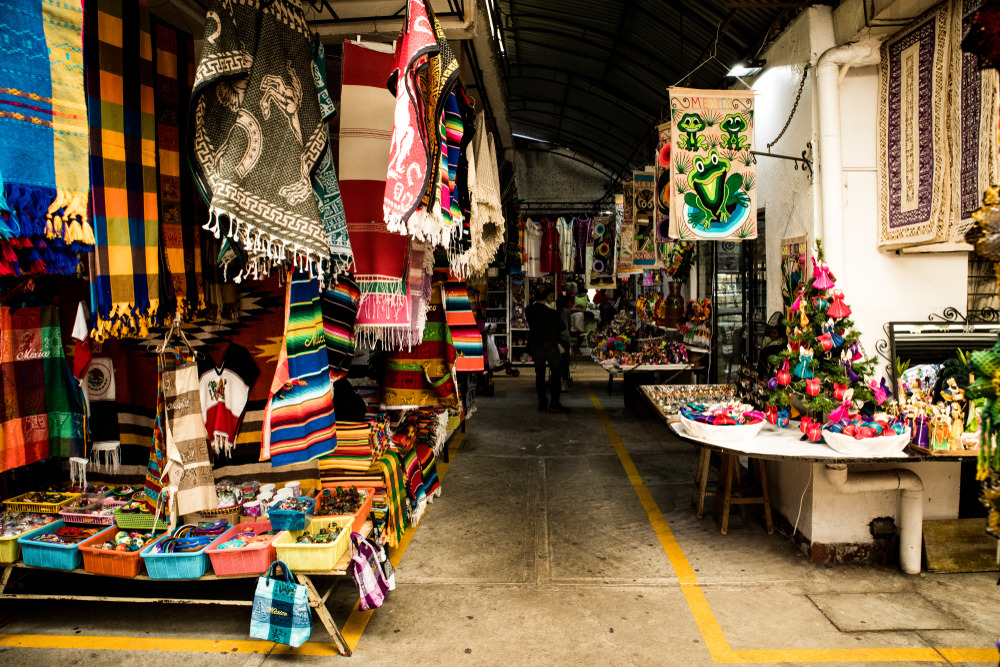
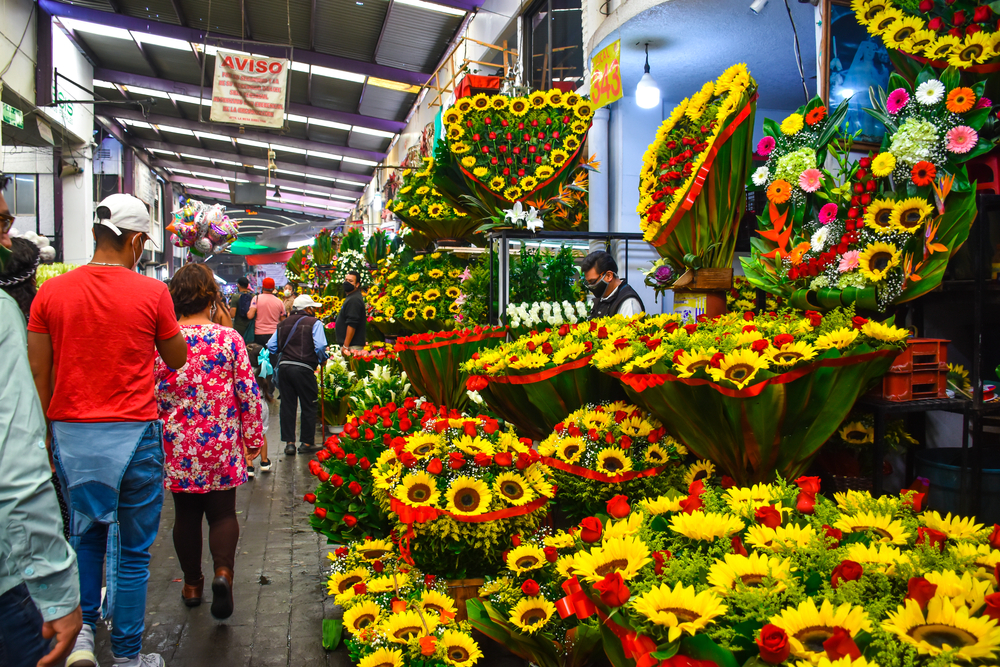
Accessible via the "Mercado de la Merced" Metro station, this covered market ranks among Latin America's largest. It organizes by specialized sectors: produce, flowers, spices, hats, kitchen equipment, toys. The atmosphere is dense; best to arrive in the morning and avoid displaying valuables.
Practical Information
- Duration: allow a half-day for main monuments, a full day if including museums.
- Safety: the tourist perimeter is patrolled during daylight hours. Avoid isolated alleyways after dark, particularly around Tepito and beyond La Merced.
- Prices: most religious buildings and the National Palace are free; museums (Templo Mayor, Bellas Artes) charge modest admission, often free on Sundays for residents.
- Attire: comfortable shoes—cobblestones are uneven and distances can be deceptive.
When to Visit
The dry season, November through April, offers the most stable conditions, with sunny days and cool nights (Mexico City sits at 2,240 m elevation). May through October brings afternoon thunderstorms but leaves mornings clear. Two periods are worth experiencing for their atmosphere: the September 15-16 Independence celebrations (celebrated on the Zócalo) and early November for Día de Muertos, marked by a grand parade crossing the center.
How to Get There
From Benito Juárez International Airport, the center lies roughly 10 km away. Several options:
- Metro: Line 5 (yellow) from Terminal Aérea, with transfer to Line 2 (blue) toward Zócalo or Allende stations. Very economical but awkward with large luggage.
- Metrobús: Line 4 connects the airport to the center via San Lázaro, with a stop near the cathedral.
- Authorized taxi: official taxis (yellow cabs in the arrivals hall) charge a fixed rate by zone, payable at a window before your ride.
- Rideshare: Uber and Didi operate from the airport with dedicated pickup points.
Nearby
The center makes an ideal base for exploring other major sites in the capital and region. To the north, the Basilica of Guadalupe ranks among the continent's principal Catholic pilgrimage sites. To extend colonial immersion elsewhere in Mexico, the Convent of San Bernardino de Siena in the Yucatán illustrates another facet of 16th-century religious architecture. Heritage and military history enthusiasts will continue to San Felipe de Bacalar Fort, while contemporary art lovers can explore the street art scene in Oaxaca.
Frequently Asked Questions
Frequently asked questions
A half-day suffices to explore the Zócalo, cathedral, Templo Mayor, and National Palace. Plan a full day if you wish to include the Palacio de Bellas Artes, Garibaldi Square, and La Merced market.
The main perimeter, between the Zócalo and Alameda Central, is under constant police surveillance during the day and welcomes a substantial flow of visitors. Stay alert to pickpockets in crowded areas and avoid neighboring districts (Tepito, east of La Merced) after nightfall.
Not for most sites: the cathedral, National Palace, and Templo Mayor can be purchased on-site. Only Palacio de Bellas Artes events (folk ballet, opera) require online reservation.
Yes, but the plaza regularly serves as a stage for official events, demonstrations, concerts, or temporary installations (skating rink in December, Día de Muertos in November). Check the municipal calendar if you wish to see the esplanade entirely clear.
Plan Your Trip
The Historic Center often forms the first leg of a Mexico journey, before branching out toward the Yucatán, Oaxaca, or Pacific coasts. To build a tailor-made itinerary including Mexico City and other regions, explore our Mexico travel suggestions.
Nearby
Interested in this visit?
We can include it in your personalised itinerary.