National Museum of Anthropology
National Museum of Anthropology
Located in Chapultepec Park in Mexico City, the National Museum of Anthropology houses 22 galleries dedicated to pre-Hispanic civilizations and contemporary indigenous cultures.
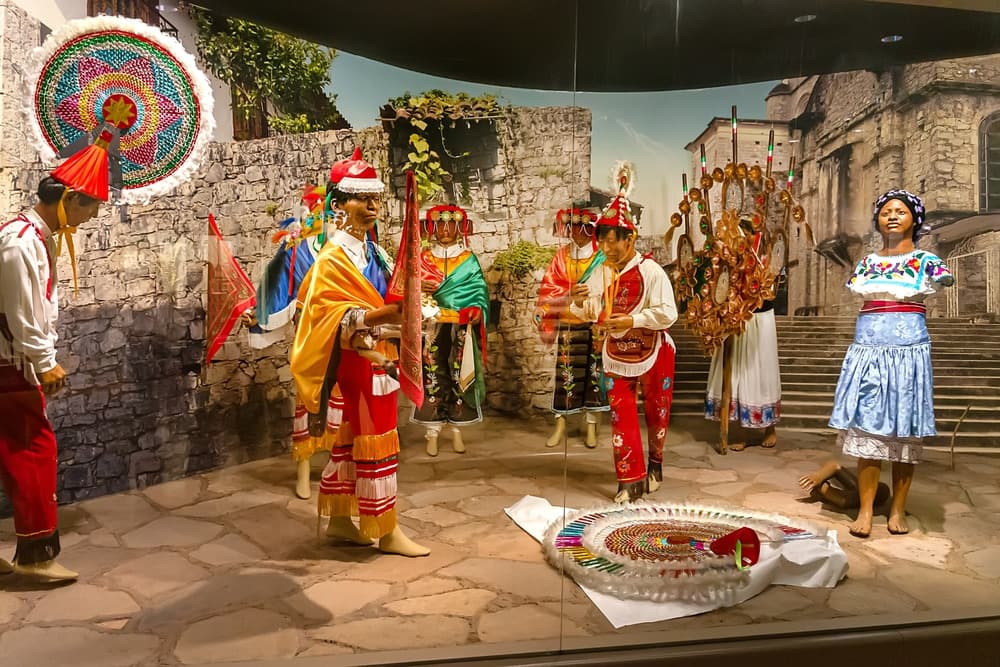
The National Museum of Anthropology in Mexico City holds the world's most extensive collection devoted to pre-Hispanic Mesoamerican civilizations. Set within Chapultepec Park, it brings together within 22 permanent galleries the remnants of the peoples who shaped Mexico before the Conquest, alongside a panorama of contemporary indigenous cultures.
Why visit the museum
Three reasons make this museum essential for understanding Mexico. First, the richness of its collections: the Aztec Stone of the Sun, the jade funerary mask of King Pakal, the seven-meter Tláloc monolith, Toltec atlantes, Mixtec codices. Second, the coherence of its layout, organized by cultural areas and chronologies, which allows you to grasp Mesoamerica's historical depth without prior knowledge. Finally, its modern architecture signed by Pedro Ramírez Vázquez, whose umbrella-shaped roof suspended above the courtyard has become a museographic reference.
Plan for a minimum of half a day for a first visit, a full day if you wish to explore each gallery.
Museum history
The story begins in 1790, when the Coatlicue monolith, the Aztec mother goddess, is unearthed in the heart of Mexico. The viceroy of New Spain, the Count of Revillagigedo, has it installed in the Royal and Pontifical University of Mexico. This gesture is today considered the first act of conservation of Mexican cultural heritage, more than thirty years before the country's independence in 1821.
In 1822, a conservatory of antiquities and natural history is founded within the university. Three years later, in 1825, the Mexican National Museum is born, renamed the "Mexican Museum" in 1834. In 1865, Emperor Maximilian of Austria transfers the collections to the Casa de Moneda. A reorganization begun in 1877 culminates in 1909 with the official creation of the National Museum of Anthropology, History and Ethnology.
Faced with the continuous growth of collections, the construction of a new building is envisioned as early as 1947. The project will be entrusted to Pedro Ramírez Vázquez and inaugurated in Chapultepec Park, where the museum still stands today.
What to see at the museum
The building and its courtyard
The museum is organized around a vast semi-covered courtyard dominated by a monumental umbrella-shaped roof, supported by a single sculptured column from which a fountain springs forth. Murals by Diego Rivera adorn certain spaces and extend the historical interpretation of the collections.
The archaeology galleries
Twenty-two permanent exhibition galleries are spread over two levels, complemented by a temporary exhibition gallery and two auditoriums.
- Galleries 1 and 2: introduction to anthropology and the settlement of Mesoamerica, with a reproduction of Lucy's skeleton and an evocation of the Lascaux cave (museography subject to change).
- Gallery 3: pre-classical period, illustrated by ceramic figurines.
- Gallery 4: Teotihuacán, with a reproduction of the facade of the Temple of the Feathered Serpent.
- Gallery 5: Toltec civilization, originating from the north of the country.
- Gallery 6: the Aztec world, where the Stone of the Sun reigns.
- Gallery 7: cultures of Oaxaca, Zapotec and Mixtec.
- Gallery 8: civilizations of the Gulf of Mexico, including green stone sculptures.
- Gallery 9: Maya area, with life-size reconstructions of the Palenque site and the jade funerary mask of King Pakal.
- Gallery 10: cultures of western Mexico.
- Gallery 11: peoples of northern Mexico.
Ten major works
- The Piedra del Sol: monumental Aztec disk, known as the "Aztec calendar," of ritual purpose.
- The jade mask of King Pakal: funerary mask of the sovereign of Palenque.
- The Atlante of Tula: colossal Toltec statue representing a warrior.
- The statue of Coatlicue: representation of the mother goddess of the Aztecs, at the origin of the museum.
- The Teocalli of Sacred War: monolithic throne commemorative sculpture created for Moctezuma II, illustrating the founding myth of the eagle on the cactus.
- Tláloc: seven-meter monolith dedicated to the rain god, standing at the museum's entrance.
- The Disk of Death: piece associated with the worship of the god of the underworld and the cosmic cycle.
- The obsidian monkey: zoomorphic vessel carved from volcanic stone.
- The reproduction of the Temple of Tepantitla: fresco illustrating Tláloc, accompanied by the Palace of Quetzalcoatl.
- Mixtec codices and gold jewelry: displayed in the Oaxaca gallery, witnesses to pre-Hispanic goldsmithing.
To deepen your understanding of the works, an English-speaking guided tour is recommended.
Practical information
The museum offers a cloakroom service, a gift shop, a restaurant, and a specialized bookstore. The full visit requires comfortable shoes: distances between galleries are considerable. Photography without flash is generally permitted in permanent spaces.
Rates and hours are subject to change; it is advisable to check information on the official website before your visit. Admission is usually free for residents on Sundays, which results in very heavy crowds.
When to visit
The museum can be visited year-round, as Mexico City's climate remains temperate. To enjoy the spaces in tranquility, prioritize weekdays in mid-morning or early afternoon. Avoid Sundays, when admission is free for residents, as well as Mexican school holidays (mid-July to mid-August, and late December).
A coherent combination is to visit the museum in the morning, then take a walk through Chapultepec Park and its castle in the late afternoon.
How to get there
The museum is located at the intersection of Paseo de la Reforma Avenue and Calzada Gandhi, in the Chapultepec neighborhood.
- By metro: Line 1 (Chapultepec station) or Line 7 (Auditorio station), then approximately 15 minutes' walk.
- By Metrobús: Line 7, Antropología station, located opposite the entrance.
- By taxi or Uber: mention "Museo Nacional de Antropología," an address universally known to drivers.
- By bicycle: several Ecobici stations are located in front of the museum.
Nearby attractions
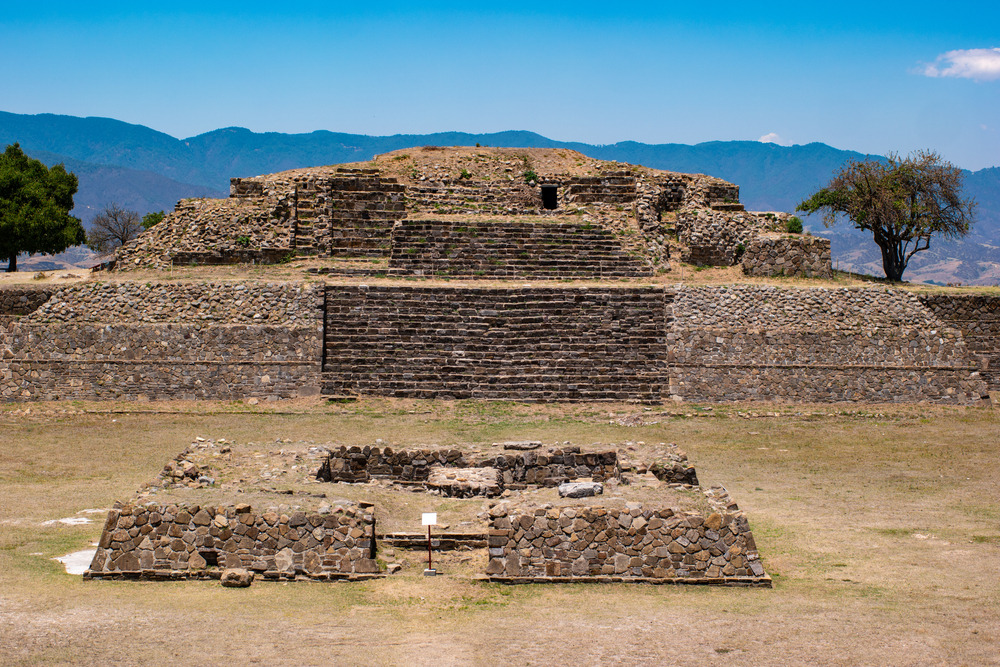
Chapultepec Park, one of Latin America's largest urban parks, also houses Chapultepec Castle, the Museum of Modern Art, and the Tamayo Museum, all accessible on foot. The neighboring Polanco district concentrates restaurants and galleries. To extend your archaeological exploration of Mexico, you can supplement this overview with a visit to Monte Albán, the Zapotec capital in the Oaxaca Valley, or the Archaeological Museum of Campeche dedicated to the Maya world. For contemporary art, Oaxaca's artistic scene offers a vibrant counterpoint to pre-Hispanic collections.
Frequently asked questions
Frequently asked questions
Allow between three and four hours for a selective tour of the main galleries, and a full day if you wish to explore each of the 22 permanent galleries as well as the floor dedicated to ethnography.
Yes, the museum lends itself well to a family visit. Life-size reconstructions (Temple of the Feathered Serpent, Pakal's tomb) and the outdoor courtyard generally capture the attention of younger visitors. Adjust the duration to their pace.
Guided tours in English can be organized through independent guides or specialized agencies. This option is recommended to grasp the historical context of the works presented.
Not essential on weekdays. On weekends and public holidays, crowds can be significant; arriving at opening time or in mid-afternoon remains the best strategy.
Absolutely. Chapultepec Castle, the Museum of Modern Art, and the Tamayo Museum are located in the same park and can complement a cultural day.
Organize your trip
The National Museum of Anthropology is a logical starting point for exploring the country's archaeological sites. To build a coherent itinerary linking Mexico to the great pre-Hispanic capitals, consult our customized trips to Mexico.
Nearby
Interested in this visit?
We can include it in your personalised itinerary.