Palacio Nacional de México
Palacio Nacional de México
Facing the Zócalo, the National Palace houses Diego Rivera's monumental murals and centuries of Mexican history, from the Aztec Empire to the Republic. Free admission, direct metro access.
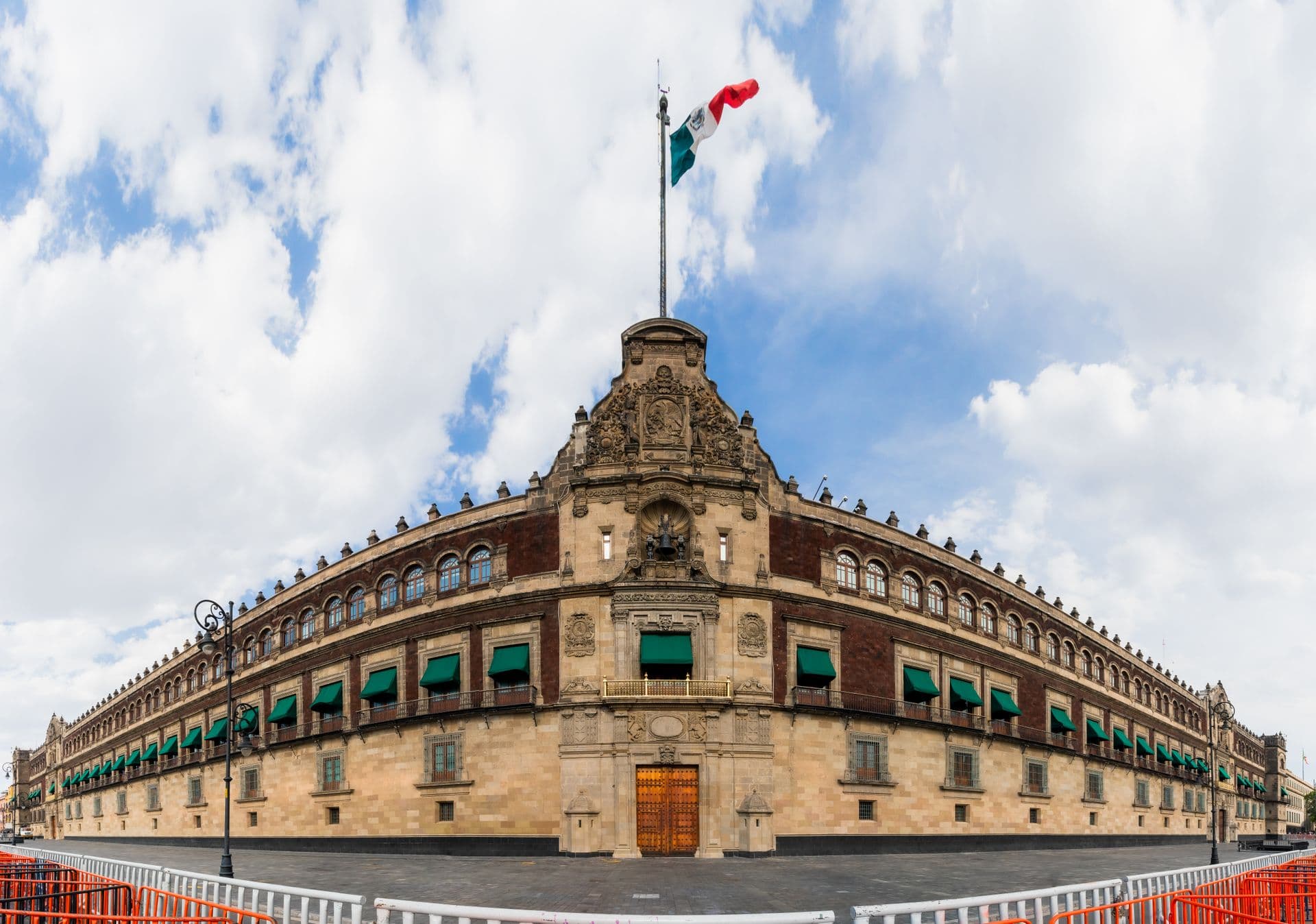
The National Palace occupies the eastern side of the Zócalo, Mexico City's grand central plaza. The seat of the Mexican federal executive branch, it also houses Diego Rivera's celebrated murals depicting the history of Mexique. It is one of the country's most important civil buildings, constructed on the foundations of the palace of Moctezuma II, then rebuilt and enlarged during the colonial period.
Practical Information at a Glance
- Admission: free for visitors
- Access: facing the Zócalo, east side — Metro Line 2, Zócalo station
- Recommended duration: 1 to 1.5 hours to view the murals and interior courtyards
- Dress code: no specific restrictions
- Identification: an ID document may be requested at the entrance (official government building)
What to See
The building is organized around several interior courtyards. The first floor of the central patio is entirely covered with Diego Rivera's murals, painted between 1929 and 1951. These monumental panels illustrate Pre-Hispanic civilization, the Conquest, the colonial period, Independence, and the Mexican Revolution.
Also found here are the historic office of Benito Juárez, preserved as it was, and the Dolores Bell—a replica of the one rung by Miguel Hidalgo in 1810 to launch the call for Independence.
History and Context
The site was originally the palace of Moctezuma II, an Aztec sovereign. Hernán Cortés had his residence constructed there after the Conquest of 1521. The current building dates mainly from the 17th century; its baroque facade of red volcanic stone was remodeled several times. It became the seat of the vice-royal government, then of republican power after Independence.
In 1926, Diego Rivera received the commission for the murals. He worked on them intermittently for over twenty years, producing one of the most ambitious mural works of the Mexican muralist movement.
Highlights of the Visit
The Murals of Diego Rivera
The grand staircase and first-floor galleries concentrate most of the paintings. The central panel of the staircase, Historia de México, is the most spectacular: it unfolds across three walls a dense fresco, populated by hundreds of historical and mythological figures.
The Office of Benito Juárez
Preserved in its original state, this office evokes the figure of the reformist president who governed Mexique in the 19th century. The furniture and personal objects are authentic.
The Dolores Bell
Suspended above the central balcony, this bell is at the heart of the Grito de Independencia ceremony every September 15th in the evening, when the President of the Republic rings it from the balcony facing the Zócalo.
The Interior Courtyards
The colonial patios offer austere and imposing architecture. The central patio, with its two-level arcades, is the main setting for the murals and a pleasant space to observe the building as a whole.
Photography Tips
Natural light illuminates the staircase murals mid-morning. Avoid peak hours (late morning on weekends) to photograph details without crowds. A wide-angle lens is useful for capturing the entire expanse of the mural panels. Photography is permitted without flash in areas open to the public.
Location and Access
The National Palace is located on the Plaza de la Constitución (Zócalo), at the heart of Mexico City's Historic Center. The Zócalo Metro station (Line 2) is just steps from the main entrance. The neighborhood is dense with historical monuments accessible on foot.
Accessibility for people with reduced mobility is partial: the ground floor and certain courtyards are accessible, but the monumental staircase to the first-floor murals has no public elevator.
Nearby Attractions
- Metropolitan Cathedral — facing the Palace, on the Zócalo, the largest cathedral in Latin America.
- Templo Mayor — ruins of the great Aztec temple, just a short walk to the northeast, with a remarkable site museum.
- Zócalo — the central plaza, one of the largest in the world, the natural starting point for any Historic Center visit.
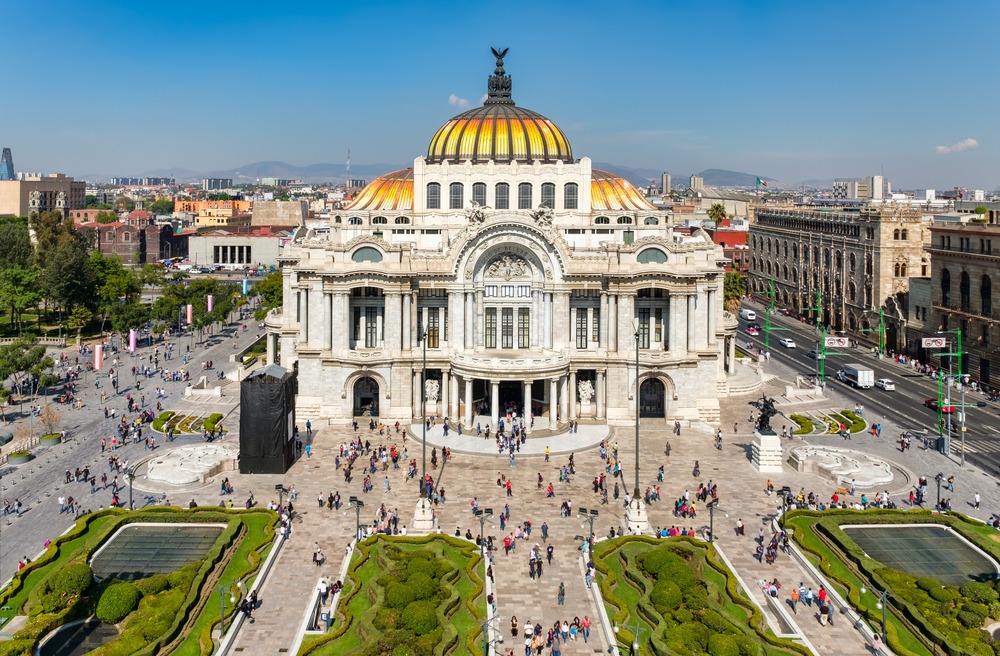
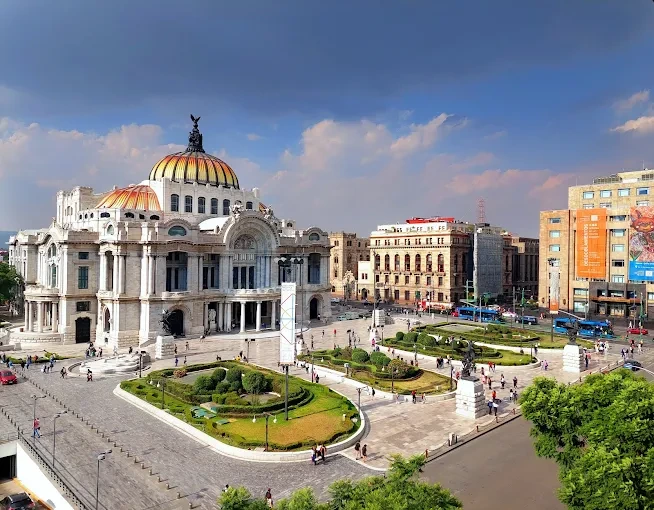
- Palacio de Bellas Artes — a few minutes' walk to the west, an Art Nouveau and Art Deco masterpiece housing additional mural works.
Frequently asked questions
Admission is free. An ID document may be requested at the entrance, as the building is an official Mexican state building.
Allow between 1 and 1.5 hours to view Diego Rivera's murals, Benito Juárez's office, and the interior courtyards at a leisurely pace.
Yes, photography is permitted in areas open to the public. Avoid flash to prevent damage to the mural pigments.
The Templo Mayor is a two-minute walk away, to the northeast of the Palace. Both sites can easily be visited in the same half-day from the Zócalo.
The Palace can be visited year-round. On weekday mornings, crowds are smaller. Avoid September 15th, the day of the national Grito ceremony, when access is very restricted.
The ground floor and courtyards are partially accessible. The monumental staircase leading to the first-floor murals has no public elevator; inquire on-site about available accommodations.
Nearby
Interested in this visit?
We can include it in your personalised itinerary.