Plaza de la Independencia (Campeche)
Plaza de la Independencia (Campeche)
Heart of the UNESCO-listed historic centre, Campeche's Plaza de la Independencia brings together a baroque cathedral, colourful arcades and vibrant local life. The ideal starting point to explore the fortified city.
At the heart of Campeche's colonial city, the Plaza de la Independencia is the central square around which the city has developed since the 16th century. Surrounded by the cathedral, the former municipal palace and colourful arcades, it concentrates the essence of urban life in Campeche. This is where you feel the pulse of the city: evening strollers, musicians, fruit vendors and families on white cast-iron benches.
Practical information at a glance
- Access: public square, open access at all times
- Recommended duration: 30 to 60 minutes for the square itself, longer if you visit inside the cathedral
- Best time: in the evening, when façades are illuminated and the square comes alive
- Accessibility: paved ground, some areas may be challenging for wheelchair users
What to see
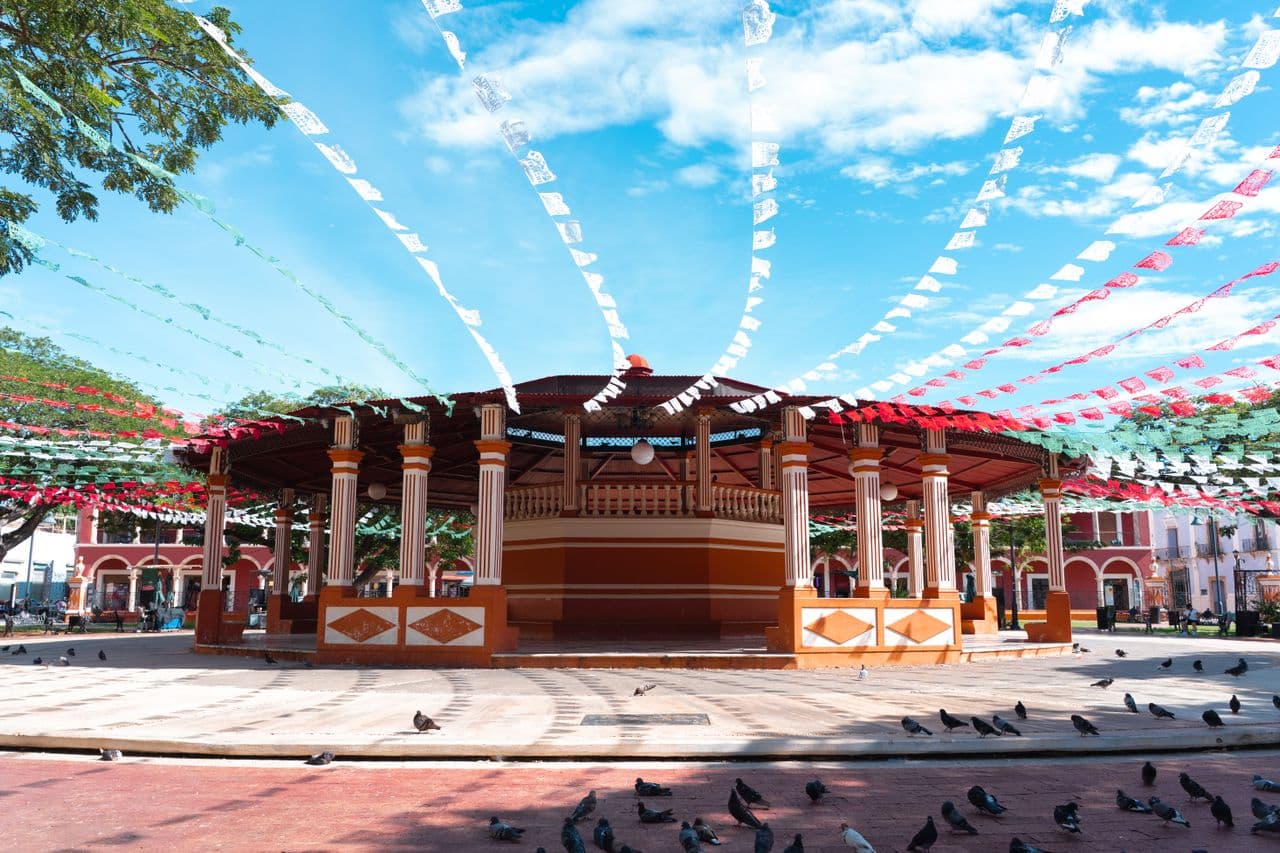
The square is bounded by four streets in the historic centre listed as a UNESCO World Heritage Site. The arcades (portales) bordering two sides house cafés and shops under their colonnades. The white cast-iron benches, characteristic of 19th-century Mexican squares, dot the central garden planted with tropical trees. A central kiosk regularly hosts concerts and cultural events.
History and context
Campeche was founded by the Spanish in 1540 on the site of a Maya village. The central square, laid out according to the grid pattern imposed by the Laws of the Indies, immediately became the administrative and religious heart of the city. In the 19th century, it took the name of Independencia in reference to Mexican independence in 1821. In 1999, Campeche's historic centre was inscribed on the UNESCO World Heritage List, recognising the colonial urban ensemble of which the square is the pivot.
Highlights of your visit
The Cathedral of the Immaculate Conception
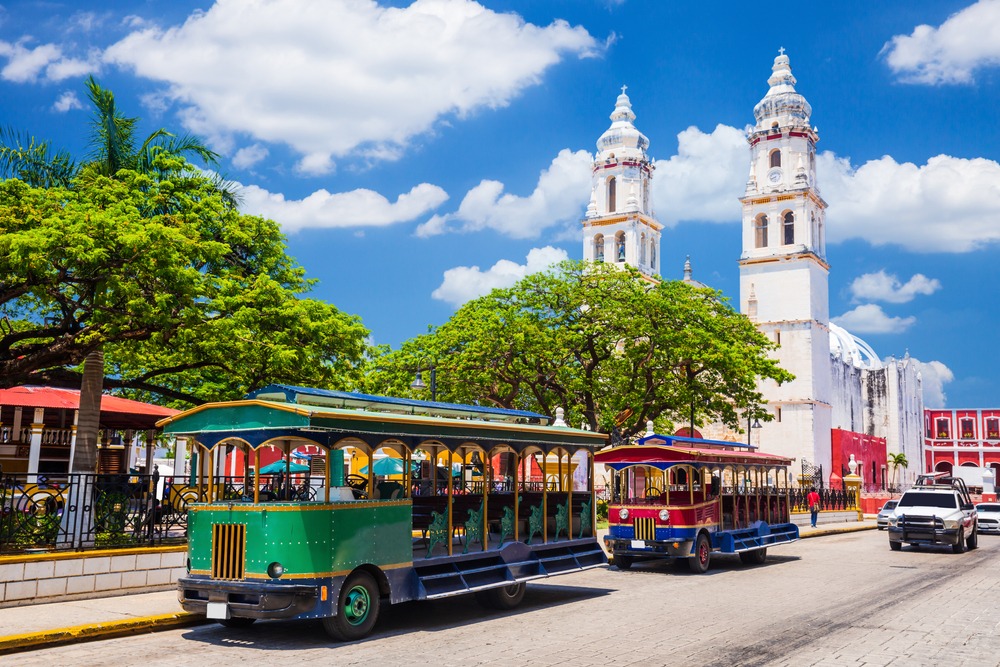
Built from the 16th century and completed in the 18th, the cathedral occupies the entire eastern flank of the square. Its sober baroque façade in white limestone contrasts with the pastel tones of neighbouring buildings. The interior houses an ivory Christ known as the Cristo Negro, an object of local devotion.
The Palacio Municipal
The former municipal palace, on the northern side, features an arcaded façade typical of Mexican colonial architecture. It is possible to access it to see the murals that trace the history of the region, from the Maya to the present day.
Evening animation
As dusk falls, the square transforms. The colourful façades of the centre light up, Campeche families occupy the benches and the arcades' terraces come alive. This is the most authentic moment to observe local life.
Photography tips
The golden light of late afternoon (one hour before sunset) is ideal for photographing the coloured façades and the cathedral. In the evening, artificial lighting creates interesting contrasts. From the centre of the square, a wide frame captures the cathedral, arcades and tropical vegetation in a single shot.
Location and access
The Plaza de la Independencia is located in the centre of Campeche's barrio histórico, a few minutes' walk from the main walls and bastions of the city. The historic centre is compact and entirely walkable. The main bus station is approximately 2 km away; taxis and tourist carriages serve the square. From the Baluarte de la Soledad and the Museo de la Arquitectura Maya, count less than five minutes on foot.
Nearby attractions
- Baluarte de la Soledad — the best-preserved bastion of the colonial enclosure, a stone's throw from the square.
- Puerta de Tierra — one of the two entrance gates to the fortified city, with its evening sound and light show.
- Baluarte de Santiago — bastion converted into a tropical botanical garden.
- Malecón de Campeche — seafront promenade along the Gulf of Mexique, a few minutes' walk away.
Frequently asked questions
Yes, the square is a public space open at all times, with no entrance fee. The adjacent cathedral is also freely accessible, except during religious ceremonies.
The dry season, from November to April, offers the most pleasant conditions. July and August are hot and humid. Campeche's carnival, in February, particularly animates the square.
As in all Mexican Catholic places of worship, covered shoulders and knees are recommended. Avoid very short shorts and sleeveless tops.
Absolutely. The historic centre is very compact. In half a day, it is possible to visit the square, several bastions and walk along part of the walls on foot.
Local guides offer historic centre tours departing from the square. The State Tourist Office, located nearby, can direct you to approved service providers.
Interested in this visit?
We can include it in your personalised itinerary.