Temple of the Descending God (El Castillo / Tulum Archaeological Zone)
Temple of the Descending God (El Castillo / Tulum Archaeological Zone)
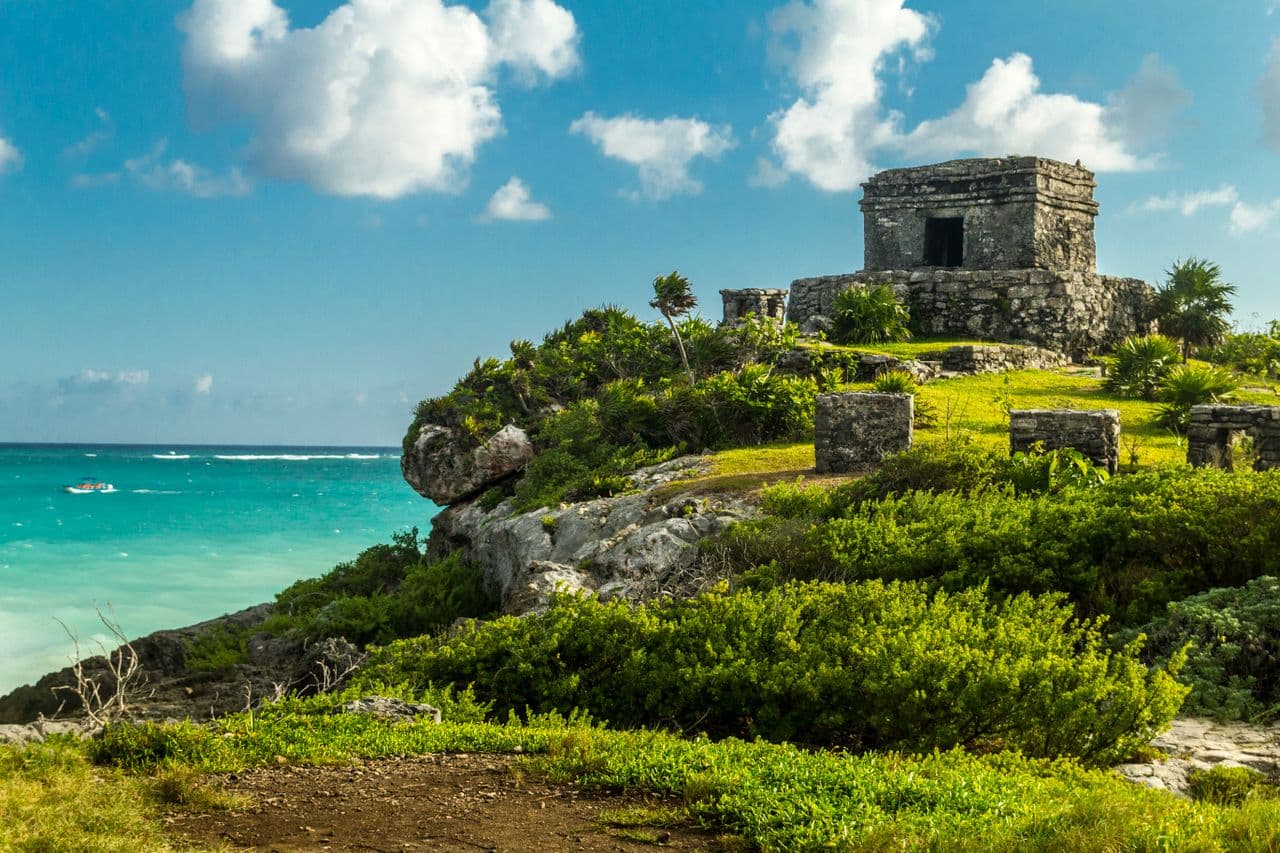
The Temple of the Descending God houses the clearest representation of this winged, inverted deity in Maya art, at the heart of the Tulum archaeological site, overlooking the Caribbean Sea.
At the heart of the Tulum archaeological zone, the Temple of the Descending God stands out for a niche carved above its entrance: a winged figure, head downward, identified as a descending deity. This rare motif in Maya art makes this small edifice one of the site's most singular structures, perched on limestone cliffs facing the Caribbean Sea.
Practical information at a glance
- Access: included in the Tulum archaeological zone entrance ticket
- Dress code: no clothing restrictions, but closed-toe shoes recommended (uneven ground)
- Suggested duration: 1.5 to 2 hours for the entire site, with a few minutes at this temple
- Accessibility: the site features elevation changes and unpaved paths; access to the temple itself is limited
- Important rule: climbing on structures has been prohibited for several years
What you'll see
The temple is a compact, single-room structure, characteristic of late Maya architecture (postclassic period). Its façade features the niche of the Descending God, an inverted figure with outstretched wings, sculpted in limestone. The interior, not accessible to the public, retains traces of mural paintings. The building is part of a complex of structures oriented toward the sea, with El Castillo as a backdrop.
History and context
Tulum was an active Maya trade port between the 12th and 16th centuries. The Descending God—sometimes associated with the bee, Venus, or the setting sun—appears on several site structures, but this temple's niche is the clearest and best-preserved representation. Spanish conquistadors described Tulum from the sea before even landing, testament to the site's visibility from maritime routes.
Highlights of your visit
The carved niche
Position yourself facing the main façade to observe the inverted figure in its trapezoidal niche. The sculpture is small but precise: wings, headdress, and freefall posture are clearly visible to the naked eye.
The panoramic view of El Castillo and the sea
From the esplanade near the temple, your view encompasses both El Castillo and the turquoise expanse of the Caribbean Sea. This is one of the rare archaeological sites in the world where ruins and shoreline merge so seamlessly.
Mural paintings visible from the entrance
Without entering the interior, some visitors can make out fragments of red and blue pigments on the inner walls. Morning light favors their observation.
Photography tips
Morning light (before 10 a.m.) illuminates the façade head-on and avoids harsh shadows. In late afternoon, backlighting from the sea creates a dramatic effect on the temple's silhouette. Frame wide to include coastal vegetation and El Castillo in the background. Drones are prohibited on the archaeological site.
Location and access
The Temple of the Descending God is located within the Tulum archaeological zone, on the east coast of the Yucatán Peninsula, in Quintana Roo State. The site's main entrance is accessible from Tulum town center by shuttle or on foot. From Playa del Carmen, allow approximately one hour by ADO bus. From Cancún, the journey takes about two hours. A tourist train (Tren Maya) now serves the region with a station near Tulum.
Nearby attractions
- El Castillo de Tulum — the site's iconic pyramid, visible from the sea, just meters from the temple.
- Temple of the Frescoes — the best-preserved building on the site, with two-level Maya mural paintings.
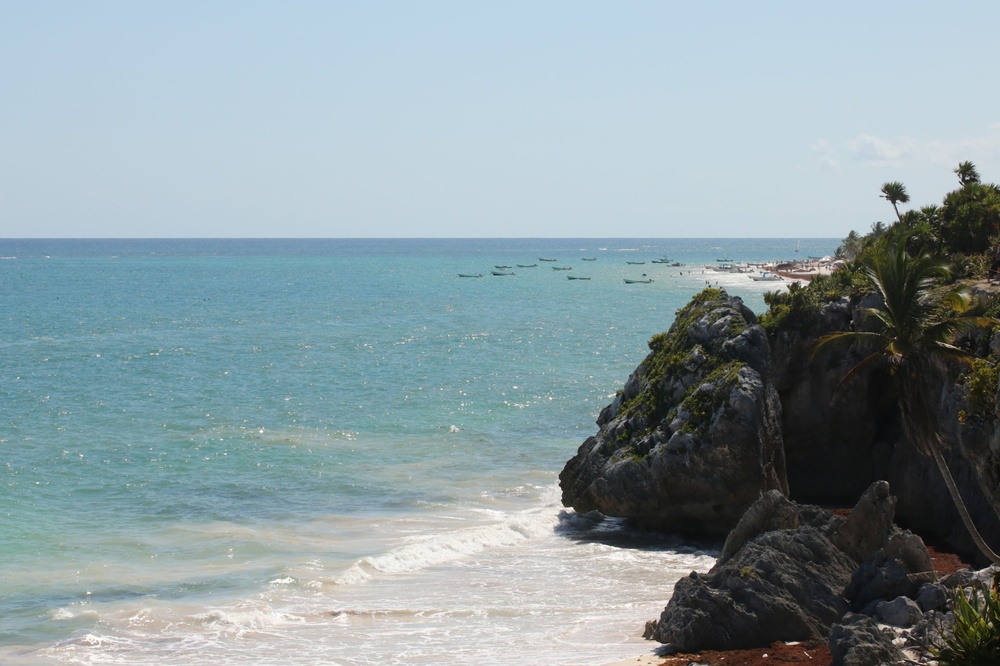
- Beach beneath Tulum's ruins — a cove accessible from the site, ideal after your visit.
- Gran Cenote — underground natural swimming pool a few kilometers from the archaeological site.
- Cobá Archaeological Site — another Maya city in the jungle, approximately 45 km away, with a pyramid still open for climbing.
Frequently asked questions
No. Climbing on all structures in the Tulum archaeological zone has been prohibited for several years for conservation reasons. Visitors circulate on marked paths around the buildings.
The dry season, from November to April, offers the most pleasant conditions. July to October corresponds to hurricane season; rainfall can be intense but mornings often remain clear.
Allow 1.5 to 2 hours to tour the entire archaeological zone at a leisurely pace, including the Temple of the Descending God, El Castillo, and the Temple of the Frescoes.
Yes. A small beach is accessible from within the archaeological site. Bring your swimwear and towel under your clothes to avoid returning to the changing rooms.
No. Drone use is prohibited throughout the Tulum archaeological zone, as it is on most sites managed by INAH in México.
Access is partial. Main pathways are passable, but terrain is uneven and some areas have elevation changes. It's advisable to check with the site entrance upon arrival.
Interested in this visit?
We can include it in your personalised itinerary.