Teotihuacán Archaeological Zone
Teotihuacán Archaeological Zone
Fifty kilometers from Mexico City, Teotihuacán aligns monumental pyramids and pre-Hispanic frescoes along a four-kilometer avenue. A UNESCO-listed site best visited early morning to avoid crowds and heat.
Fifty kilometers northeast of Mexico City lies one of the greatest pre-Hispanic cities on the American continent. Between the 1st and 7th centuries, Teotihuacán was a metropolis of more than 100,000 inhabitants whose influence radiated across all of Mesoamerica. Its monumental pyramids, precisely aligned avenues, and polychromatic frescoes make it an archaeological site of remarkable historical density, listed as a UNESCO World Heritage site since 1987.
Practical Information at a Glance
- Admission: paid entry (INAH rate; free on Sundays for Mexican nationals)
- Closure Days: open daily; check INAH website for exceptional closures
- Recommended Duration: 3 to 5 hours to explore the entire site
- Access from Mexico City: buses from Central del Norte Bus Station (direct Teotihuacán line); car via Highway 132D
- Attire: closed, comfortable shoes essential; hat and sunscreen highly recommended
- Accessibility: largely unpaved terrain; limited wheelchair access
What to See
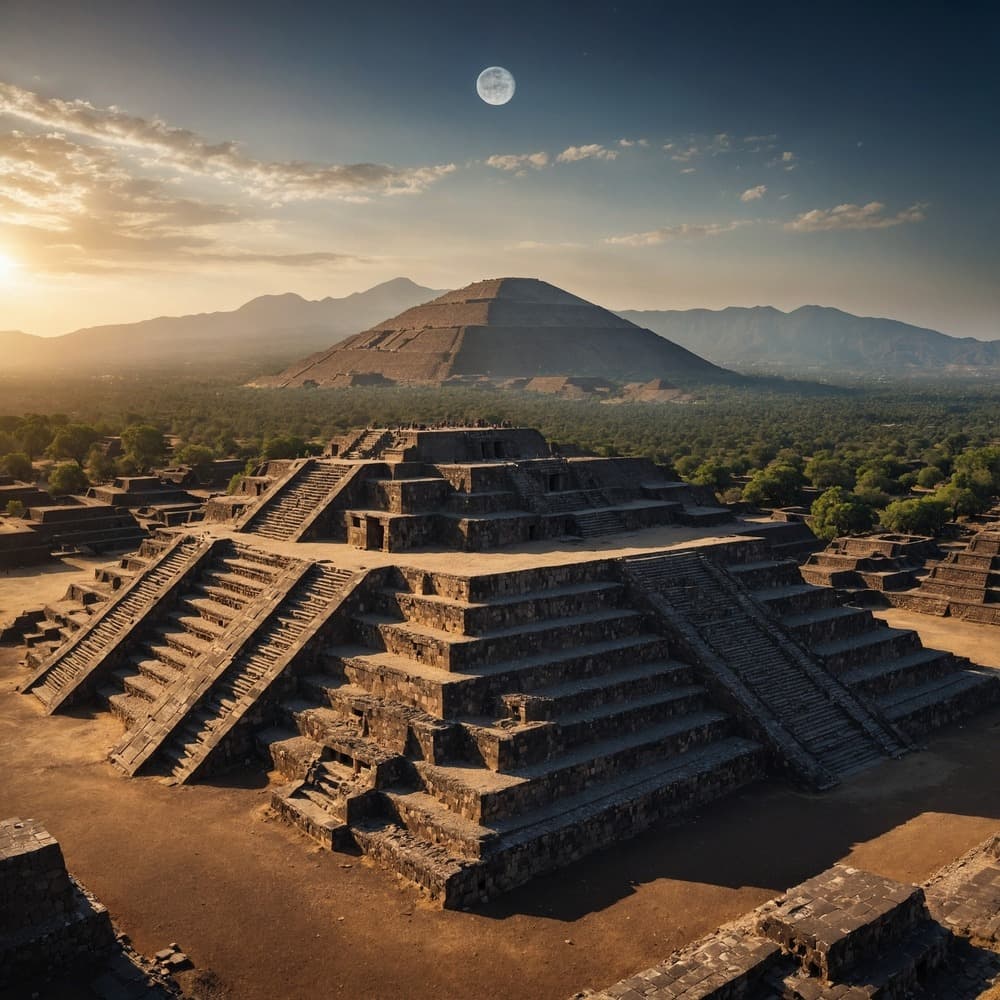
The site is organized around the Avenue of the Dead, a north-south axis nearly four kilometers long. To the north stands the Pyramid of the Moon, to the south the Citadel with the Temple of Quetzalcóatl. The Pyramid of the Sun, the world's third-largest pyramid by volume, dominates the site from its center.
The Palace of Quetzalpapálotl and the Palace of the Jaguars retain wall frescoes with vivid pigments still intact. The Teotihuacán Museum, located on the site, displays ceramics, masks, and models that contextualize the city.
History and Context
Teotihuacán means in Nahuatl "the place where men become gods." The city was founded around the 2nd century BC and reached its peak between 150 and 550 AD. Its ethnic identity remains debated: neither Aztec nor Maya, it preceded both civilizations.
Abandoned around 650 AD following a probable fire linked to internal unrest, the city was rediscovered by the Aztecs, who venerated it as a sacred place of world creation. Spanish conquistadors mentioned it in the 16th century; systematic excavations began in the late 19th century.
Highlights of Your Visit
Pyramid of the Sun
At 65 meters high with a base of 225 meters on each side, this five-level pyramid is the site's central monument. The climb via the front stairway offers a panoramic view over the entire valley. The ascent is steep; bring water.
Pyramid of the Moon
Slightly smaller but perched on higher ground, it offers from its summit the most complete perspective of the Avenue of the Dead. Recent excavations uncovered burial chambers with human and animal offerings.
Temple of Quetzalcóatl
The best-preserved façade on the site: hundreds of sculpted heads of the feathered serpent and the rain god Tláloc alternate on the slopes. The original polychrome was red, green, and yellow.
Palace of Quetzalpapálotl
Likely the residence of a religious elite, this palace features pillars adorned with bas-reliefs depicting the mythical butterfly-bird. The interior frescoes are among the best-preserved on the site.
Photography Tips
Light is optimal early morning, from opening, before heat haze veils the pyramids. From the summit of the Pyramid of the Moon, frame the Avenue of the Dead in overhead perspective for a classic composition. Sculpted details of the Temple of Quetzalcóatl stand out best in raking light of late morning. Photography is free throughout the site; drones are prohibited without special INAH authorization.
Location and Access
The site is located in the municipality of San Juan Teotihuacán, in the State of Mexico. From Mexico City, buses depart regularly from the Central del Norte Bus Station (Autobuses del Norte metro, Line 5). The journey takes approximately one hour. By car, Highway 132D connects Mexico City to the site in about 45 minutes depending on traffic.
Four numbered entrances (1 to 5, with 4 non-existent) provide access to different parts of the site. Entrance 1, to the south, accesses the Citadel; Entrance 3, in the center, is closest to the Pyramid of the Sun.
Nearby Attractions
- Basilica of Our Lady of Guadalupe — Latin America's most-visited Catholic shrine, about forty kilometers to the southwest.
- Historic Center of Mexico City — the Zócalo and Templo Mayor, Aztec and later colonial heart of the capital, about an hour away.
- National Museum of Anthropology — in Mexico City, it houses the world's largest collection of pre-Hispanic art, including pieces from Teotihuacán.
- Acolman Convent — 16th-century Augustinian monastery located a few kilometers from the site, with a remarkable Plateresque façade.
Frequently asked questions
The dry season, October through April, offers the best conditions: clear skies and moderate temperatures. During the rainy season (May-September), brief but intense showers can make stairs slippery. Avoid weekends and Mexican holidays to limit crowds.
Yes, the Pyramid of the Sun and Pyramid of the Moon are accessible for climbing. Access to the Temple of Quetzalcóatl is restricted for conservation reasons. Rules may change; check with INAH before your visit.
Plan for at least three hours for the main monuments. Five hours allows you to include the site museum, palaces, and a lunch break. The site is vast and exposed to the sun: start early to avoid midday heat.
Yes, if you start early from Mexico City. After the site, Acolman Convent is a few kilometers away and takes less than an hour to visit. Your return to Mexico City allows a stop at the Basilica of Guadalupe in late afternoon.
No, drone use is prohibited without prior INAH authorization. Photography on the ground with cameras or smartphones is free and unrestricted.
Accredited official guides offer their services at site entrances, in Spanish, English, and sometimes French. Local agencies in the Nomadays network can organize a guided visit from Mexico City with transport included.
Interested in this visit?
We can include it in your personalised itinerary.