Colonial Heartland
The Mexican high plateau between 1,800 and 2,400 m, its UNESCO mining cities, Mexico City and its 22 million inhabitants, Teotihuacán and Puebla's mole poblano.
The colonial heartland occupies Mexico's high plateau, the altiplano stretching between 1,800 and 2,400 meters in elevation, bounded by the Sierra Madre Oriental and Sierra Madre Occidental. From our agency in Mexico City, we view this region as the country's historical and political heart, where indigenous Nahua, Otomi, and Purépecha peoples blended with Spanish colonizers who arrived in the 16th century. The cities we guide you through were built on wealth extracted from the silver mines of Zacatecas, Guanajuato, and San Luis Potosí, which explains the density of their baroque and neoclassical heritage.
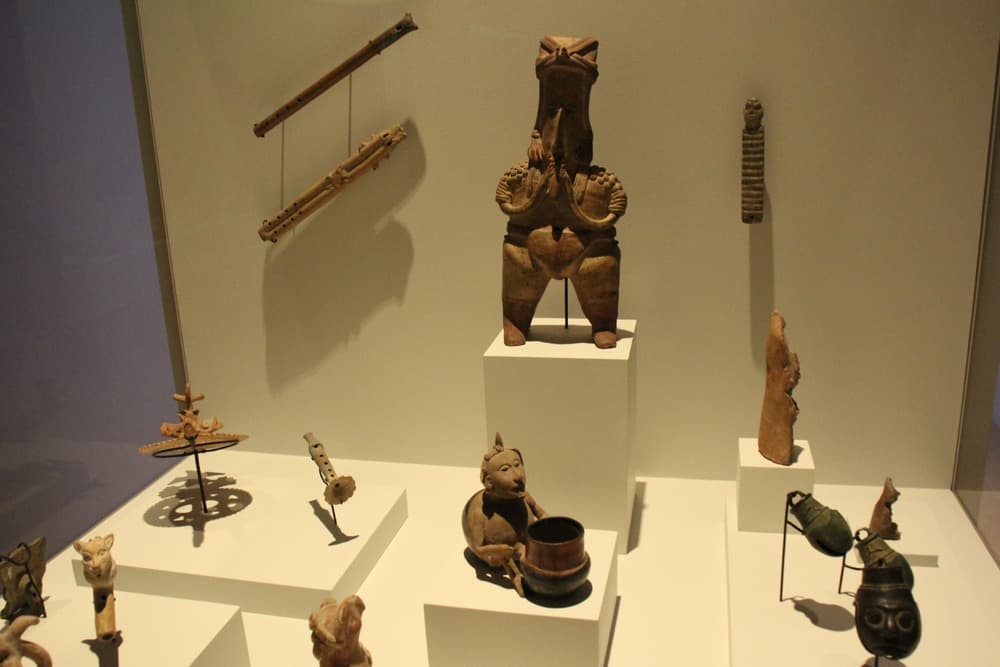
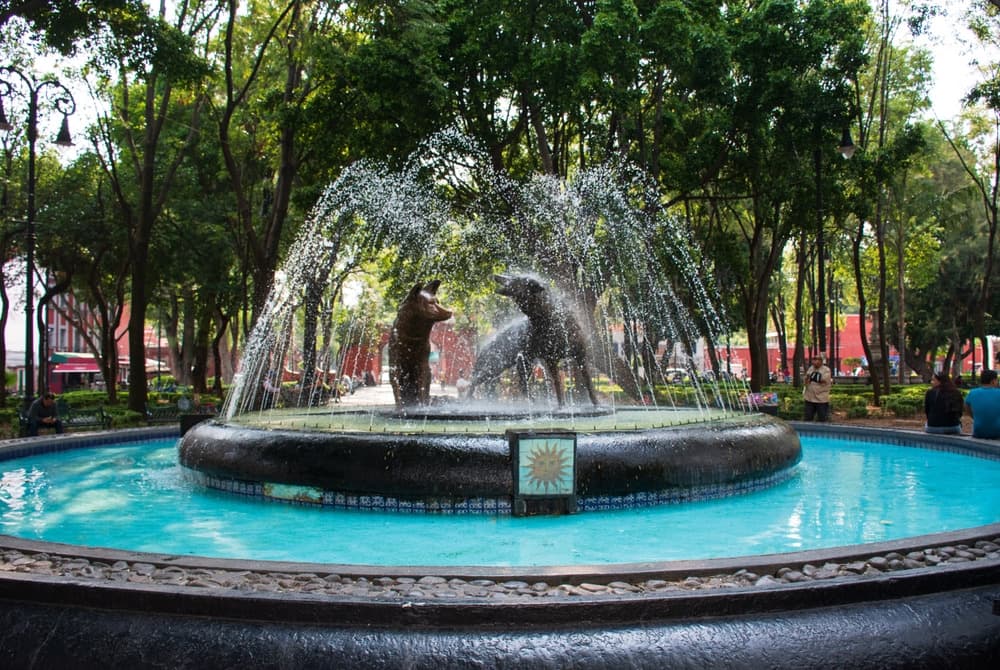
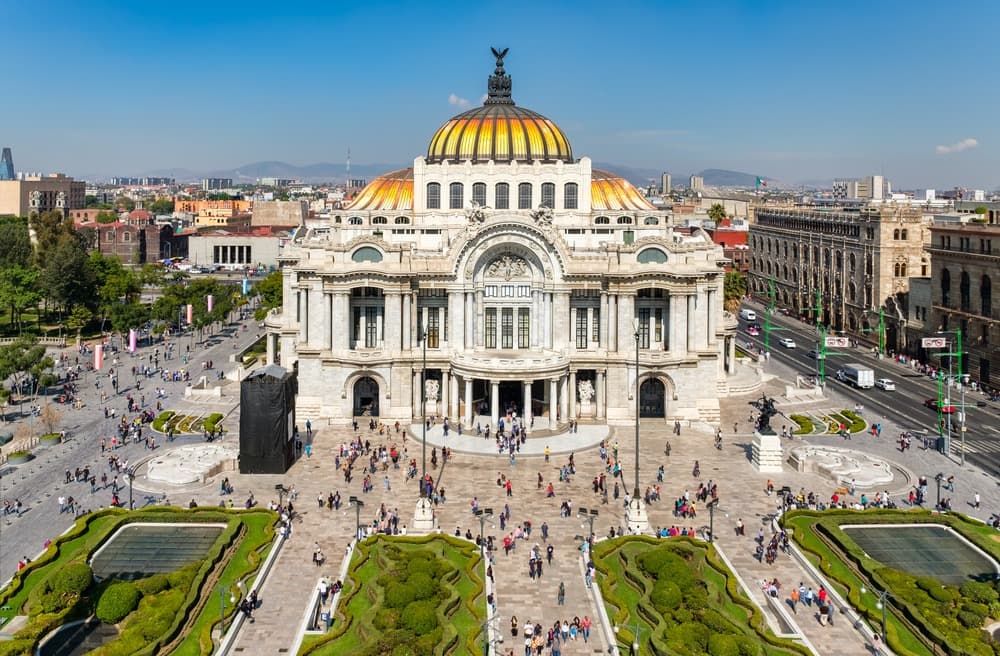
Mexico City concentrates 22 million inhabitants on the former Lake Texcoco, drained by the Spanish. We recommend three to four days to grasp the city: the Zócalo and Metropolitan Cathedral built atop the ruins of the Aztec Templo Mayor, the Coyoacán neighborhood where Frida Kahlo lived, the National Anthropology Museum in Chapultepec Forest, and a day trip to Teotihuacán, a pre-Hispanic city 50 km northeast whose Pyramid of the Sun and Pyramid of the Moon were abandoned around 650 CE.
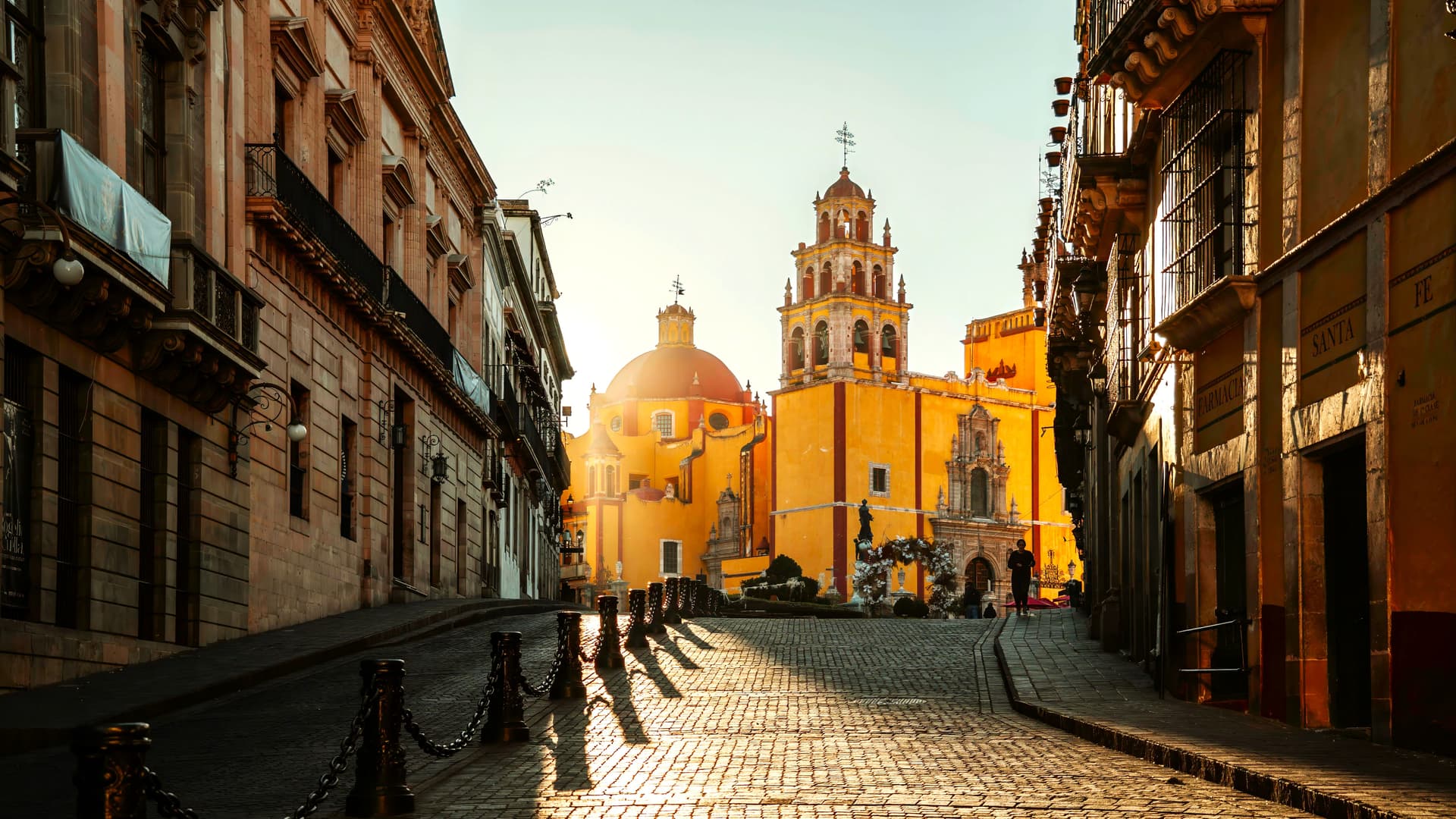
Northwest of the capital, the Bajío encompasses UNESCO-designated mining cities. Guanajuato spirals around a canyon floor, its streets pass underground through former mining drainage tunnels converted into traffic routes, and the Callejón del Beso remains one of the country's narrowest alleyways. San Miguel de Allende, 90 km east, preserves its ochre and pink facades around the neo-gothic San Miguel Arcángel Parish. Querétaro retains its 74-arch aqueduct built between 1726 and 1738 to bring water from La Cañada.
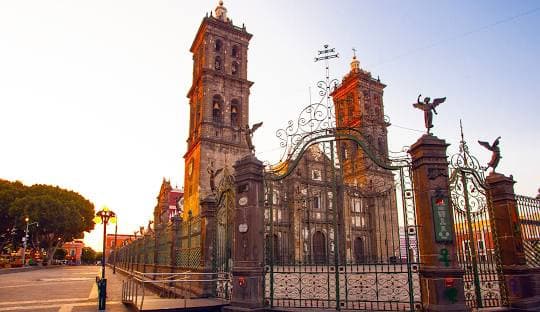
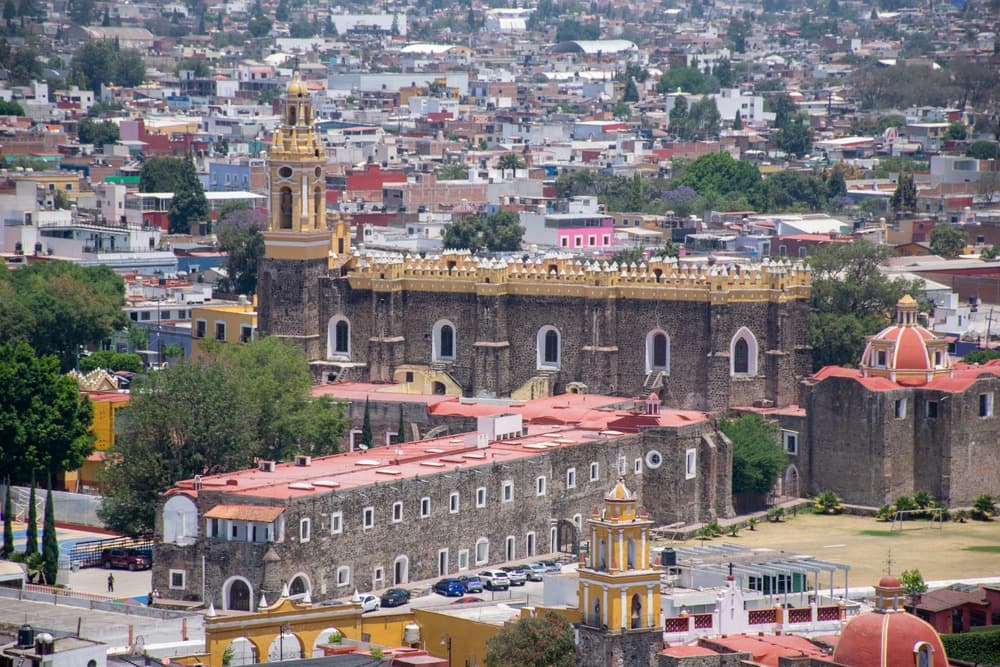
Further southeast, Puebla unfolds its 365 churches at the foot of still-active Popocatépetl volcano. The city is renowned for its cuisine: here is where mole poblano is prepared, a sauce of ancho chiles, bitter chocolate, and around twenty ingredients, and chiles en nogada in the national flag's colors, served mainly between July and September when pomegranates ripen. Cholula, 10 km from Puebla, houses the world's largest pyramid by volume, crowned by a colonial church.
The plateau's climate remains temperate year-round thanks to altitude. Daytime temperatures range between 15 and 25°C, with cool nights from November to February that can drop below 5°C in Mexico City. The dry season runs from October to May. From June to September, thunderstorms arrive in late afternoon—brief but intense—without preventing morning visits. This consistency makes the colonial heartland a region we easily schedule throughout the year, with preference for October through April.
Culturally, the region hosts major national celebrations: Independence Day festivities on September 15 from Mexico City's presidential balcony, Día de Muertos on November 1-2, particularly vivid in Mixquic and surrounding villages, Guanajuato's Cervantino Festival in October bringing music and theater for three weeks. This is also where you grasp the genesis of contemporary Mexico, from Aztec codices to Diego Rivera's murals in the National Palace.
Must-See Experiences
Teotihuacán at sunrise. Climb the Pyramid of the Moon before the tour buses arrive, with views over the 2-km Avenue of the Dead. Recent excavations have revealed ritual tunnels beneath the Feathered Serpent Pyramid.
Guanajuato and its tunnels. Drive through former mining drainage channels now serving as roads, then take the funicular up to the Pípila monument to take in the layered colorful houses cascading down the canyon walls.
Puebla cuisine. Workshop on mole poblano in a restored convent kitchen, tasting chiles en nogada in season (July-September), and visit to El Parián market for talavera, local ceramics produced since the 16th century.
San Miguel de Allende, artist's life. Strolling around the main square, visiting workshops at Fábrica La Aurora housed in a former cotton mill, thermal baths of La Gruta 10 km away toward Dolores Hidalgo.
Día de Muertos in Mixquic. November 2 southeast of Mexico City, candlelit overnight vigil in the village cemetery, family altars open to visitors, pan de muerto and atole served in the streets.
When to Visit
The dry season extends from October to May and remains our recommended period. Daytime temperatures hover around 22 to 25°C in Mexico City, Puebla, and Querétaro, with clear skies allowing views of Popocatépetl and Iztaccíhuatl from Puebla on clear days. Nights from December to February drop to 5-8°C in the city—pack a fleece. March to May marks the warmest and driest period, reaching 28°C in the afternoon, with occasionally degraded air quality in Mexico City in April.
From June to September, the rainy season brings thunderstorms concentrated between 4 and 7 PM, often followed by clear evenings. Mornings remain viable and vegetation becomes lush around colonial cities. We only avoid the last week of July and first week of August, Mexico's school holiday period when San Miguel de Allende and Guanajuato fill with visitors. September, despite rain, offers chiles en nogada and independence festivities.
Practical Information
We recommend ten to twelve days to explore the colonial heartland without rushing: three to four days in Mexico City with Teotihuacán, two days in Puebla and Cholula, two days in Querétaro and San Miguel de Allende, two days in Guanajuato. Mexico City's Benito Juárez International Airport is the natural entry point, with direct flights from Paris and Madrid. Distances between colonial cities are covered by private car with driver (count 2.5 hours Mexico City-Puebla, 4 hours Mexico City-Guanajuato via highway) or luxury coaches ETN and Primera Plus, offering business-class comfort.
The region easily combines with Oaxaca and the indigenous south via a one-hour internal flight from Mexico City, or with the Yucatán and Caribbean to finish your trip by the sea. Comfort levels are high: restored 17th-century haciendas, boutique hotels in historic centers, fine dining restaurants particularly in Mexico City and Puebla. The colonial heartland suits contemplative travelers, art and architecture enthusiasts, families with children from age 8 onward (altitude affects the first two days), and anyone wishing to understand Mexican history before exploring more remote regions.