Cénote Azul
Cénote Azul
Open-air cenote spanning 200 m between Playa del Carmen and Tulum: swimming, snorkeling, diving platform and submerged caves on the Riviera Maya.
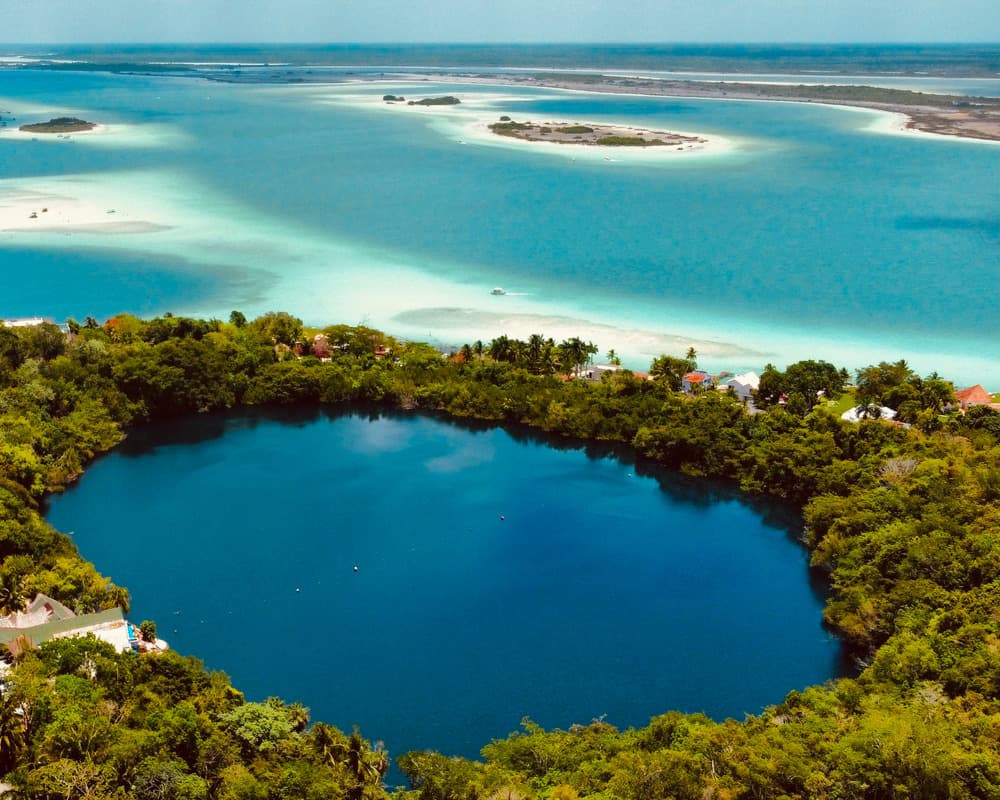
Cénote Azul is one of the most accessible open-air cenotes on the Riviera Maya. Located roadside on Highway 307, between Playa del Carmen and Tulum, just south of Puerto Aventuras, it stretches for nearly 200 meters and combines shallow pools, swimming zones and submerged caves. A straightforward and well-equipped stop to cool off between sightseeing visits.
Why visit Cénote Azul
Unlike more remote cenotes elsewhere in the Yucatán, Cénote Azul is just a few minutes from the main highway. This accessibility makes it a logical stop for travelers moving between Playa del Carmen, Akumal and Tulum, requiring no detour or special equipment.
The site ticks several boxes in one location: shallow areas suited to families, a deep basin for swimming and snorkeling, a diving platform, and access to submerged caves for equipped divers. Visitor numbers are higher than at isolated cenotes, but the facilities—trails, benches, water entry platforms—make for a comfortable visit.
Mayan history and significance
The word "cenote" comes from the Mayan term dz'onot, meaning "sacred well." These natural formations appear when the ceiling of water-filled caves collapses, revealing the freshwater layer flowing beneath the Yucatán Peninsula.
For the Maya, cenotes were far more than water sources. They viewed them as passages to the spirit world and performed rituals there, left offerings, and in some cases conducted sacrifices. They also represented the region's primary source of fresh water, in an area devoid of surface rivers. Cénote Azul fits into the network of sacred places that shaped both the spiritual and material life of the Mayan world.
What to see and do
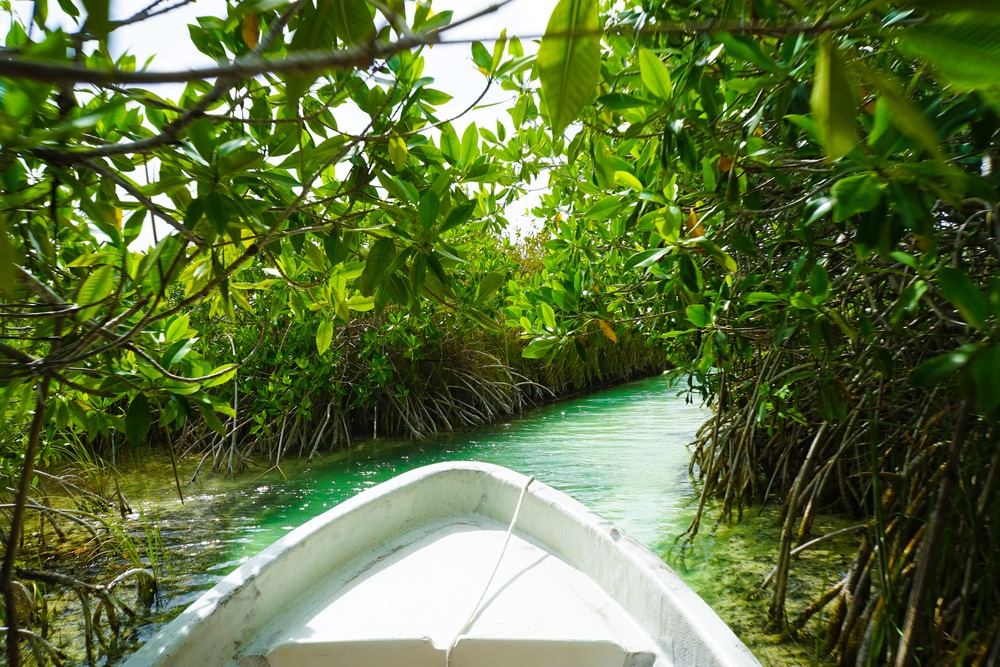
The cenote is divided by a wooden palisade into two distinct basins: one a deep blue, the other more greenish. An earth trail circles the entire site and provides access to various water entry points.
Shallow pools
At the entrance, two small shaded calm pools suit children and those simply wanting to cool off. By remaining still in the water, you'll soon see small fish approach to nibble away dead skin, much like fish used in certain spa treatments.
Deep basin and diving platform
Further along, a large natural pool is ideal for swimming. On the side, a platform approximately 4 meters high allows you to jump into the water. This is the liveliest zone on the site, especially weekends and high season.
Snorkeling and submerged caves
The water is clear and stable, making snorkeling possible in good conditions with several small fish species visible. Equipped divers can access submerged caves extending the cenote beneath the rock. Among the rocks at the surface, iguanas are frequently spotted.
Practical information
- Visit duration: allow 1.5 to 3 hours depending on whether you're there for a simple swim or combining snorkeling and basin exploration.
- Entry fee: moderate, payable in pesos at the entrance. Rates fluctuate regularly, bring some cash.
- Equipment: swimsuit, towel, water shoes useful on rocky areas. Mask and snorkel can be rented on-site or brought along.
- Sunscreen: use only biodegradable sunscreen to preserve the cenote's ecosystem.
- Parking: available on-site, immediately near the entrance.
When to visit
The dry season, November to May, offers the most stable conditions: clear skies, little rain, pleasant temperatures. Attendance surges during North American school holidays (December, March-April) and weekends; arriving early morning, at opening time, lets you enjoy the site before crowds and with better water lighting.
June to October brings a more humid and hot climate, with possible showers, but the cenote water remains constant and weekday attendance is lighter.
How to get there
From Playa del Carmen
By car, take Highway 307 toward Tulum, about twenty minutes. At the level of the Barceló Hotel Resort, follow signs for the cenote.
By colectivo, depart from across the Chedraui supermarket, at the corner of Calle 1 Sur and Avenida 45 Norte. Ask the driver for a colectivo heading to Tulum and indicate your stop. For the return, simply cross the road and flag down a colectivo the other way.
From Tulum
By car, follow Highway 307 toward Playa del Carmen, roughly thirty minutes. Colectivos heading to Playa del Carmen regularly pass along the road and can drop you at the site entrance.
What to see nearby
Cénote Azul fits easily into an itinerary along the Riviera Maya. A few kilometers north, Puerto Aventuras offers a marina and calm beaches. Further south, Akumal is known for the chance to observe sea turtles while snorkeling, and Tulum combines Mayan ruins by the sea with white sand beaches. To extend the water experience, other cenotes dot the region, each with its own setup (open, semi-open, cave-based).
Further south, the San Felipe de Bacalar fort overlooks the lagoon of seven colors, and in neighboring Yucatán State, the Convent of San Bernardino de Siena in Valladolid makes a complementary cultural stop. For a complete change of scenery, Oaxaca State offers the Manialtepec Lagoon and the archaeological site of Monte Albán.
Frequently asked questions
Frequently asked questions
Yes. The shallow pools at the site entrance are calm, shaded and suited to young children. Deeper zones and the diving platform are best left to confident swimmers.
You can bring your own mask and snorkel or rent equipment on-site. Water shoes are recommended for rocky areas.
The site has submerged caves accessible to certified divers, typically through organized outings with a local club. Swimming and snorkeling are freely available.
The fee remains moderate and is paid in pesos at the entrance. Prices may change, so bring cash in small bills.
Morning, right at opening, to avoid crowds and enjoy light that showcases the water's color. Weekends and holidays see notably higher attendance.
Plan your trip
Cénote Azul fits naturally into a Riviera Maya itinerary, blending Mayan culture, Caribbean beaches and freshwater swimming. To build a tailored trip combining cenotes, archaeological sites and colonial towns, explore our Mexique travel ideas.
Interested in this visit?
We can include it in your personalised itinerary.